
Ruins, Resilience, and Reflections Across Europe
By Dr. Adekunle Omotayo
Where imperfection becomes identity, and structures become metaphors, the Continental Journey is a meditative path through Europe’s most evocative spaces—from the narrow canal under Venice’s Bridge of Sighs to the ancient stage of Taormina.
This is not a tourist trail. It is a reflective pilgrimage through history, artistry, and timeless architecture.
Is your camera ready to capture breathtaking moments? Whether you’re exploring the stunning landscapes of Santorini, savoring the vibrant city life in London, wandering through the historic streets of Dubrovnik, or soaking up the sun in picturesque Portugal, having the right equipment is essential. A good camera can transform ordinary experiences into extraordinary memories, allowing you to frame each scene with clarity and emotion. As you step onto the sun-kissed shores of Santorini, the brilliant blue waters will beckon for you to capture their beauty; nature’s canvas is ripe for a perfect shot that tells a story of serenity and adventure. In the bustling markets of London, the eclectic mix of cultures and vibrant colors creates opportunities for storytelling through your lens, making every click a narrative unto itself, reflecting the city’s rich tapestry of life, where every face, every smile, and every moment matters. Walking through the cobblestone streets of Dubrovnik, you’ll want to capture not just the ancient architecture, but also the feelings of awe and wonder that envelop you at every corner, breathing life into the centuries-old stones, as the sunlight dances off the historic facades. And let’s not forget Portugal, where the golden sunsets over the cliffs can leave you breathless, begging to be immortalized through your photography, as the sky transforms into a masterpiece of oranges, pinks, and purples that invite you to witness nature’s artistry at its finest. So, before you embark on your next adventure, make sure you check your camera settings, pack extra batteries, and bring along your favorite lenses to ensure you’re prepared for every incredible shot that awaits you, from candid street scenes bursting with life and character to majestic landscapes that will become cherished lifelong memories, a visual diary of your explorations that you can revisit and share long after your journey has concluded.
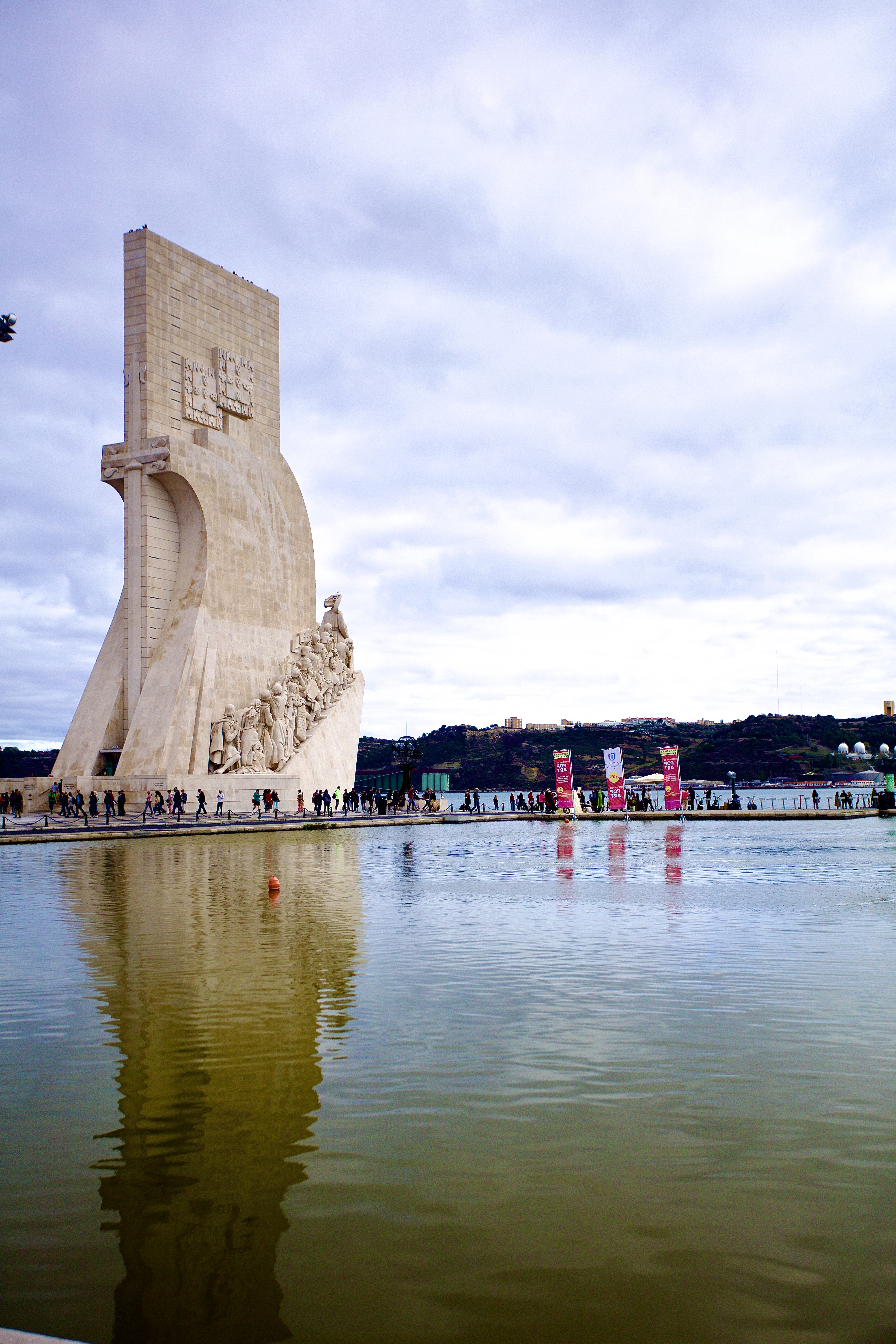
Photo by Dr. Adekunle Omotayo
Rising proudly along the banks of the Tagus River in Lisbon, the Padrão dos Descobrimentos (Monument the Discoveries) is a striking tribute to Portugal’s seafaring legacy. Shaped like the prow of a ship, this towering stone sculpture honors the navigators, explorers, and visionaries of the 15th and 16th centuries who helped chart the course of global exploration. Leading the charge is Prince Henry the Navigator, followed by an entourage of historical figures etched in dramatic relief.
Standing before this monument, I felt the weight of history and the thrill of adventure—of voyages that once expanded the known world. Reflected in the still waters beneath it, the monument seems to merge past and present in a timeless salute to discovery.
It’s a must-see stop along Lisbon’s waterfront in Belém, especially when paired with nearby gems like the Belém Tower and Jerónimos Monastery—both UNESCO World Heritage Sites.
🧭 “To discover new oceans, one must have the courage to lose sight of the shore.”
— André Gide
🌍 “Travel is not only movement across space, but a reclaiming of one’s own inner compass.”
— Dr. Adekunle Omotayo
Myrtos Beach – Kefalonia’s Coastal Masterpiece
Located on the northwest coast of Kefalonia, Myrtos Beach is often hailed as one of the most beautiful beaches in Greece. Its stunning turquoise waters are framed by dramatic white cliffs, creating a breathtaking backdrop for sunbathers and swimmers alike. The beach is renowned for its powdery white pebbles that contrast sharply with the deep blue of the Ionian Sea, providing an enchanting setting for relaxation and exploration. Visitors can enjoy the warm Mediterranean sun, while the gentle waves create a soothing soundtrack that enhances the overall experience. For those seeking adventure, Myrtos offers opportunities for snorkeling and water sports, allowing you to immerse yourself in the vibrant underwater life, teeming with colorful fish and intriguing rock formations. Beachgoers can also take leisurely strolls along the shore, discovering hidden coves and secret spots that showcase the area’s unspoiled beauty. As the sun sets, the view from the cliffs above transforms into a mesmerizing spectacle of colors, painting the sky in hues of orange, pink, and purple, making it a perfect spot for romantic evenings and unforgettable memories. The atmosphere is further enriched by the occasional local music drifting from nearby tavernas, inviting visitors to savor traditional Greek cuisine while soaking in the stunning scenery. Myrtos Beach is not just a beach; it is an experience that embodies the essence of Kefalonia’s natural beauty, a place where every visit feels like a getaway to paradise.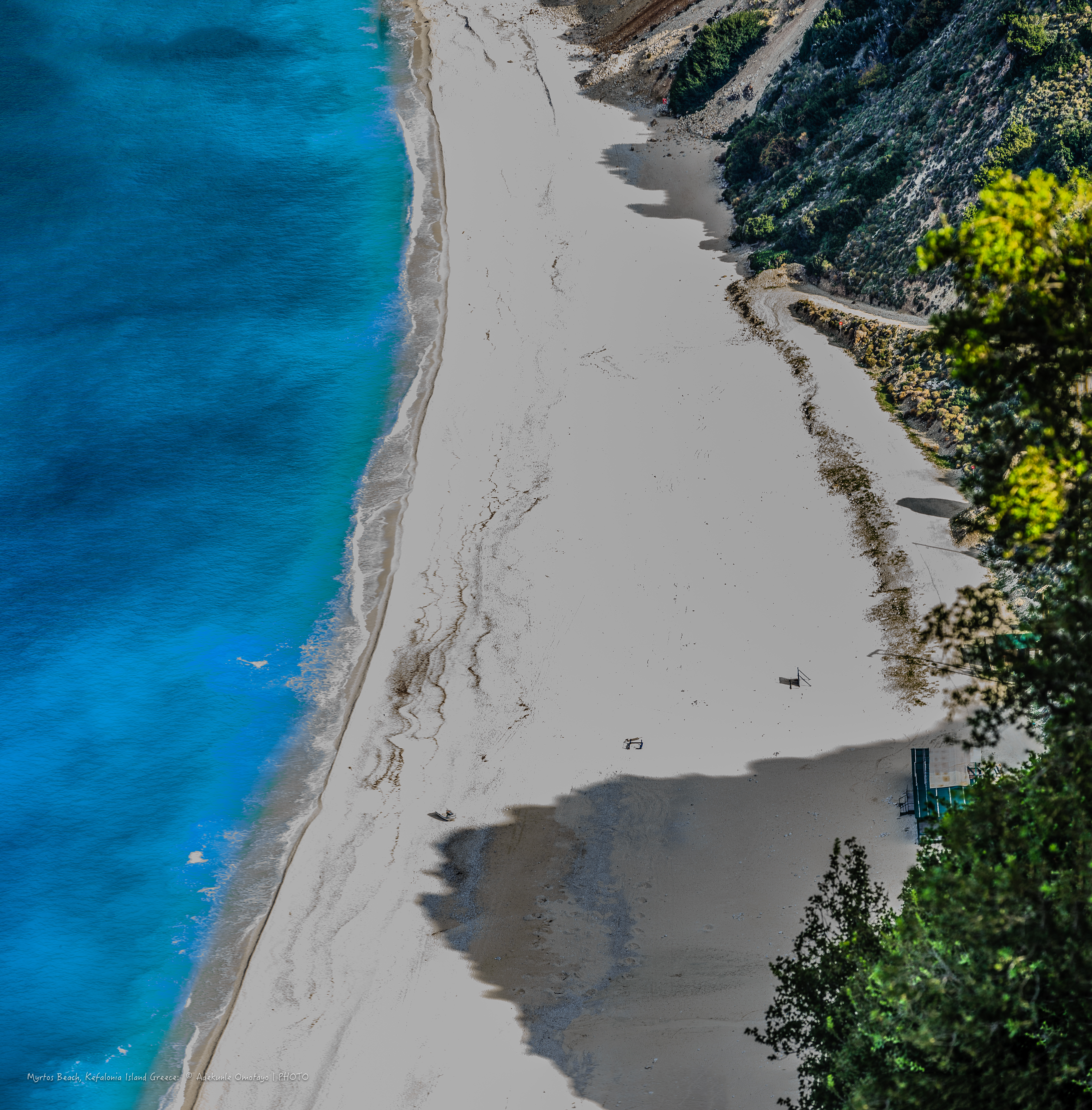
Photo by Dr. Adekunle Omotayo
Few places take your breath away like Myrtos Beach on the island of Kefalonia, Greece. With its pristine arc of white pebbled sand, steep cliffs, and surreal shades of turquoise and cobalt blue, this is one of the most photographed beaches in all of Greece—and for good reason.
Viewed from above, the beach feels almost untouched, like nature’s private gallery of color and texture. The dramatic contrast between the aquamarine sea and the steep, verdant cliffs creates a quiet kind of awe that lingers long after you leave. Even with hardly a soul in sight, the place hums with life—each wave a soft whisper of the island’s timeless beauty.
Whether you’re here for sunbathing, swimming, or simply soaking in the view from the cliffs above, Myrtos Beach is a must-visit on any Ionian itinerary. A sanctuary carved by wind, sea, and time—Myrtos Beach reminds me that sometimes the best places are the ones that ask nothing of you but presence.
Dubrovnik – King’s Landing in Stone and Sea
Nestled on the shimmering Adriatic coast, Dubrovnik captivates visitors with its stunning architecture and rich history. This enchanting city, often referred to as King’s Landing from the acclaimed television series “Game of Thrones,” boasts magnificent stone walls that have stood the test of time, offering breathtaking views of the sea and surrounding mountains. As you walk along the cobblestone streets, you can almost hear the whispers of the past, echoing tales of noble families and ancient trade routes. The picturesque Old Town, a UNESCO World Heritage site, is lined with charming cafes and shops that add to its vibrant atmosphere. From the iconic Rector’s Palace to the serene beauty of the nearby islands, Dubrovnik invites all who visit to explore its myriad wonders and indulge in the warmth of its Mediterranean spirit. 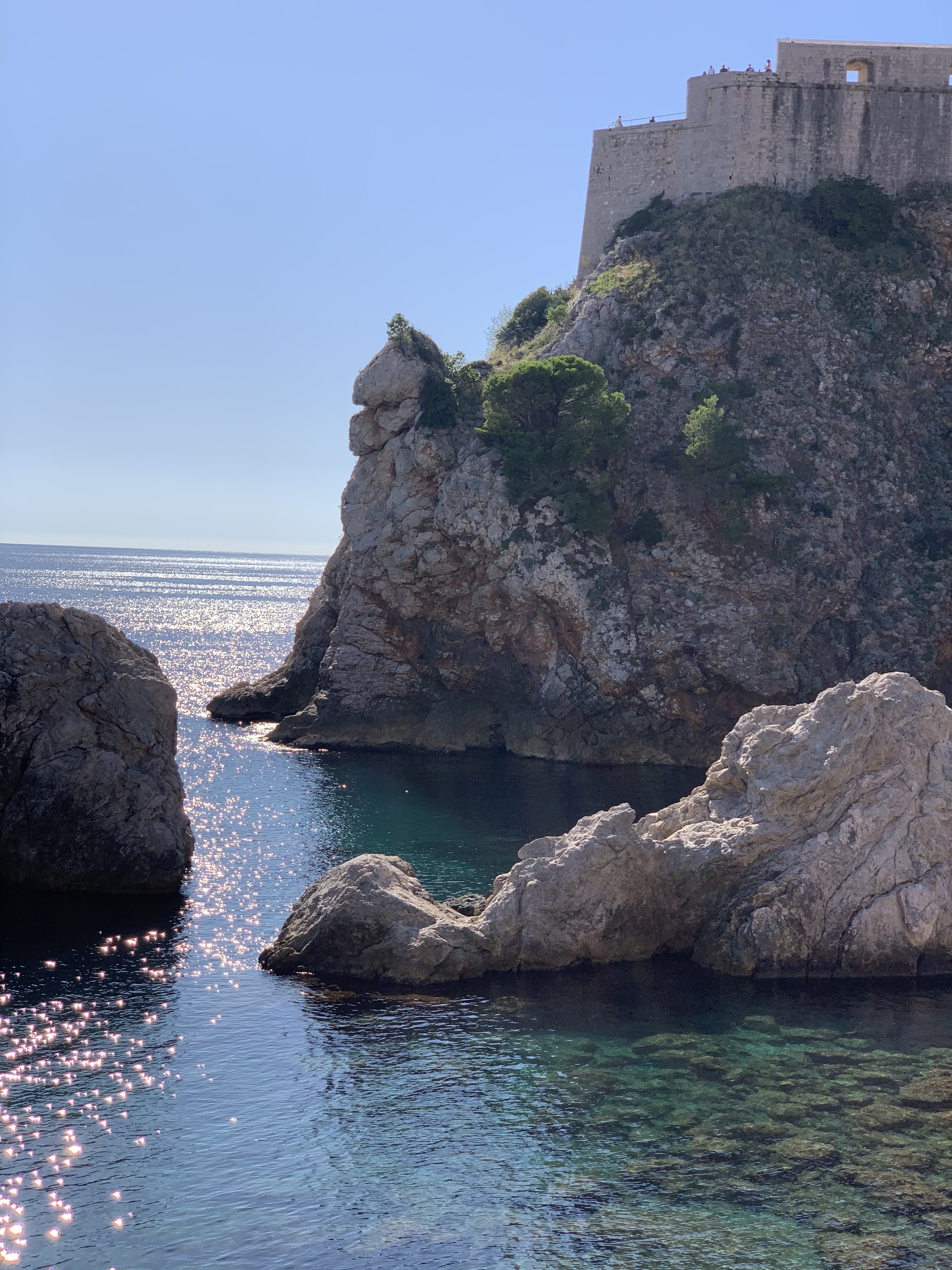
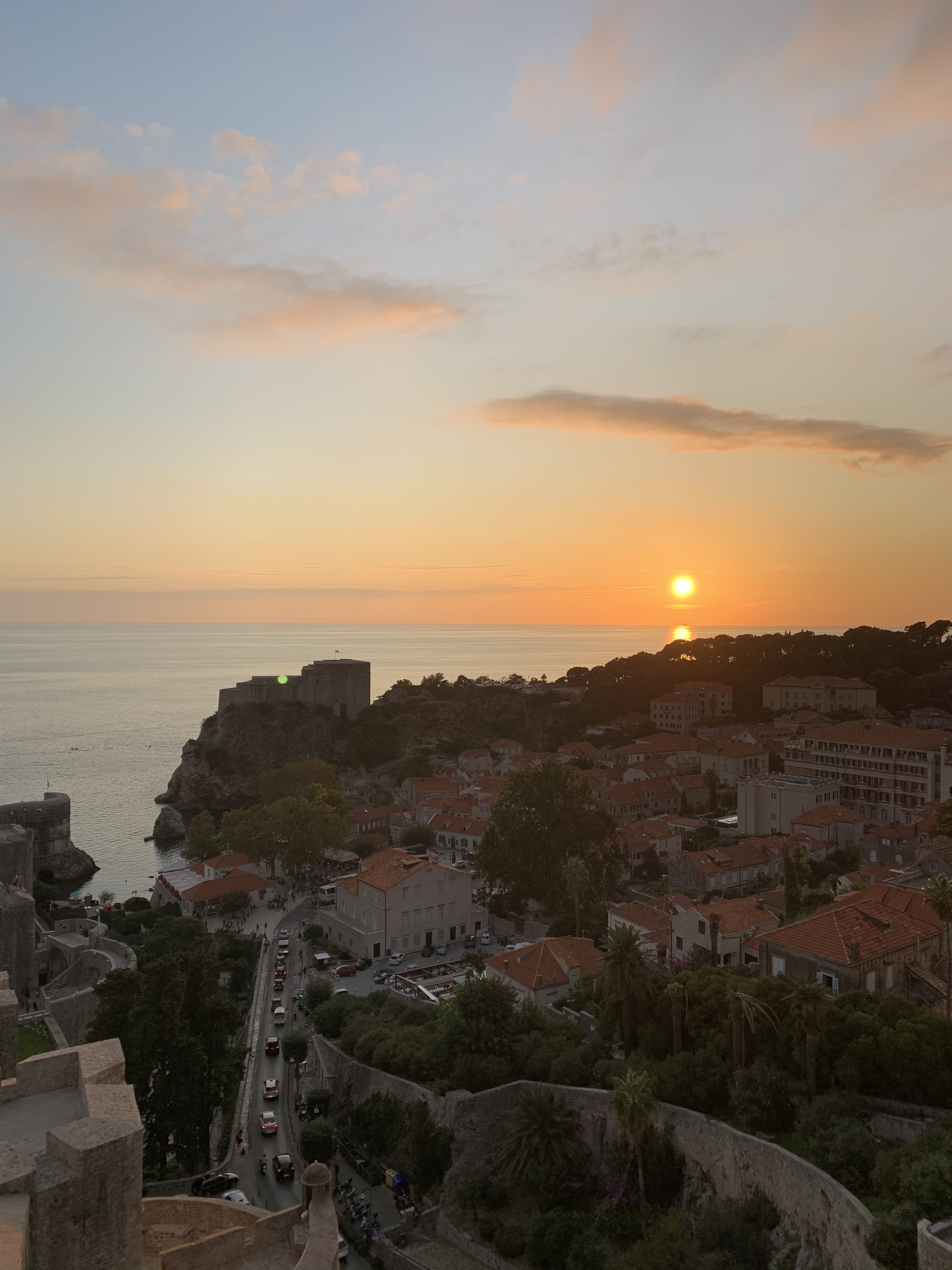
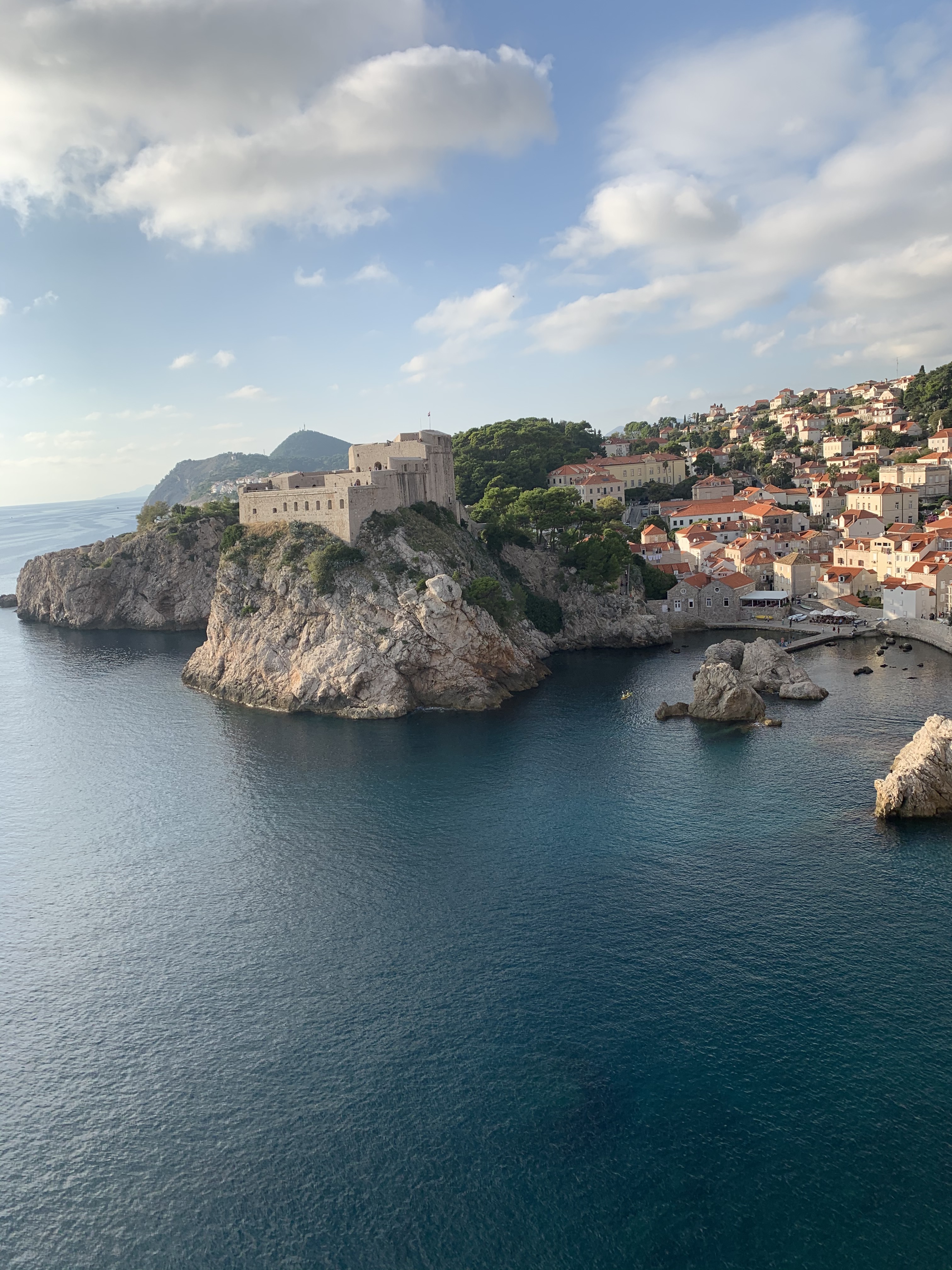
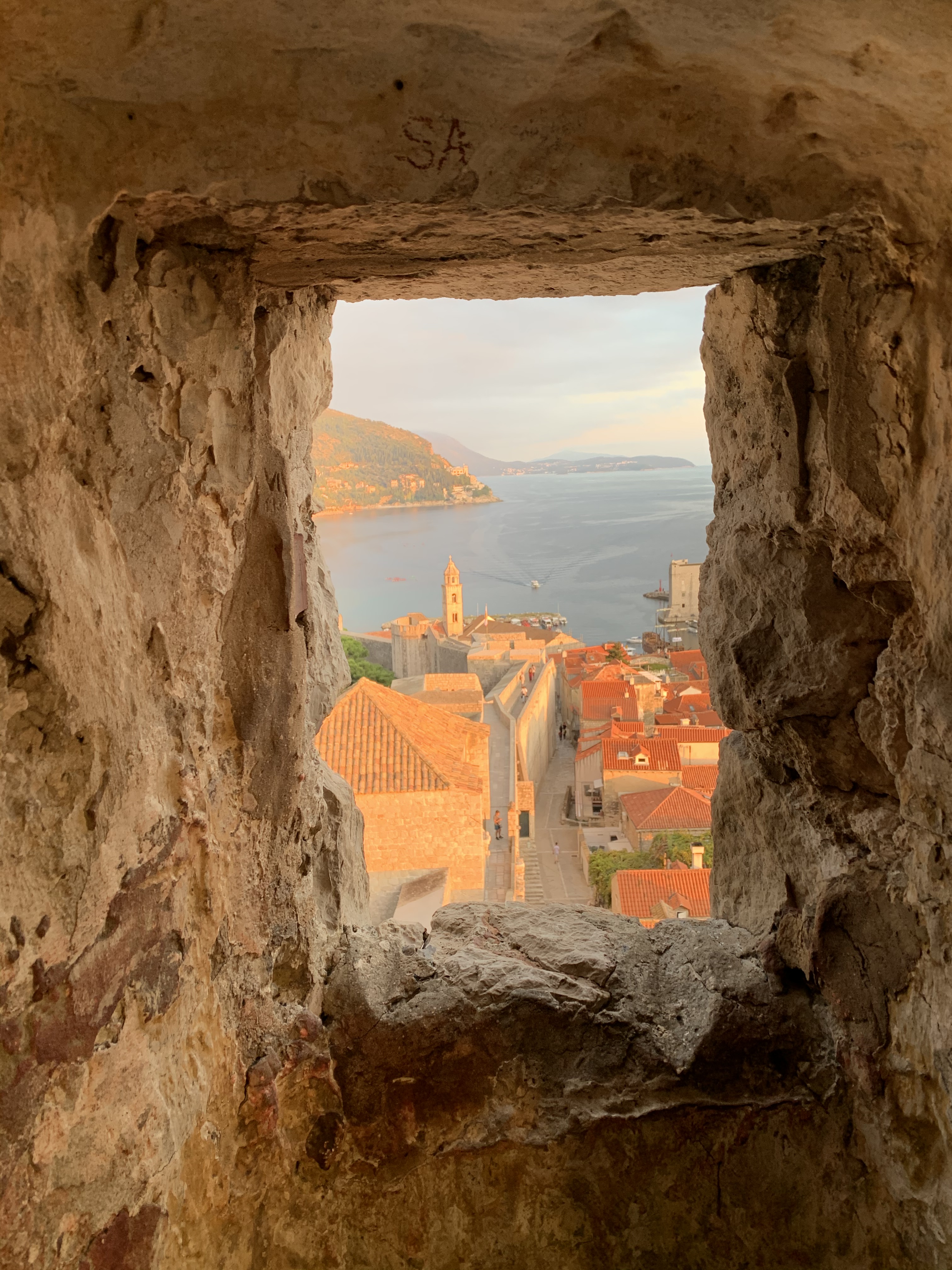
Photos by Dr. Adekunle Omotayo.
Perched defiantly on the cliffs above the sparkling Adriatic, the walled city of Dubrovnik, Croatia is more than a UNESCO World Heritage Site—it’s the real-world backdrop for King’s Landing, capital of the Seven Kingdoms in Game of Thrones.
This very spot, just outside the Pile Gate and beneath the imposing Fort Lovrijenac, featured prominently throughout the series—from Tyrion’s sharp exchanges on the battlements to Cersei’s infamous walk of atonement. The city’s centuries-old walls and sun-drenched cliffs delivered a visual gravitas no CGI could replicate.
In person, it’s even more breathtaking. The contrast of rugged rock against crystalline water is cinematic in its own right. The fortress feels timeless, its stones whispering stories far older than Westeros. And the sea—calm, clear, eternal—seems to carry the echoes of drama, betrayal, and loyalty that made the show unforgettable.
“When you play the game of thrones, you win or you die.” – Cersei Lannister “Some places are too powerful to pretend—they simply become.” Standing here, I didn’t just visit a filming location. I walked the very threshold between myth and memory, where fantasy borrowed from history and left behind something hauntingly beautiful.
“Queen Beyond the Wall” — A Game of Thrones–Inspired Reflection
“In a realm of stone and salt, she stands—not to claim a throne, but to remind the world that grace is mightier than crowns.” Framed by the weather-worn cliffs and the eternal sea, she appears as a figure of quiet power—a queen not of conquest, but of calm. Like Cersei watching from the Red Keep, or Daenerys gazing eastward across the Narrow Sea, this moment captures the still tension between what was and what is yet to be. Her presence commands respect, not through the display of force, but through an unyielding spirit and an unwavering commitment to peace in a world rife with turmoil. The winds howl around her, carrying whispers of old battles and forgotten glories, yet she remains steadfast, a beacon of hope for those who feel lost. As the sun dips below the horizon, casting hues of orange and purple across the sky, she embodies the very essence of the realm—a place where strength and serenity coexist, reminding all that true leadership is not about domination, but about nurturing the hearts of the weary and guiding them towards a brighter dawn.
Yet unlike the queens of Westeros, whose rule was carved from fire, blood, or prophecy, she reigns by presence alone—anchored in peace, commanding without a single word.
The sea behind her whispers of dragons long gone and journeys not yet taken. The rocks recall the unyielding cities built by ambition—but here, there is no need for Iron Thrones or swords drawn in shadow. There is only a throne of stillness, carved from years of wisdom, resilience, and quiet power.
Where Cersei once plotted, where Arya once stood, here stands a woman who needs no armor. Her smile is her sigil. Her calm, her kingdom.
Evening in Kotor – A Whisper of Old Stones and Soft Light
As the sun dips below the horizon, casting a warm golden hue upon the ancient stones of Kotor, the atmosphere transforms into a serene tapestry of shadows and glimmering lights. The cobblestone streets, polished by time, echo with the whispers of history, inviting wanderers to lose themselves in their charm. Flashes of twilight illuminate the majestic fjord, where the water mirrors the vibrant colors of the sky, creating a breathtaking spectacle. Lush mountains cradle the bay, standing sentinel over the old town, their silhouette a testament to the passage of time. As twilight deepens, the gentle sound of laughter and music spills from quaint cafes, mingling with the distant chime of church bells, creating a melody that resonates with the essence of this enchanting place. The air is infused with the scent of local cuisine, hinting at culinary treasures waiting to be discovered. Kotor in the evening is not just a sight; it is an experience that beckons to be savored.
Photo by Dr. Adekunle Omotayo
As the sun slipped behind the mountains that cradle Kotor, the streets of the Old Town transformed into something altogether magical. This UNESCO World Heritage city in Montenegro is a place where time lingers—and nowhere is that more evident than on an autumn evening, when the lamps cast their warm glow and the ivy blushes red against ancient stone.
I wandered into this quiet courtyard, just steps from the Cathedral of Saint Tryphon, and paused. The arched doorway, the shuttered windows, and the worn marble well told their own story—of centuries of seafarers, merchants, and poets who passed through this port, leaving whispers in the limestone walls.
It’s hard to believe this fairytale corner once stood as part of a mighty Venetian stronghold. Now it holds the gentle rhythm of quiet conversations, candlelit cafes, and the occasional echo of music from the Kotor Arts Festival, whose posters graced the door in front of me. “Some places don’t ask for attention—they invite presence.”
“There is a kind of poetry that only cobblestone and candlelight can compose.” In Kotor, the past isn’t behind you—it walks beside you, slowly, quietly, and with grace.
Echoes in Marble – Hadrian’s Library, Athens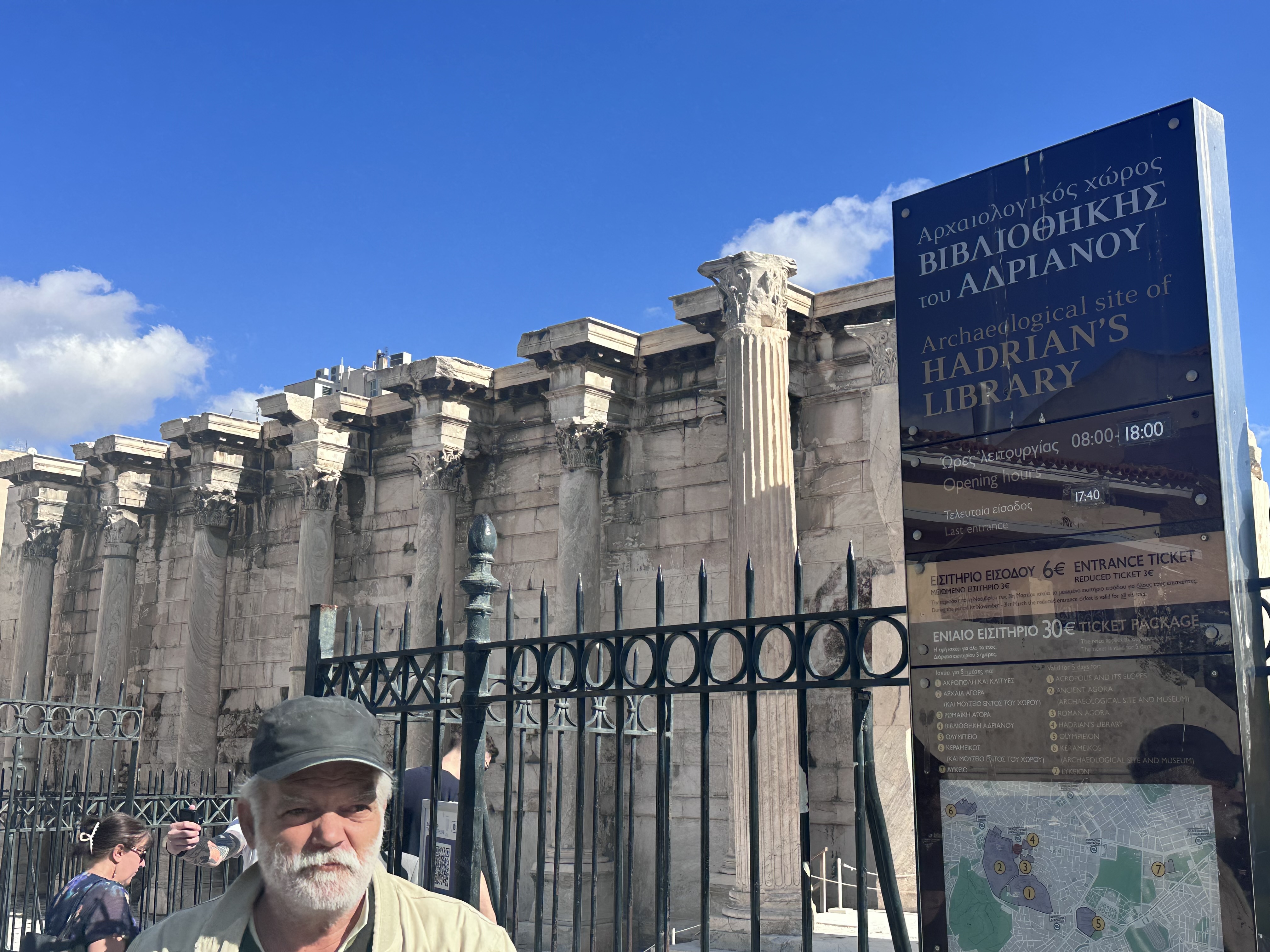
Nestled in the heart of Athens, Hadrian’s Library stands as a testament to the architectural brilliance and cultural significance of ancient Rome. Built by Emperor Hadrian in 132 AD, this grand structure was not only a repository of scrolls and manuscripts but also a vibrant center of learning and civic life. Its towering marble columns and exquisite facades echo the intellectual pursuits of a bygone era, inviting visitors to ponder the knowledge that once flowed within its walls. Today, as you walk through the remnants of this historic site, you can almost hear the whispers of scholars discussing philosophy, literature, and science, their voices blending with the rustling leaves of the nearby trees. The library, although partly in ruins, continues to inspire awe, reminding us of the enduring legacy of knowledge and the thirst for enlightenment that characterized the ancient world.
Photo by Dr. Adekunle Omotayo
In the heart of modern-day Athens, between sidewalk cafés and buzzing scooters, stand the enduring columns of Hadrian’s Library—a monument not just to knowledge, but to resilience.
Built in 132 AD by the Roman Emperor Hadrian, this was once the grandest library in the ancient world outside of Rome. Marble-walled reading rooms, lecture halls, and gardens formed a sanctuary of learning in the bustling city of antiquity. Today, only fragments remain—but they whisper.
As I stood before these Corinthian columns, golden in the afternoon light, I was struck by the continuity of human longing—for understanding, for preservation, for beauty. It’s not the volume of knowledge these stones once held that moves you, but the fact that it mattered so deeply, even then.
Athens reminded me that civilization isn’t built in stone—it’s merely etched into it.
“The only true wisdom is in knowing you know nothing.” — Socrates
“Ruins are not the end of a story. They are the breath that keeps memory alive.”
Postcards from the Vltava – Prague’s Timeless River View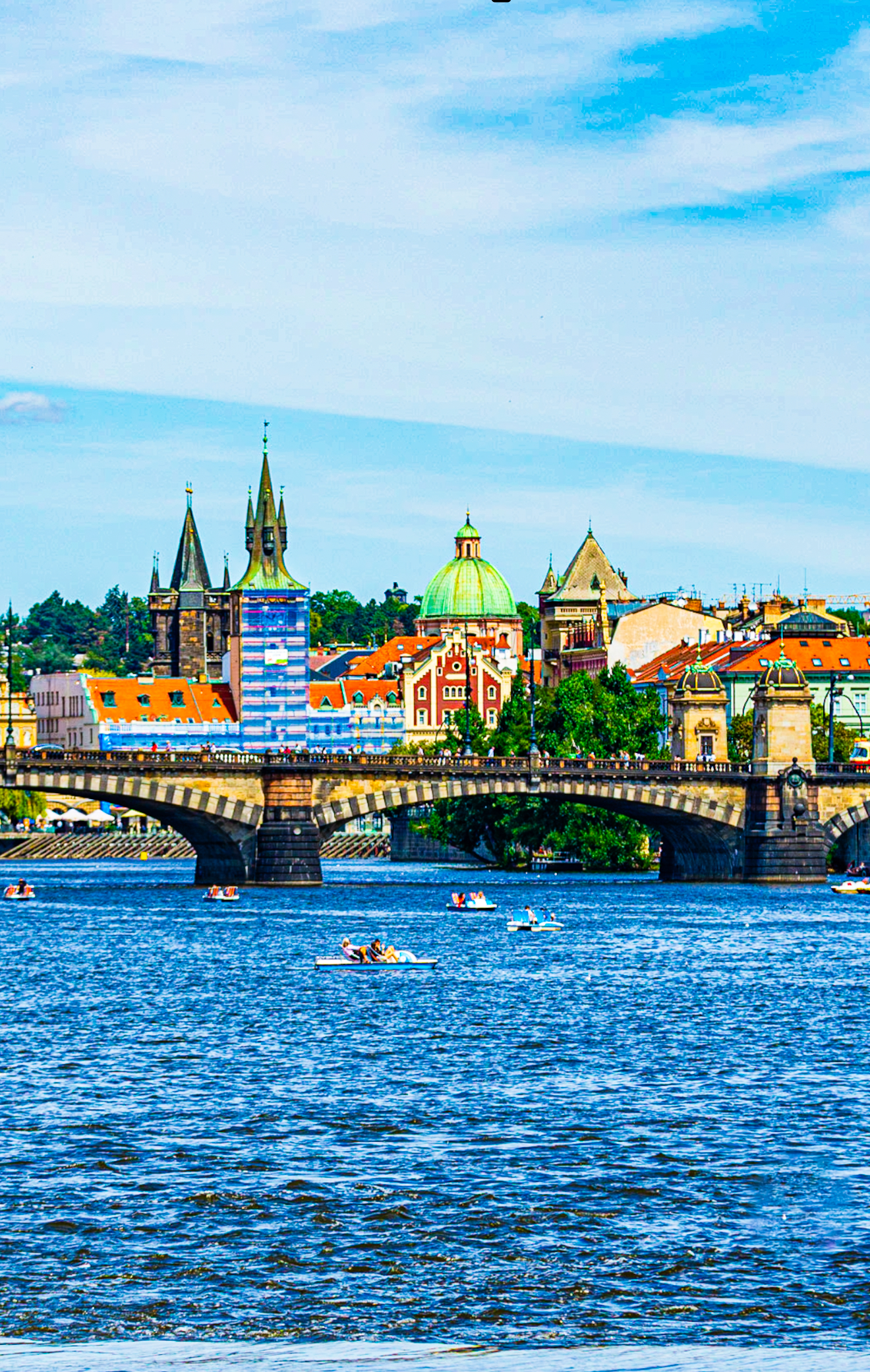
Photo by Dr. Adekunle Omotayo. The Vltava River, winding through the heart of Prague, offers a breathtaking panorama that captures the essence of this enchanting city. From the iconic Charles Bridge to the stunning backdrop of Prague Castle, each postcard depicts a scene alive with the vibrant hues of sunrise or the golden glow of sunset reflecting off the water.
The river is not just a scenic route; it is a lifeline that has witnessed centuries of history, bustling markets, and serene riverbanks where locals gather to soak in the beauty of their surroundings. Whether you’re savoring a leisurely boat ride or enjoying a simple stroll along its banks, the Vltava’s timeless charm enchants every visitor, making it a perfect subject for capturing unforgettable memories.
Prague is a city that doesn’t ask for attention—it earns it with every curve of its skyline. Seen from the banks of the Vltava River, the city feels like a painting come to life.
This view from the Legion Bridge captures what I can only call architectural poetry. The copper dome of the National Theatre, the red rooftops of the Old Town, and the dark spires of Týn Church and St. Nicholas rise like a chorus of eras, echoing centuries of artistry, faith, and revolution.
The river itself is alive with paddleboats and reflection—of sky, stone, and story. It has witnessed emperors, composers, and protesters, each adding to Prague’s layered soul. It is no wonder this city inspired Kafka’s dreams and Mozart’s music.
“The river flows quietly, but it carries empires in its wake.”
“Prague never lets you go… this dear little mother has claws.” — Franz Kafka
The Last Glimpse – Venice’s Bridge of Sighs
Situated in the heart of Venice, the iconic Bridge of Sighs captures the essence of the city’s romantic allure and historical depth. Constructed in the early 17th century, this architectural masterpiece links the Doge’s Palace to the gloomy prisons, creating a poignant contrast between beauty and despair. It is said that prisoners would take their last glance at the enchanting canals and vibrant life of Venice through the bridge’s barred windows, leading to its haunting name. As visitors stroll across this covered limestone bridge, they can’t help but feel a connection to the past, imagining the whispers of history that echo through its arches. The shimmering waters below reflect the unique luminescence of the city, inviting couples to share a kiss and make a wish, as legend suggests that such romantic gestures on the bridge ensure eternal love. 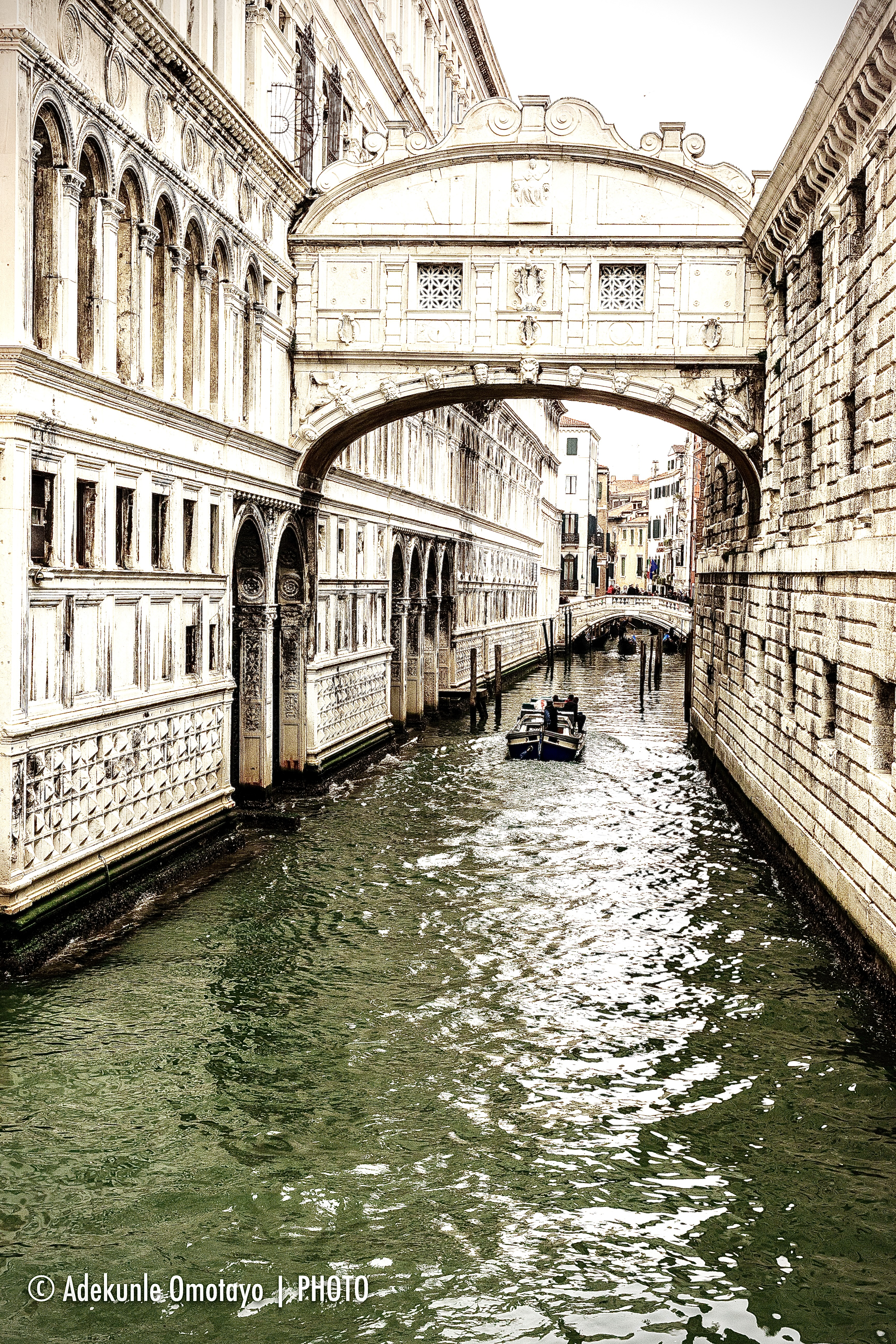
Photo by Dr. Adekunle Omotayo
In a city built on water and memory, the Bridge of Sighs might be its most poetic crossing. Spanning the narrow canal between the Doge’s Palace and the old prison cells, this ornate, enclosed limestone bridge was once the final passage for prisoners sentenced within the palace walls.
The name—Ponte dei Sospiri—comes from the idea that inmates would sigh at their last view of Venice through its delicate stone-masked windows. Today, the sighs are different—tourists, dreamers, romantics—awed by the surreal silence of this place, where the water reflects both beauty and sorrow.
I stood watching as gondolas slipped beneath its arch, the canal holding centuries of stories in its ripples. It is not a grand bridge in size—but in emotion, it towers.
“Some bridges are not meant to be crossed—they’re meant to be remembered.”
“I stood in Venice, on the Bridge of Sighs; / A palace and a prison on each hand.” — Lord Byron
The Watchtower of Empires – Fort St. Angelo, Malta
Situated on the beautiful shores of Malta, the majestic Fort St. Angelo stands as a testament to the island’s rich maritime history and strategic significance. Originally built as a medieval fortification, it has been transformed over the centuries into a formidable stronghold that played a crucial role in numerous conflicts and sieges. With its towering walls and stunning views of the Grand Harbour, Fort St. Angelo not only served as a military bastion but also as the residence of the Grand Masters of the Knights of St. John. Today, visitors can explore its storied past through guided tours that showcase the intricate architecture, the well-preserved military artifacts, and the breathtaking surroundings that continue to captivate the hearts of all who venture to this iconic site. 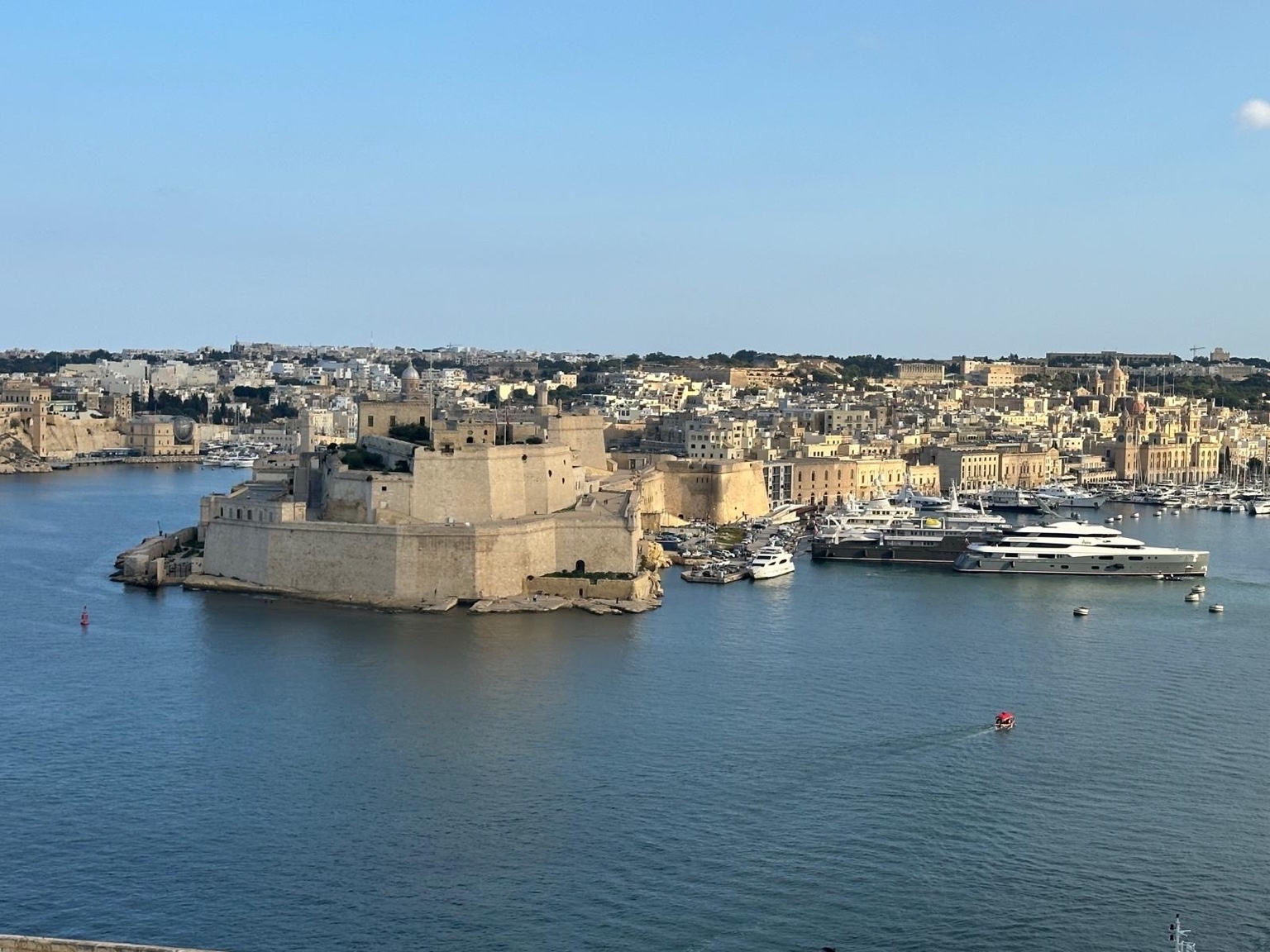
Photo by Dr. Adekunle Omotayo
Few places compress as much layered history into one view as Malta’s Grand Harbour. Here, standing at the edge of Valletta, I looked across the water toward Fort St. Angelo—a stone sentinel whose story stretches from the Knights of St. John to World War II.
Built on the bones of earlier fortifications, Fort St. Angelo anchors the town of Birgu, one of Malta’s famed Three Cities. From this vantage point, you can see how empires saw this harbor not as a backdrop—but as a gateway. Phoenicians, Romans, Arabs, Normans, and the British all left their mark on these shores.
Now, the harbor is dotted with sleek yachts, sunlit domes, and baroque facades. Yet the fortress remains, unchanged in its silent authority. It is a place that has known siege and celebration, conflict and continuity.
“The walls no longer defend—but they still remember.”
“History never looks like history when you’re living through it.” — John W. Gardner
⚓
Dr. O’s Travel Tip:
Catch this view from the Upper Barrakka Gardens in Valletta. Time your visit to witness the noonday gun salute, a tradition that echoes Malta’s maritime heritage. Take the ferry across to explore the Three Cities up close—especially Birgu’s winding alleys and bastions.
Olympia – Where the Flame Was Born
In the heart of ancient Greece lies the sacred site of Olympia, a place steeped in history and reverence, where the Olympic flame was first ignited. This enchanting location was not only the birthplace of the Olympic Games, held every four years in honor of Zeus, but also a thriving center of worship and culture. The ruins of temples, training grounds, and athletic facilities still resonate with the echoes of past competitions, where athletes from various city-states showcased their prowess. Today, visitors flock to this historical treasure, drawn by the allure of its storied past and the tradition that continues to inspire the modern Olympic ideals of excellence, friendship, and respect. The breathtaking landscapes surrounding Olympia add to its charm, providing a picturesque setting for those wishing to explore the origins of an event that unites nations and celebrates human achievement.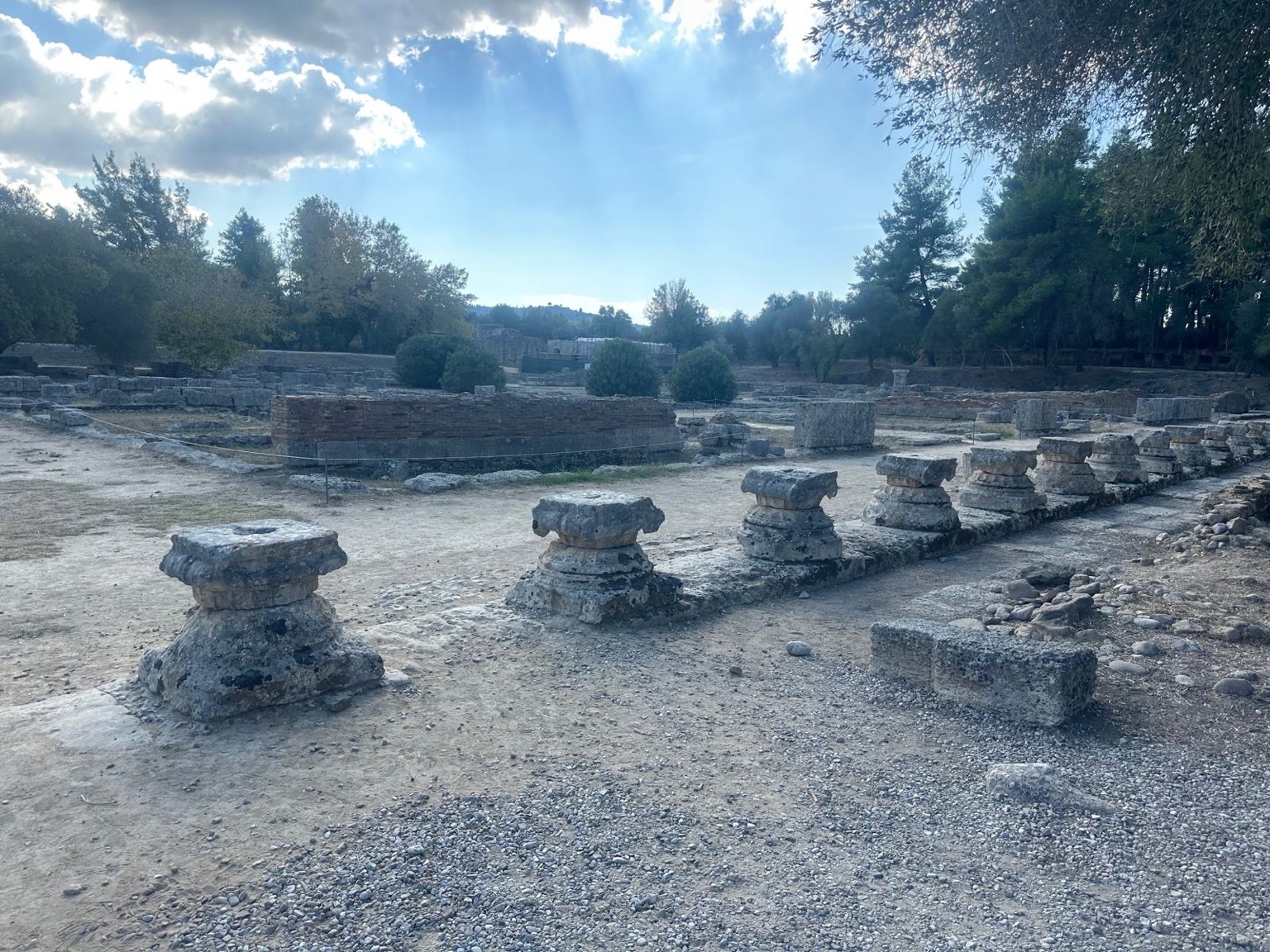
Photo by Dr. Adekunle Omotayo
In the quiet cradle of the Peloponnese, beneath a sky cracked with light, I stood among the ruins of Olympia—where the very spirit of sport and sacred competition began.
These broken columns and weathered bases once supported temples, gymnasiums, and statues that honored both gods and glory. Here, for over a millennium, athletes came not for medals, but for arete—excellence, pursued with discipline and offered as tribute to Zeus.
There is something reverent in the air here. The light filters differently. The silence isn’t empty—it’s ancient. One can still imagine the thunder of feet on the starting line, the chants of spectators, the echo of distant trumpets announcing the sacred truce.
The Olympics were never merely sport—they were ritual, politics, and philosophy woven into motion.
“Victory is not always measured by the crown, but by the courage to compete.”
“Excellence then is not an act, but a habit.” — Aristotle
🏛
Dr. O’s Travel Tip:
Visit the Archaeological Museum of Olympia before entering the ruins—the scale of recovered statuary gives context to the remains. Walk to the stadium archway, and step barefoot onto the ancient starting line. Then pause—not to run, but to reflect.
Echoes on the Stage – The Ancient Theatre of Taormina
Nestled on the cliffs of Sicily, the ancient theatre of Taormina stands as a breathtaking testament to the ingenuity of Roman architecture, blending seamlessly with the stunning Mediterranean backdrop. Built in the 3rd century BC, it has been a site of celebration and artistry for centuries, hosting theatrical performances, musical concerts, and various cultural events that resonate through time. As you wander through the well-preserved ruins, you can almost hear the echoes of laughter and applause that once filled the air, while the magnificent view of Mount Etna and the azure sea further enhances the dramatic atmosphere of this historical venue.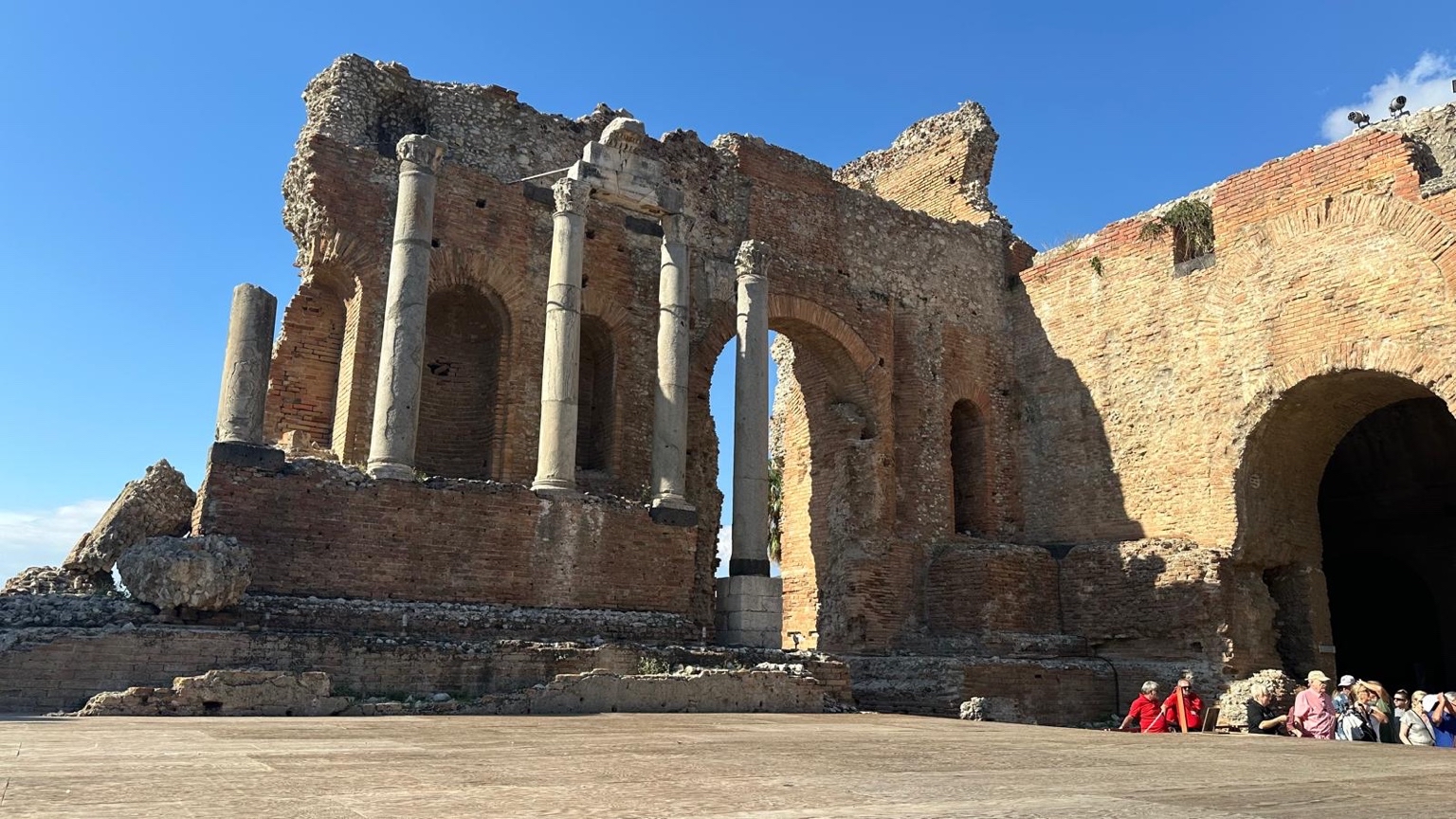
Photo by Dr. Adekunle Omotayo
In Taormina, Sicily, atop a steep hill that cradles both myth and mountain, sits one of the most awe-inspiring ruins in the Mediterranean—the Ancient Theatre of Taormina.
Originally built by the Greeks in the 3rd century BCE and expanded by the Romans, this semi-circular marvel wasn’t just a venue for plays—it was a declaration of cultural power. To perform here was to act in the shadow of Mount Etna, with the sea as your backdrop and the gods as your audience.
Today, only fragments remain: a few upright columns, archways that once framed dramatic entrances, and tiered seats worn smooth by time. Yet the spirit of performance lingers. The silence is never quite silent. If you listen closely, you might still hear the chorus.
“The stage may crumble, but the story endures.”
“All the world’s a stage, and all the men and women merely players.” — William Shakespeare
🎭
Dr. O’s Travel Tip:
Visit in the late afternoon to see the stones turn gold under the Sicilian sun. If you can, time your visit with the Taormina Film Festival or a classical concert—the acoustics still amaze.
Tilted Wonder – The Leaning Tower of Pisa
The Leaning Tower of Pisa stands as an iconic testament to medieval architecture, drawing millions of visitors eager to witness its architectural marvel and intriguing history. Originally constructed as a freestanding bell tower for the nearby cathedral, the tower began to lean during its construction in the 12th century due to an unstable foundation on the soft ground below. Over the years, engineers have wrestled with its precarious angle, implementing various methods to stabilize the structure while preserving its historic integrity. Today, the Leaning Tower is not just a symbol of Pisa, but also a representation of human ingenuity and resilience in the face of challenges. Visitors are captivated by its beauty and curious about the mechanics that have kept it standing through the centuries. The tower’s unique charm, combined with its picturesque surroundings, makes it an essential stop for any traveler in Italy. 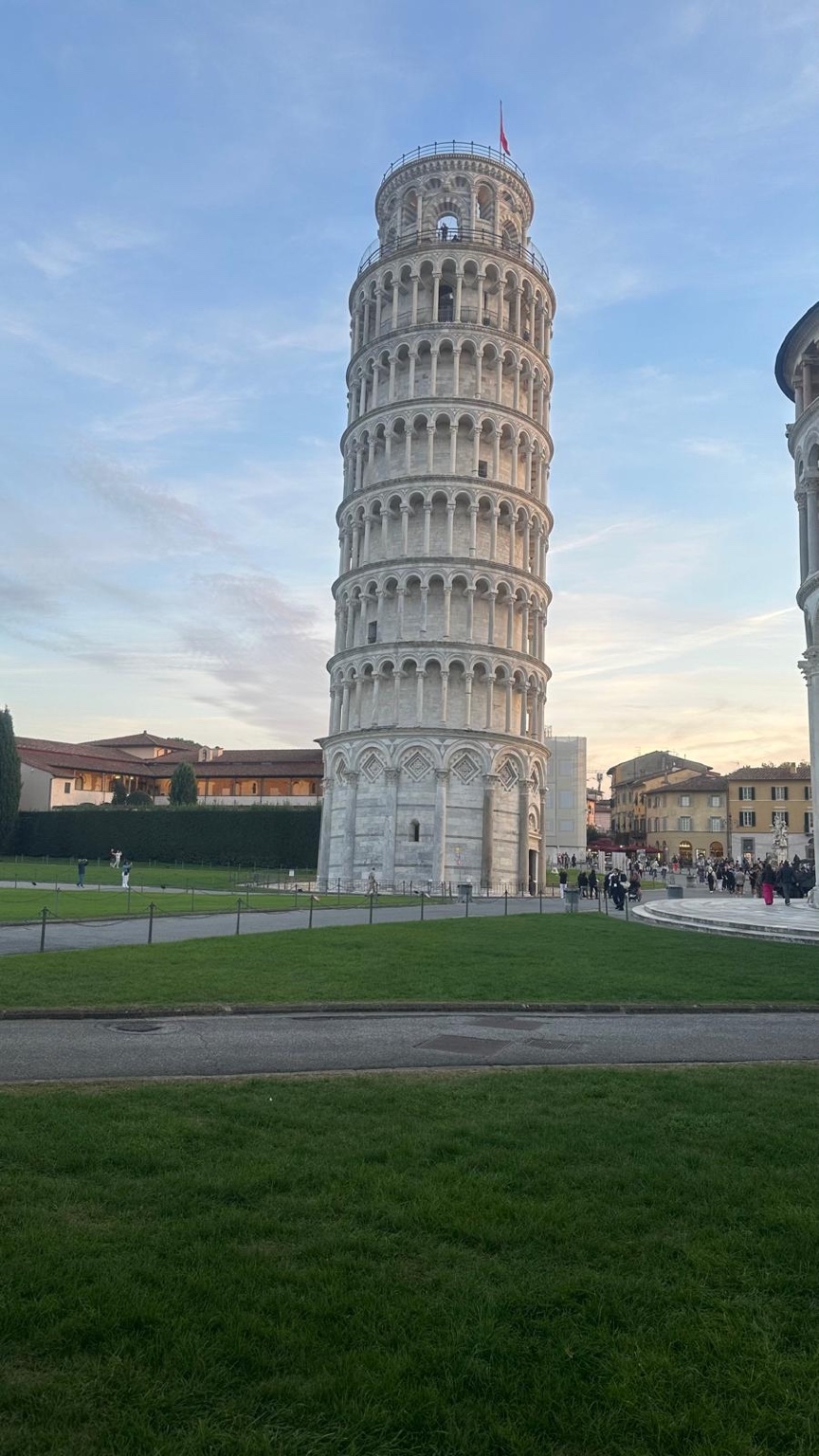
Photo by Dr. Adekunle Omotayo
There are few places in the world where imperfection becomes legend. The Leaning Tower of Pisa is one such place—a flaw transformed into fascination.
Rising from the Piazza dei Miracoli (Square of Miracles), this 12th-century bell tower began leaning before it was even finished. Soft ground and shifting foundations couldn’t support its weight—but rather than collapse, it bent gracefully, as though bowing to time.
Standing at its base, I was struck not by the novelty of its tilt—but by its tenacity. For over 800 years, the tower has endured wars, earthquakes, and countless camera poses, yet it remains, resilient and radiant in white marble.
Its beauty lies not in defiance, but in balance—literal and symbolic.
“We are all a little tilted. What matters is what we continue to hold up.”
“Every great work of art has two faces—one toward its own time and one toward the future.” — Daniel Barenboim
🕰
Dr. O’s Travel Tip:
Reserve tickets to climb the 294 steps well in advance. For perspective photos, arrive early morning or just before sunset to beat the crowds. And don’t skip the adjacent Cathedral and Baptistery—they’re miracles in their own right.
Stillness Between Stones – Old Fortress of Corfu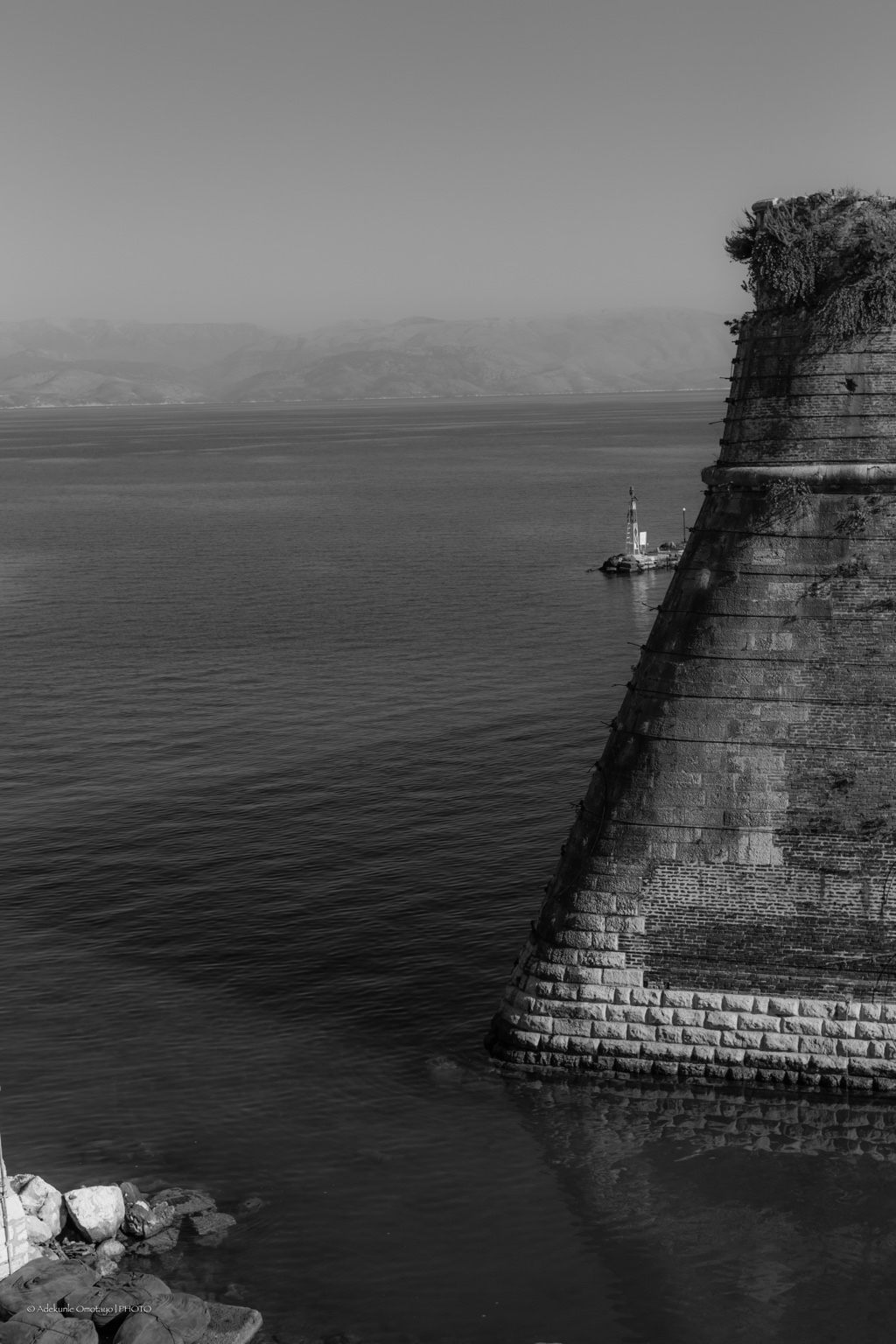
Photo by Dr. Adekunle Omotayo
Nestled on the sun-drenched hills of Corfu, the Old Fortress stands as a testament to centuries of history, where the echoes of past battles and the whispers of ancient stories linger in the air. This majestic structure, surrounded by the crystalline waters of the Ionian Sea, invites visitors to explore its intricate stonework and breathtaking views. As one ventures through its ancient pathways, the stillness between the stones evokes a profound sense of tranquility, allowing for moments of reflection amid the rich tapestry of cultural heritage that defines this remarkable site. The fortress, with its commanding presence, serves not only as a reminder of the island’s turbulent history but also as a serene escape from the modern world, with each corner revealing new vistas and hidden treasures waiting to be discovered.
Sometimes, the absence of color brings a place to life more vividly. This image of the Old Fortress of Corfu, captured in black and white, felt less like a photo and more like a memory whispered back to me.
Standing on this weathered rampart, I looked across the Ionian Sea toward the misted mountains of Albania. Between us was not distance—but time. This fortress, built by the Venetians and scarred by sieges, earthquakes, and empire, has guarded Corfu’s eastern flank for centuries. It did not ask to be beautiful. It asked to endure.
And it has.
“Monochrome reveals what the eye forgets: form, contrast, and quiet conviction.”
“Time engraves as deeply as war.” — Inscription (Anonymous)
⸻
🏰 Dr. O’s Travel Tip:
Visit during early morning or late dusk for the most dramatic light over the stone. Wander through the fortress’s tunnels and bastions before making your way to the lighthouse at the eastern tip—where you’ll feel like you’re at the edge of two worlds.
A Bridge of Gold – Florence’s Ponte Vecchio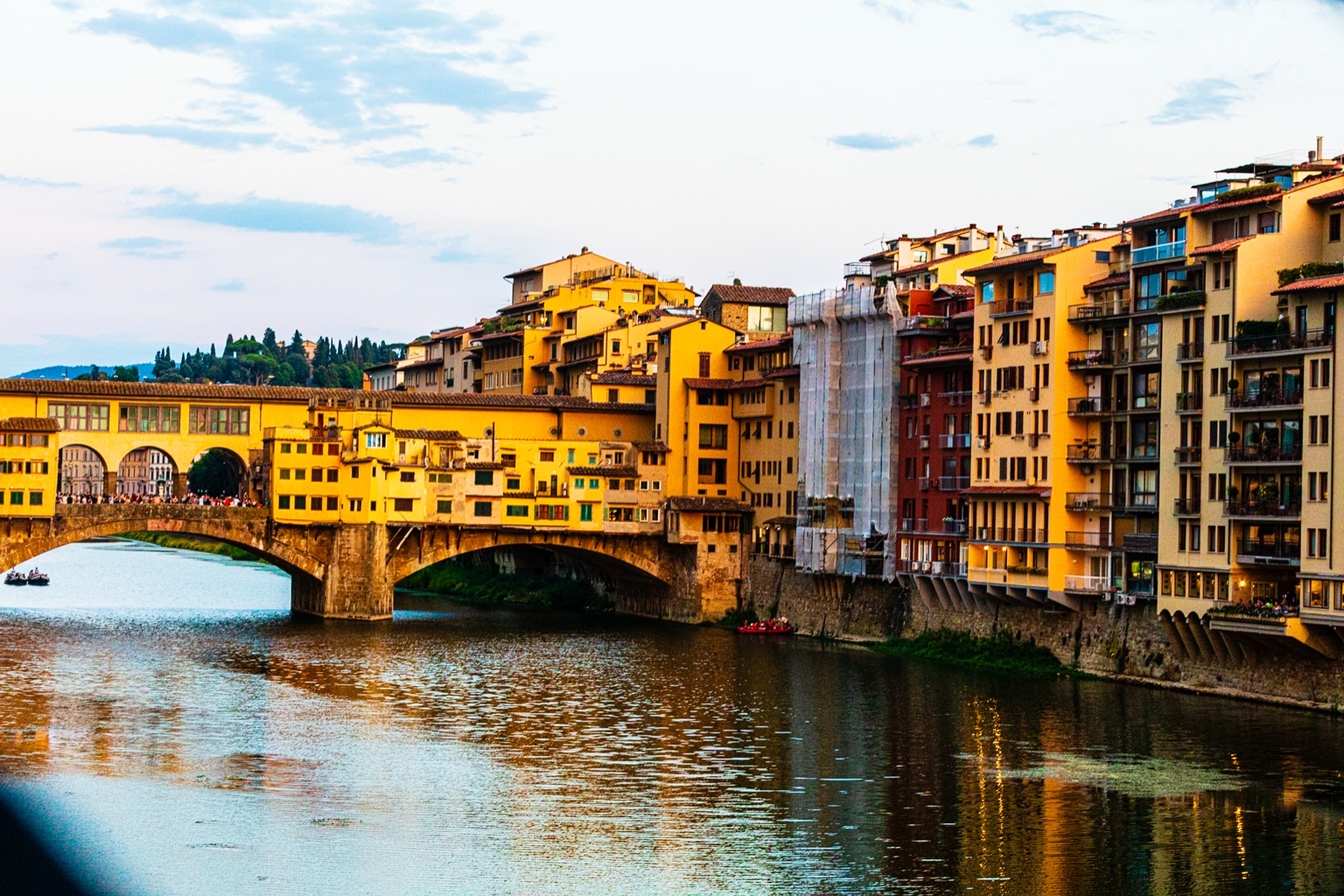
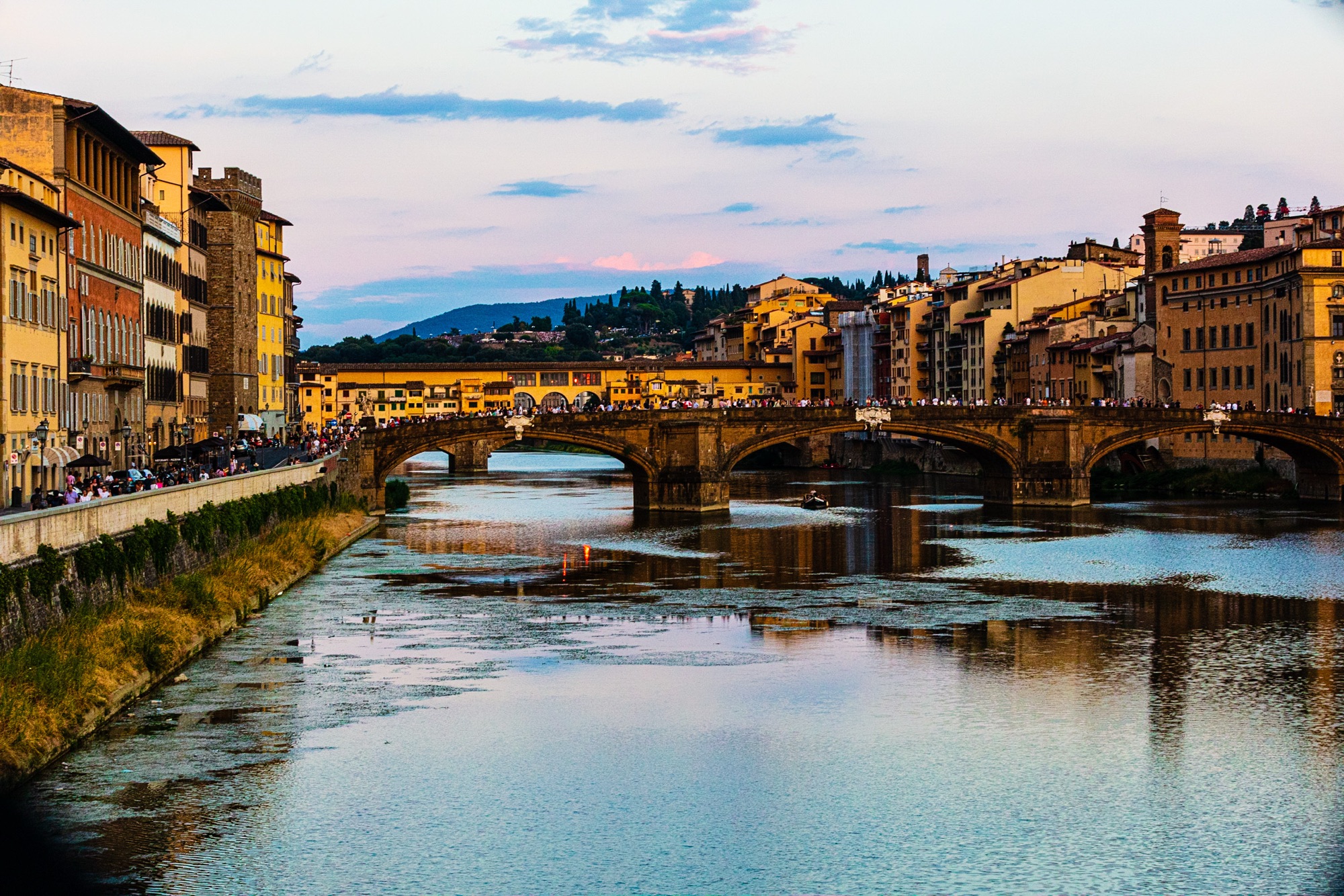
Photo by Dr. Adekunle Omotayo. The Ponte Vecchio, an iconic landmark of Florence, is not merely a bridge; it stands as a testament to the city’s rich history and architectural prowess. Built in the 14th century, it is famous for its charming shops and vibrant atmosphere, where artisans sell their handcrafted jewelry and unique souvenirs. As you stroll along the bridge, the views of the Arno River create a picturesque backdrop, melding history with scenic beauty. The bridge’s resilience during times of war reflects not only its architectural strength but also the spirit of the Florentine people who cherish this symbol of unity and balance. Each stone tells a story, from the Medici family’s secret passageway to the vibrant markets that still buzz with life today.
As the Arno catches the last fire of the Florentine sun, the Ponte Vecchio glows not merely with light, but with legend.
Built in the 14th century and remarkably spared during World War II, this “Old Bridge” is lined not with flags or lamp posts, but with tiny shops—many still occupied by goldsmiths, jewelers, and artisans, just as they were in the time of the Medici.
Above the shop roofs runs the Vasari Corridor, an elevated passage once used by dukes to cross unseen between the Uffizi Gallery and Palazzo Pitti. Below it, the river flows quietly, reflecting the architecture and spirit of a city that gave the world Michelangelo, Brunelleschi, and da Vinci.
Standing here, I was reminded that some bridges are not simply connectors—they are expressions of a civilization’s soul.
“The Ponte Vecchio is not just a bridge—it is Florence whispering across centuries.”
“Beauty awakens the soul to act.” — Dante Alighieri
🎨
Dr. O’s Travel Tip:
View the Ponte Vecchio at sunset from Ponte Santa Trinita—the curves, colors, and reflections make for an unforgettable photograph. Step inside a goldsmith’s shop, and you may find not just jewelry, but history cast in metal.
The Dome That Dared the Heavens: An Afternoon at Florence’s Duomo
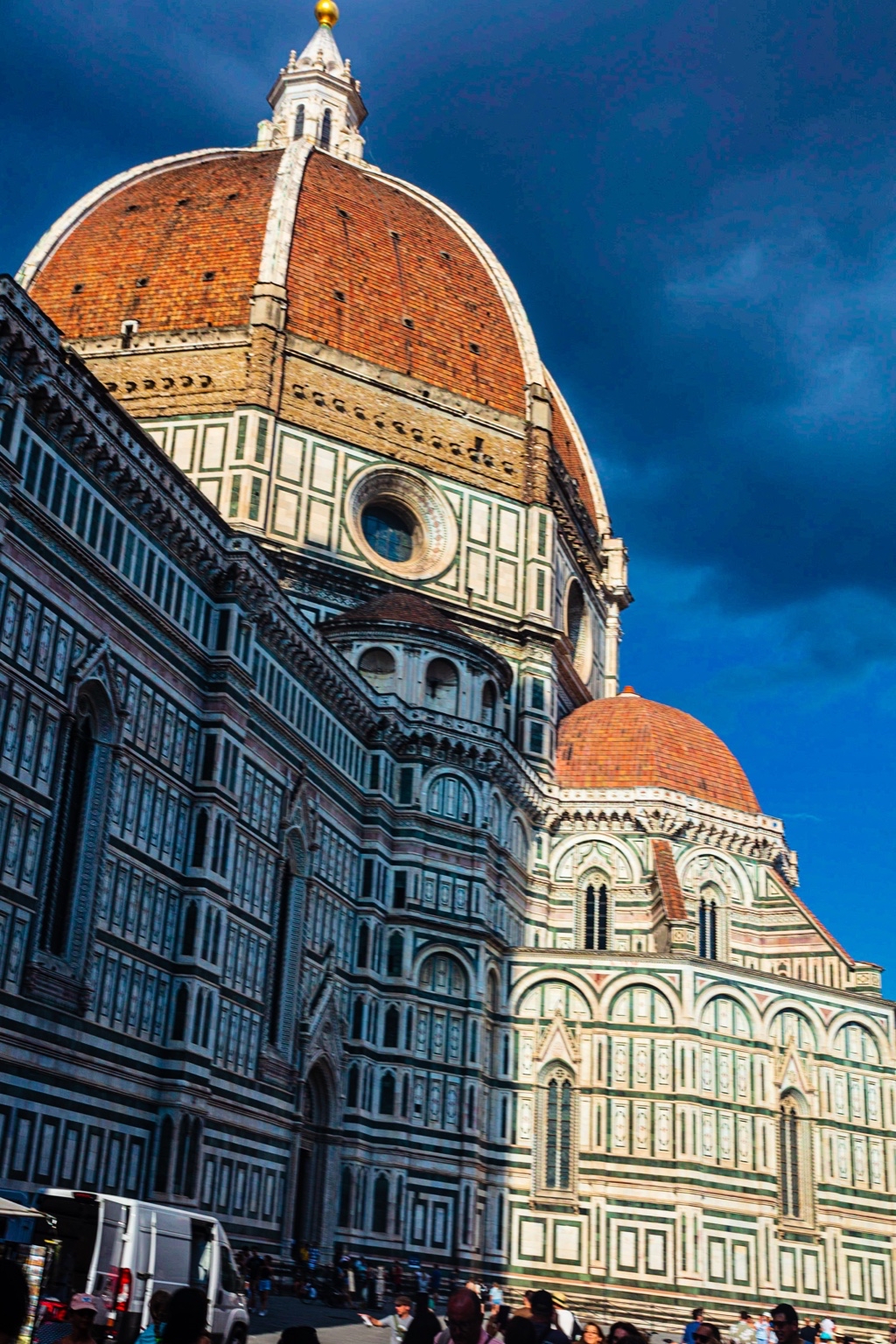
Florence doesn’t so much whisper its Renaissance heritage—it declares it from every marble panel, intricate fresco, and shadowed dome. The air itself seems imbued with the spirit of art and innovation, echoing the footsteps of master artists and thinkers who once roamed these streets. And nowhere is that declaration louder, clearer, or more breathtaking than at Santa Maria del Fiore, the Duomo of Florence. The cathedral’s stunning facade, adorned with vibrant colors and elaborate sculptures, beckons visitors from afar, inviting them to explore the rich history woven into its very fabric. Inside, the vastness of the nave and the grandeur of the dome leave one in awe, as sunlight streams through stained glass windows, casting a kaleidoscope of colors over the serene worshippers below. This masterpiece stands as a testament not only to Florentine artistry but to the enduring legacy of the Renaissance itself, as it continues to inspire and captivate the hearts of all who come to witness its splendor.
From the moment I stepped into Piazza del Duomo, the sheer scale and detail of the cathedral struck me dumb. Polychrome marble in green, white, and pink glowed under the late Tuscan sun. Every line, every arch, every façade carved with the confidence of a civilization reborn.
And then—the Dome.
Brunelleschi’s miracle. A feat not only of engineering but of imagination. No scaffolding. No precedent. Just a Florentine goldsmith turned architect daring to outdo the Pantheon. At the time of its construction, it was the largest dome in the world. It still reigns over Florence’s skyline, both structurally and spiritually.
This wasn’t just a building. It was a statement of faith—not just in God, but in man’s capacity to understand creation through geometry, art, and reason.
As I gazed up, the clouds behind it shifted, dark and heavy, lending drama to an already theatrical silhouette. That contrast of light and shadow seemed to mirror the Renaissance spirit itself—a rebirth out of medieval darkness, a city daring the heavens with mortar, marble, and mind.
I stood beneath that dome, and I didn’t just see Florence—I saw the awakening of the modern world.
📌 Reflections to Take With You:
Brunelleschi didn’t just solve a problem; he invented a possibility.
The Renaissance was not a return to the past—it was a bold reinterpretation of it.
Florence reminds us that faith and reason, far from being opposites, can elevate each other.
In the Cave of Revelation – Patmos, Greece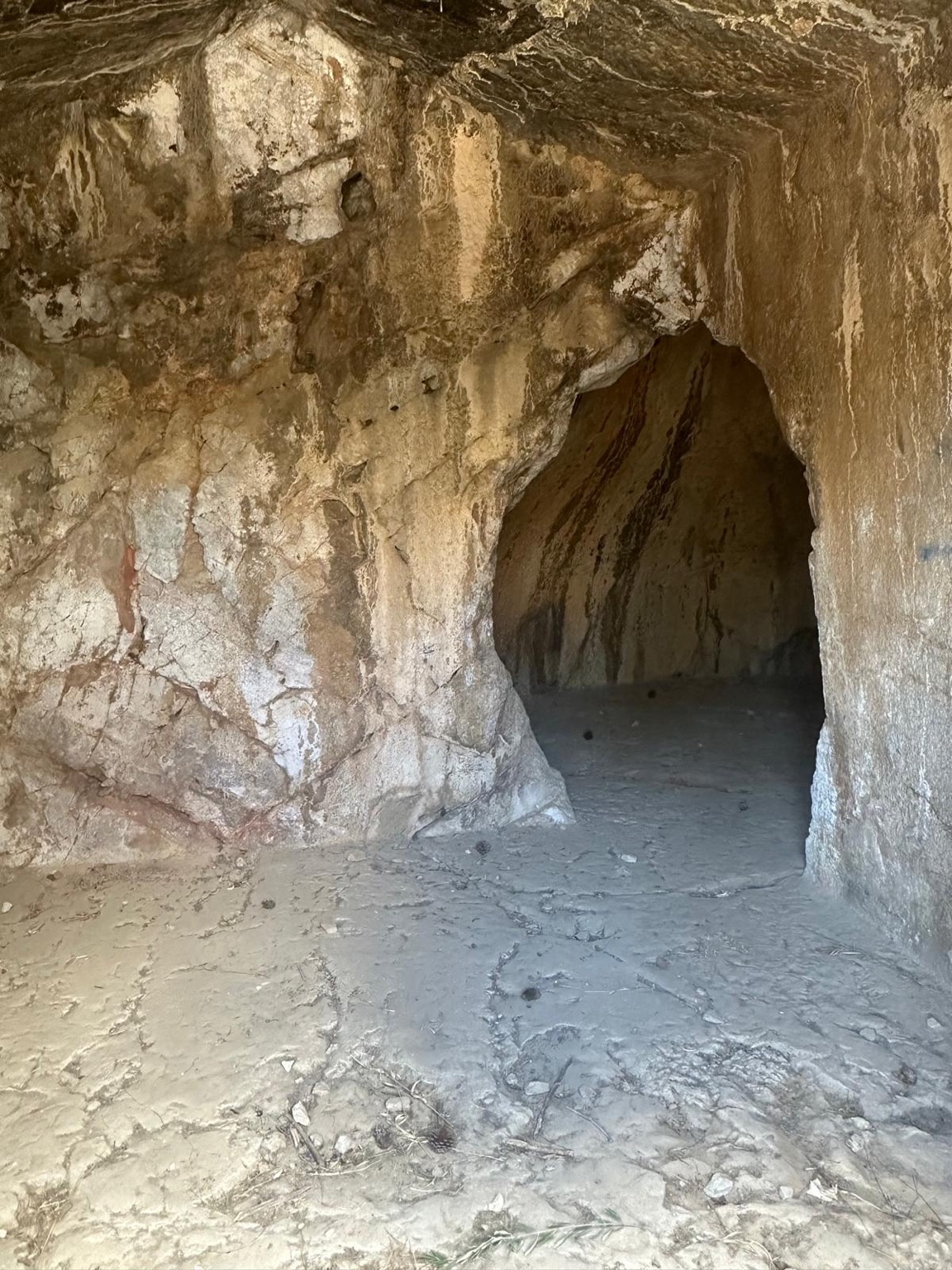
Photo by Dr. Adekunle Omotayo
Nestled on the serene island of Patmos, Greece, the Cave of Revelation is a sacred site that holds deep spiritual significance for many. It is here that St. John is believed to have received the divine visions that would eventually form the Book of Revelation, the final book of the Christian Bible. The cave itself is a stark yet profound testament to the power of faith and the mysteries of divine communication. Visitors to the site often find themselves enveloped in an atmosphere of tranquility and contemplation, as the echoes of ancient prayers seem to linger in the air. The rugged stone walls and dimly lit chambers invite one to reflect on the profound messages of hope and endurance found within the scripture. Surrounded by the natural beauty of the island, the cave serves not only as a historical landmark but also as a spiritual retreat for pilgrims seeking to connect with the profound legacy of religious history.
Not all monuments are built. Some are found—quietly, humbly, and enduringly. This cave, nestled on the sun-drenched island of Patmos, is one such place. It is where tradition holds that John the Theologian received his visions of the Apocalypse, transcribing what would become the final book of the New Testament.
As I stepped inside, the world grew dim, and something eternal seemed to press gently against the walls. The markings of time, the scent of stone, the hush—this was not merely a space; it was a threshold between realms.
What began as exile became epiphany. What seemed like isolation gave way to revelation.
“Some visions are born not in light, but in the depth of silence.”
“I was in the Spirit on the Lord’s Day…” — Revelation 1:10
⸻
✨ Dr. O’s Travel Tip:
Wear shoes with good grip, as the steps into the cave are polished smooth by centuries of pilgrims. Pause at the outer threshold before entering—breathe deeply. This is a place not just of history, but of stillness.
Sacred Spaces – A Sub-Series of Continental Journey
By Dr. Adekunle Omotayo
Some places are not simply visited—they are felt.
Sacred Spaces is a curated reflection on the spiritual geographies that shaped humanity’s inner life. From the cave on Patmos to the marble domes of the Vatican, these entries explore places where silence speaks, and mystery lingers. This is not a pilgrimage of doctrine, but of presence—a search for stillness amid the stories.
“Travel far enough, and you meet not just the world—but your own soul again.”
Light on the Caldera – Santorini, Greece

Photo by Dr. Adekunle Omotayo
High above the sapphire curve of the Aegean Sea, the domes of Oia shimmer under the afternoon sun. The air here feels lighter, almost holy, and the silence—though often shared with others—remains deeply personal.
These whitewashed chapels with their iconic blue domes and simple crosses are more than symbols of Cycladic architecture. They are beacons of balance—between the divine and the earthly, between presence and eternity.
The sun, unfiltered and sovereign, pours over the caldera like a silent blessing. The shadows cast by the domes fall soft and forgiving. And in this sacred geometry—of light, sea, and stone—you begin to feel what it means to dwell in grace.
“The light shines in the darkness, and the darkness has not overcome it.” — John 1:5
“God is often found not in the thunder, but in the quiet clarity of light.”
🏛
Dr. O’s Pilgrim Note:
You don’t have to go inside a church to feel reverence in Santorini. Sit still near a dome. Watch the sun. Let the light become your liturgy.
Pillars of Glory – St. Peter’s Basilica, Vatican City
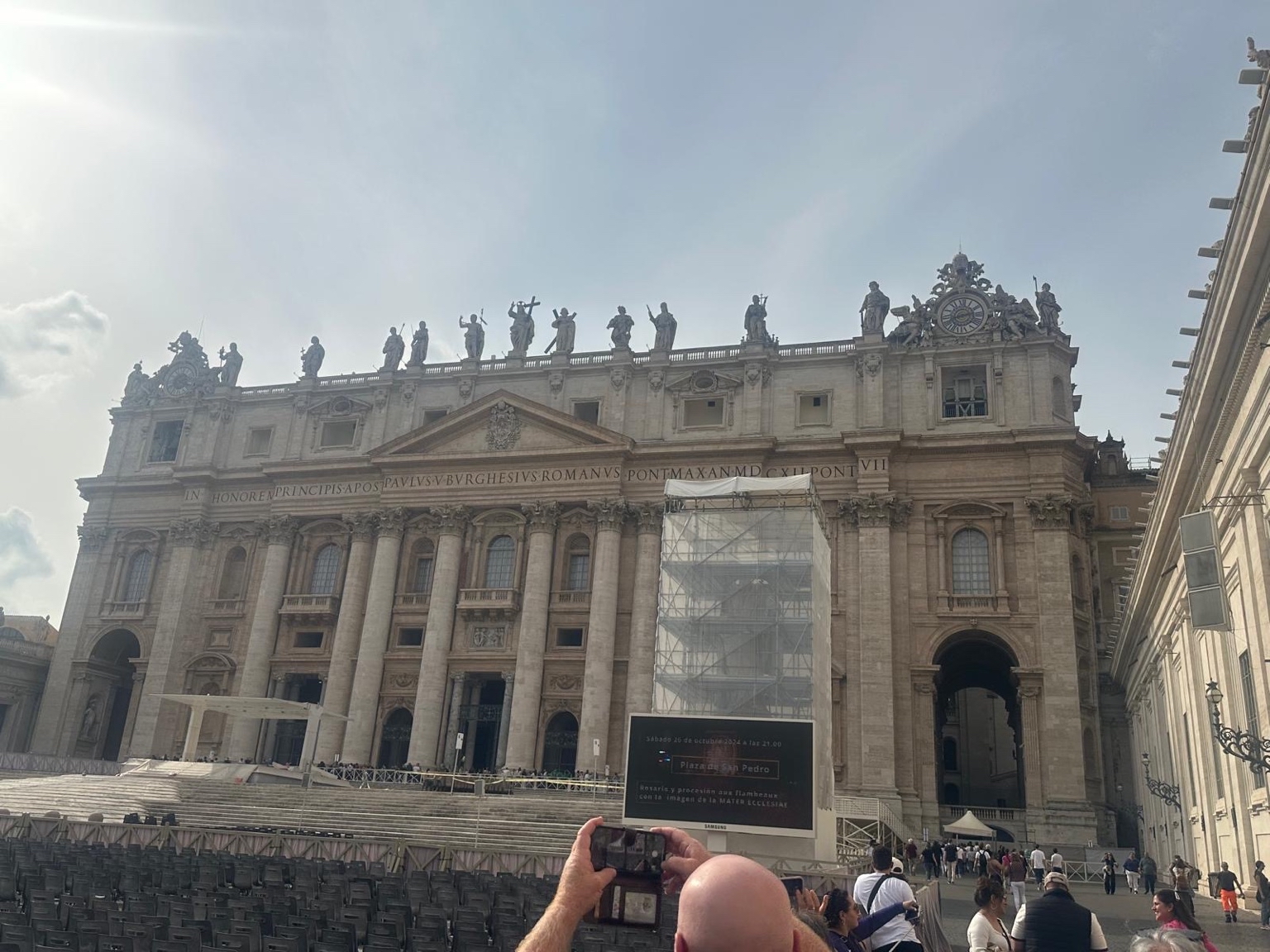
Photo by Dr. Adekunle Omotayo, a talented photographer known for his stunning landscape and portrait work, captures the essence of beauty in each frame. His keen eye for detail and ability to convey emotion through his images has earned him a dedicated following. Whether he is photographing the vibrant colors of nature or the intricate expressions of his subjects, Dr. Omotayo’s work invites viewers to see the world from a fresh perspective.
To stand before St. Peter’s Basilica is to confront the awe that lives in scale—the scale of stone, of tradition, and of human longing for the eternal.
As I stood in St. Peter’s Square, the colonnades felt like arms reaching to gather the world. Above me, statues of apostles and saints stood vigil over centuries of worship, war, renewal, and peace. I imagined the hands that laid each marble block, the prayers that echoed beneath its dome, and the millions who made this pilgrimage before me—not as tourists, but as seekers.
Inside, the silence swells rather than retreats. Light filters through cupolas like grace made visible. Here, beauty is not ornament—it is devotion made manifest.
“Upon this rock I will build my church.” — Matthew 16:18
“Sacredness is not always in the silence. Sometimes it resounds in the stone itself.” — Dr. Adekunle Omotayo
✨
Dr. O’s Pilgrim Note:
Arrive early before the square fills. Let yourself be still. Look up—not just with your eyes, but with your soul.
Where the Gods Whispered – Delphi, Greece

Photo by Dr. Adekunle Omotayo
Among the pines and olive groves of Mount Parnassus, the ruins of Delphi still breathe with an otherworldly quiet. This was once the center of the world—marked by the omphalos stone—and the place where the Oracle of Apollo spoke cryptic truths in a trance of sacred smoke.
The Temple of Apollo, though now a skeleton of columns and fractured stone, stands with dignity. I could almost hear the rustle of robes, the hum of questions carried on mountain wind, the stillness before a prophecy.
Unlike the clarity of scripture or the grandeur of cathedrals, Delphi is about listening into the silence, leaning into uncertainty, and honoring the sacred as mystery—not mastery.
“Man, know thyself, and thou shalt know the gods.” — Inscribed at the Temple of Apollo
“Revelation isn’t always a roar. Sometimes it arrives as a riddle.”
🏛
Dr. O’s Pilgrim Note:
Walk the Sacred Way slowly. Pause at the theater. Gaze across the valley. Ask your own question. The answer may not come as words—but something in you will shift.
Marble and Miracle – Cathedral of Pisa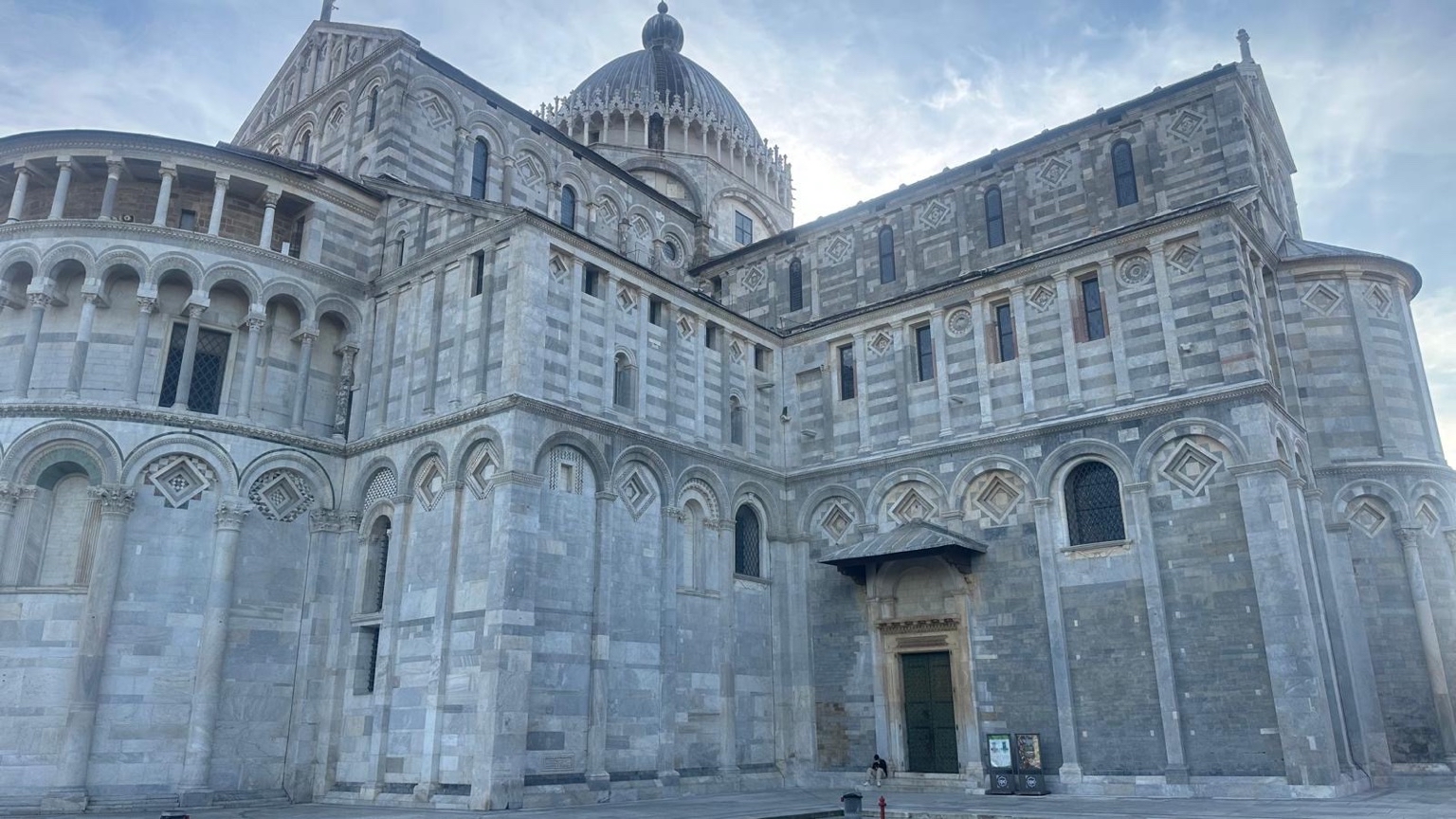
Photo by Dr. Adekunle Omotayo. The magnificent Cathedral of Pisa stands as a testament to architectural brilliance and artistic mastery, attracting visitors from around the globe. Its stunning façade, adorned with intricately carved marble and vibrant mosaics, reflects the historical significance and cultural richness of the region. As one steps inside, the breathtaking interior reveals a harmonious blend of grandeur and spirituality, with soaring arches that invite the gaze upward, inspiring awe and contemplation. This remarkable structure not only serves as a place of worship but also as a vital part of Pisa’s identity, deeply intertwined with the city’s storied past and vibrant present, making it a must-visit landmark for anyone exploring Italy.
Though the Leaning Tower may steal the spotlight, it is this cathedral—the Duomo of Pisa—that anchors the spiritual heart of the Piazza dei Miracoli.
Built in the 11th century, its design is a blend of East and West, Rome and Byzantium, ambition and devotion. Its striped marble façade, soaring arches, and richly adorned apse were meant not merely to impress, but to proclaim: God is here.
Walking its cool stone interior, the echo of footsteps sounds like prayer. Light spills in softly through ancient windows. And even among the hum of cameras outside, something deeply sacred lingers inside—proof that beauty, when offered humbly, becomes worship.
“The heavens declare the glory of God; the skies proclaim the work of his hands.” — Psalm 19:1
“Sacred architecture is theology in stone. Pisa’s Duomo whispers faith through symmetry.” —
⛪
Dr. O’s Pilgrim Note:
Visit just after sunrise. Before the crowds. Before the leaning. Stand still at the transept. Let the silence speak.
🌿 Sculpted Silence in the Heart of Prague
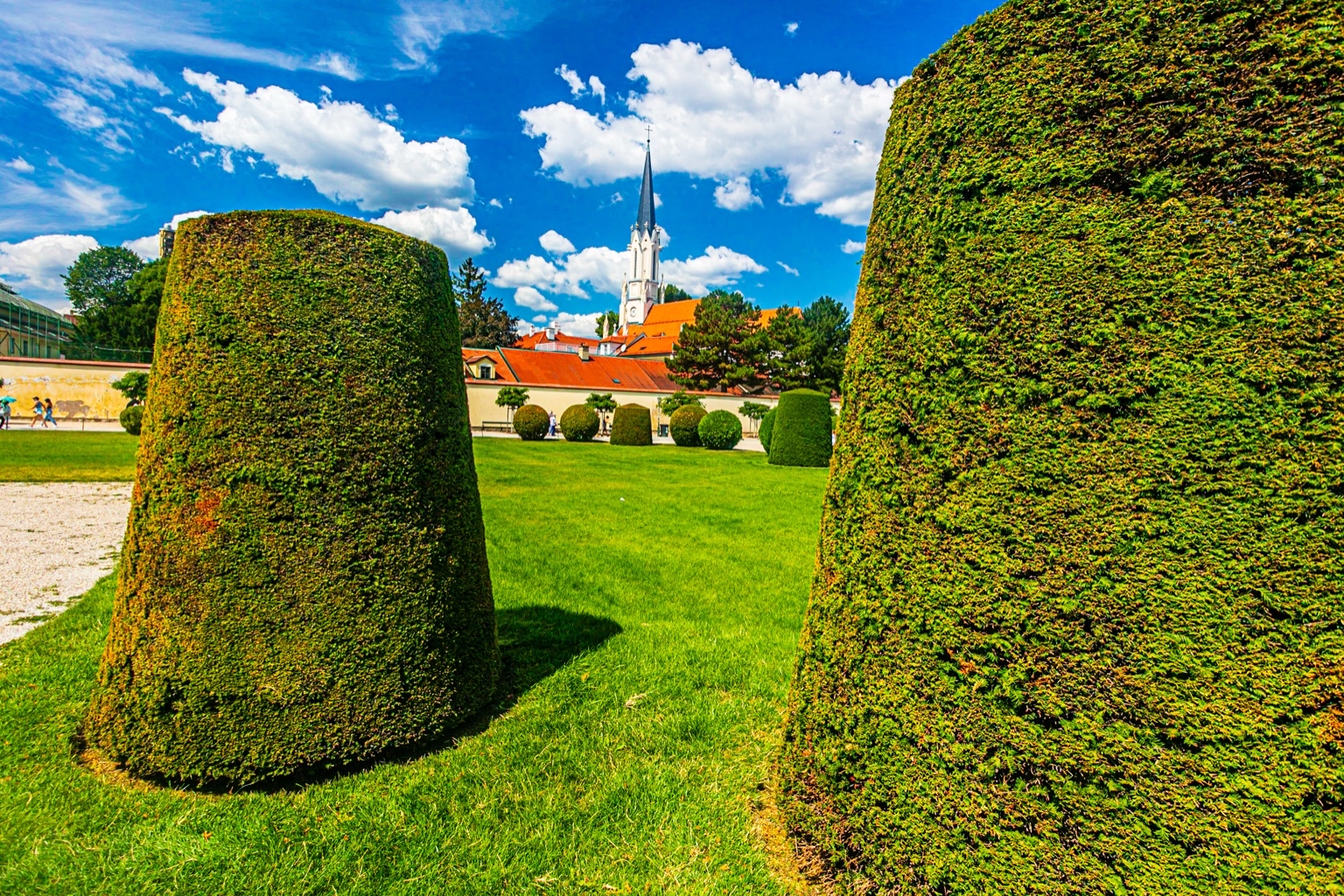
Just beneath the towering shadow of Prague Castle, hidden from the noise of modern life, lies a Baroque haven—the Wallenstein Garden. Trimmed hedges, sculpted greenery, and stillness so intentional it echoes create a serene escape for weary souls seeking refuge. Vibrant seasonal flowers burst forth, enhancing the intricate designs and colors that dance in harmony with the delicate statues that grace the pathways. As you wander through this meticulously maintained landscape, the soft murmurs of fountains blend with the whispers of the breeze, inviting you to pause and reflect amidst the beauty of the natural surroundings. A peaceful oasis, the garden serves as a reminder of the elegance of the past, where time appears to stand still, allowing visitors to immerse themselves fully in its enchanting embrace.
I wandered through these grounds under a sun-splashed sky. The clouds looked painted in oil, the clipped hedges like velvet cones dotting the lawn. Between them, a steeple peered up like a sentinel—part Gothic, part dream.
This space was more than garden—it was calm, composed philosophy. Every angle whispered discipline. Every line hummed symmetry. And yet, somehow, it all felt alive. Children’s laughter bounced from stone to shrub. A white peacock strutted like royalty reborn.
In the center of Europe—where so many empires rose and fell—this pocket of peace stands as a reminder: even in turbulent history, there is always room for stillness and grace.
📌 Reflections to Take With You:
In the silence of a garden, a continent’s soul often speaks loudest.
Nature and artifice don’t compete here—they complement.
The Baroque wasn’t just decoration; it was devotion.
Lednice: A Fairytale Unfolds in Moravi
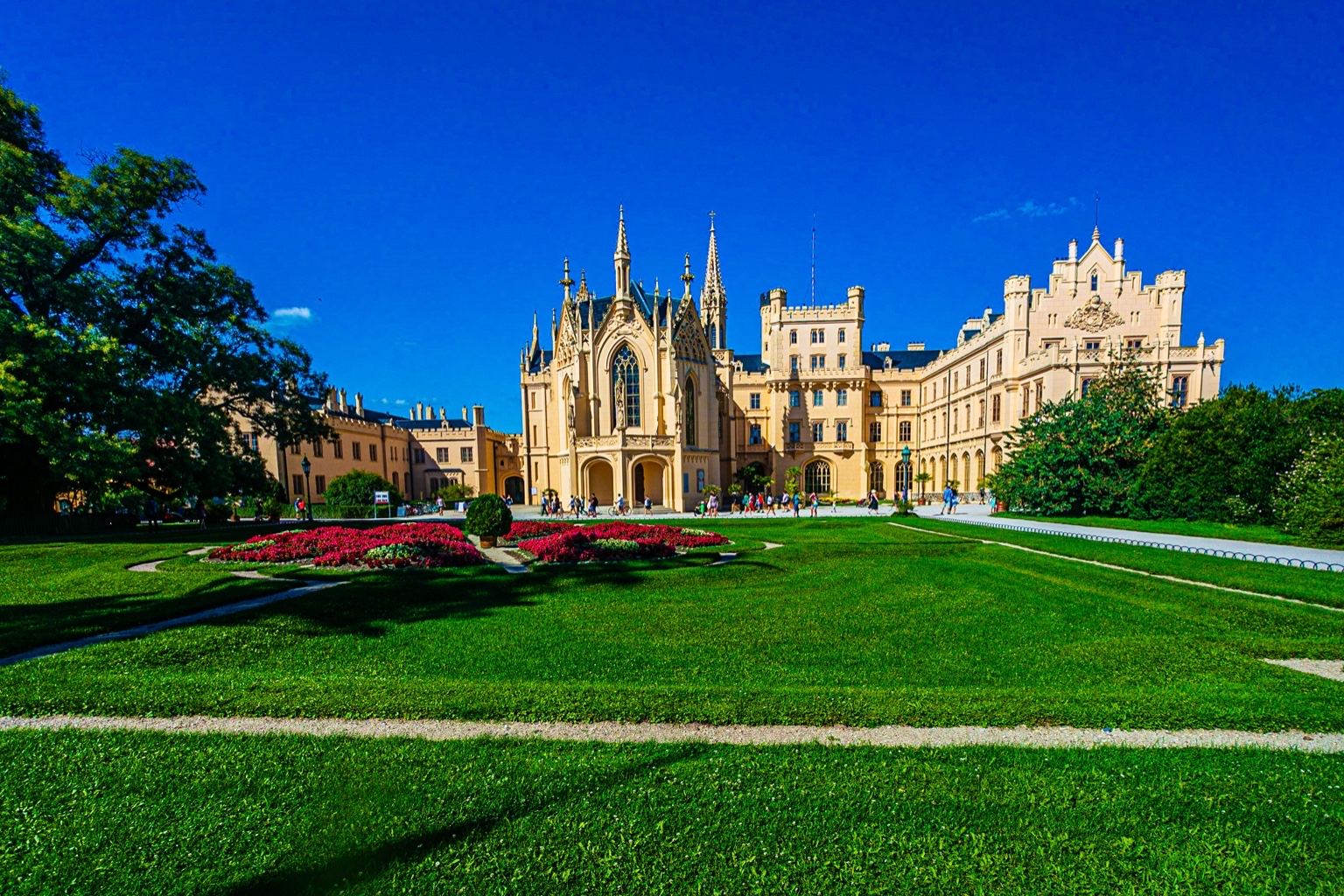
“Not all castles are built for war—some are crafted for wonder, serving as magnificent testaments to human creativity and imagination. These architectural marvels often stand as symbols of beauty and fascination, inspiring awe in those who visit them. While some fortresses are designed to protect and defend, others invite exploration and storytelling, transporting us to a world where dreams and reality intertwine. Each, with its intricate designs and historical significance, whispers tales of the past, beckoning us to discover the magic hidden within their walls.”
“There is a pleasure in the pathless woods, a rapture on the lonely shore… I love not man the less, but Nature more.”
— Lord Byron
The air smelled like roses and stories. I stepped into Lednice Castle through its symmetrically sculpted gardens, where paths crisscrossed like embroidered lace, guiding me toward a vision in sandstone.
This castle wasn’t just built—it was composed. A Romantic symphony in Neo-Gothic stone. It whispered not of battles, but of beauty. Once the summer residence of the Liechtenstein family, Lednice now feels like a dreamscape conjured by a poet-architect.
Behind its delicate turrets and arched windows lies a profound statement: Power doesn’t always roar—it sometimes blossoms.
As I walked the sun-drenched grounds, I understood: This wasn’t just a castle; it was a love letter to nature, art, and imagination.
 Simply O