Today was supposed to be a rest day.
After more than twelve thousand steps yesterday, my feet had lodged a fairly convincing protest, and I had every intention of listening to them. No ambitious itinerary. No long walking tour. No attempt to conquer another corner of Istanbul.
Istanbul, apparently, had other plans.
By late afternoon, the pull of the city became difficult to resist, and before long we were wandering again—not really touring, not following an itinerary, simply walking and seeing where the streets took us.
Perhaps that is when a city begins to reveal itself differently. You stop looking only for the things you came to see and begin noticing the things that are simply there.
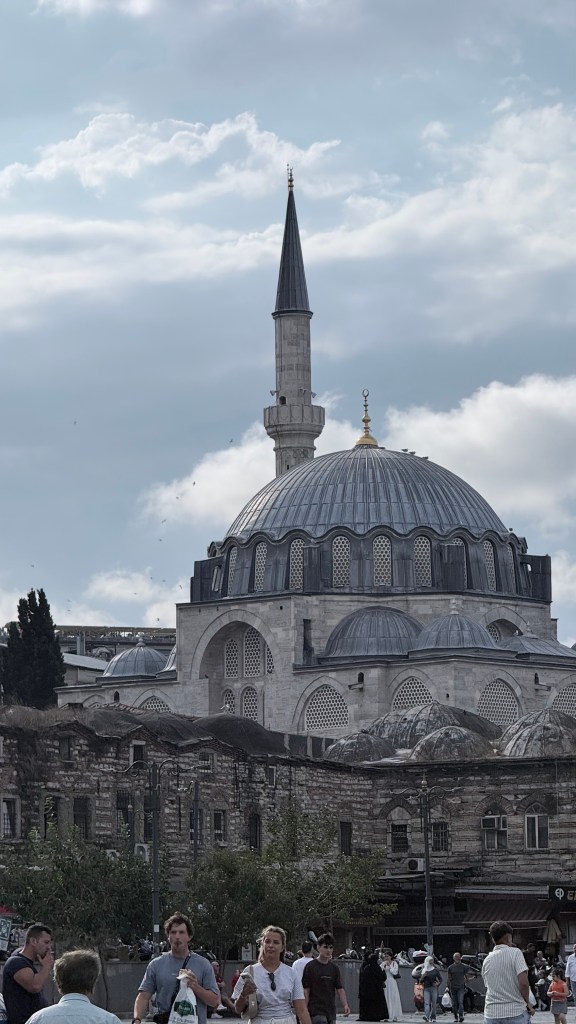
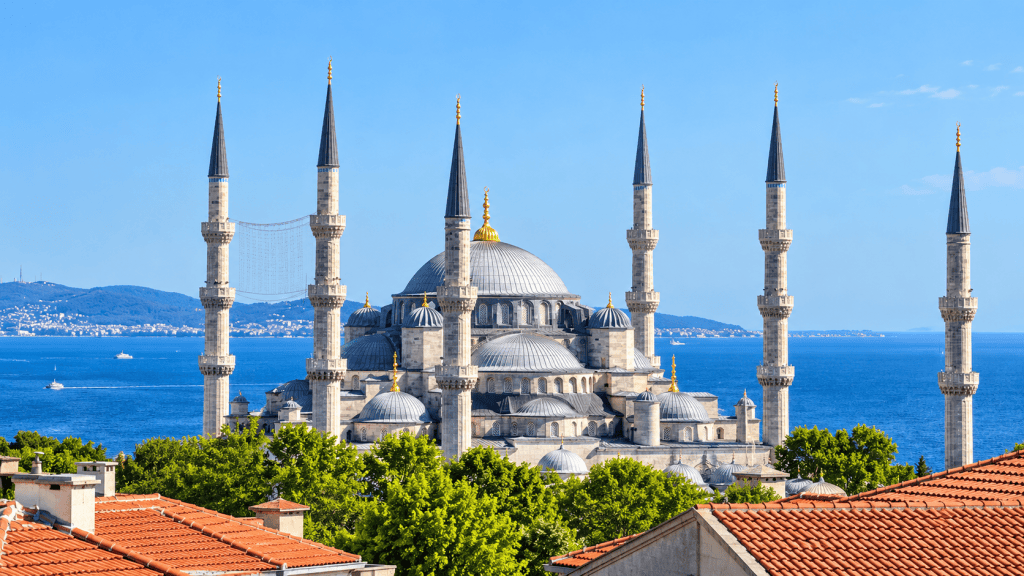
The Galata Tower appeared above the rooftops. Ferries moved constantly across the water. Mosques rose from the hills on the opposite shore. People crowded the bridge. Gulls circled overhead. Fishermen stood along the railings, seemingly indifferent to the millions of people moving around them.
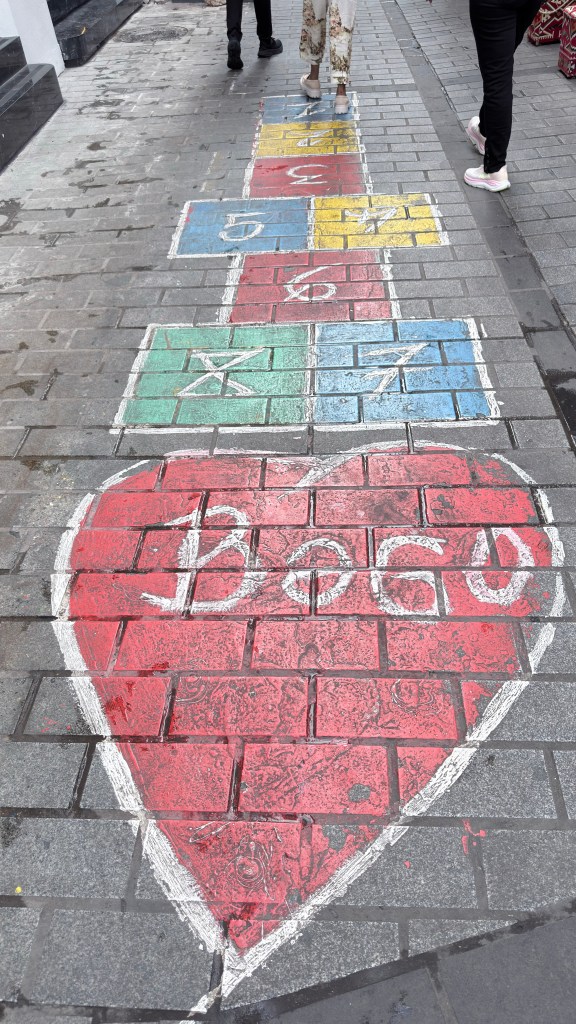
And somewhere amid all this history, someone had drawn a hopscotch court on the pavement.
I loved that.
Empires come and go. Children still play.
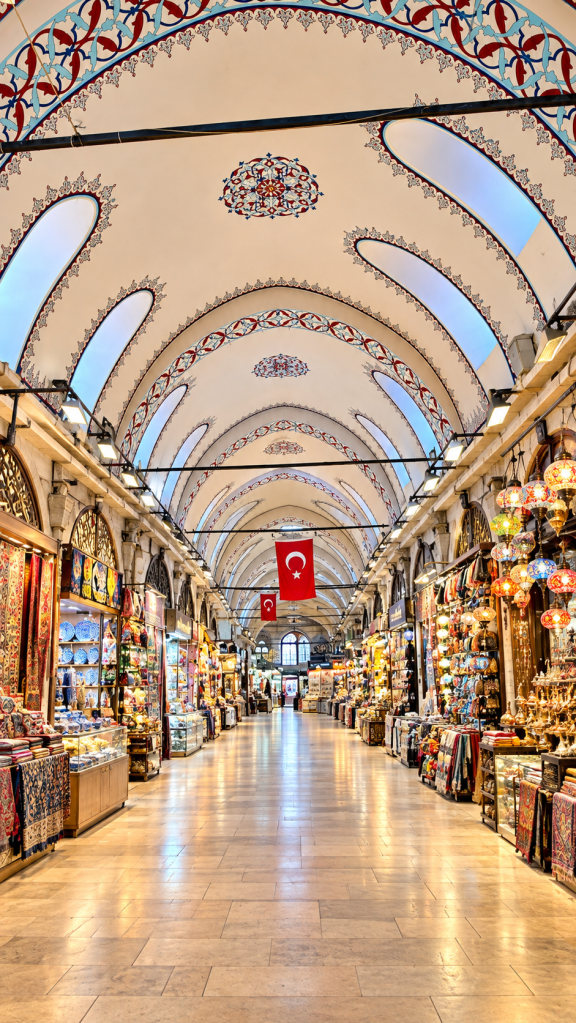
Eventually our supposedly aimless wandering brought us to the Spice Bazaar. Construction began at the end of the sixteenth century and the bazaar was completed in the seventeenth, but what interested me was not simply its age. It was how alive it remains.
The vaulted ceilings and Ottoman decoration remind you that you are walking through history, but underneath them people are still doing essentially what people came there to do centuries ago: buying, selling, bargaining, talking, tasting and moving on. Spices overflow from stalls. Turkish delight competes for attention with teas and sweets. Shopkeepers call out to passing customers. Tourists stop to photograph everything.
It is not history preserved behind a rope.
It is history still earning a living.
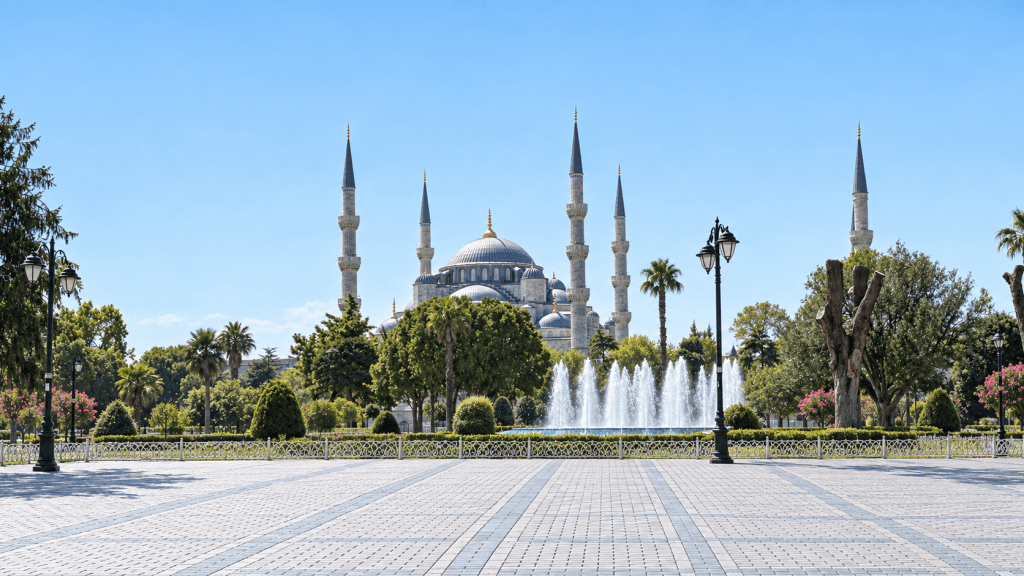
That may be what I noticed most today. Yesterday Istanbul confronted me with its great monuments and the complicated histories of faith and empire. Today there was less need to interpret it. Istanbul was simply getting on with being Istanbul.
People ate. People shopped. Ferries crossed the water. Fishermen cast their lines. Children played. Somewhere someone was late for work. Somewhere else someone was sitting over tea with nowhere particularly urgent to be.
And people who had declared a rest day were somehow still wandering around the city.
By evening, however, I found the perfect compromise.
A dinner cruise.
My feet could finally remain stationary while Istanbul continued moving.
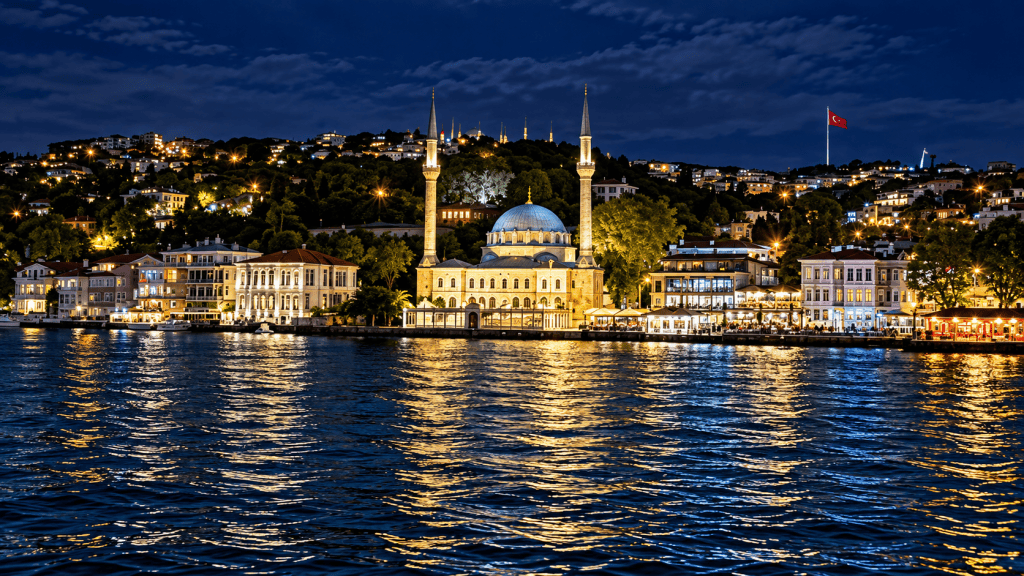
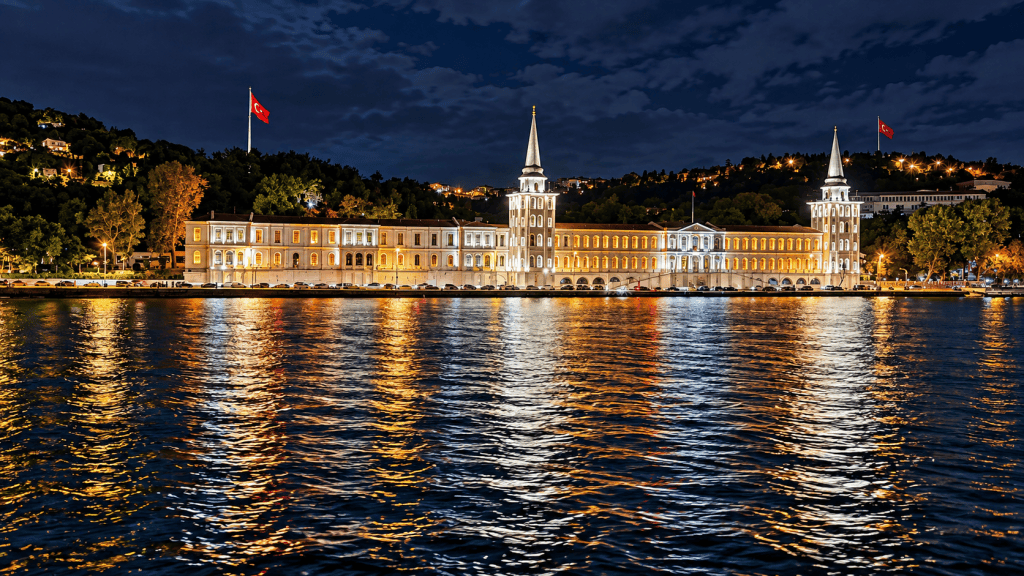
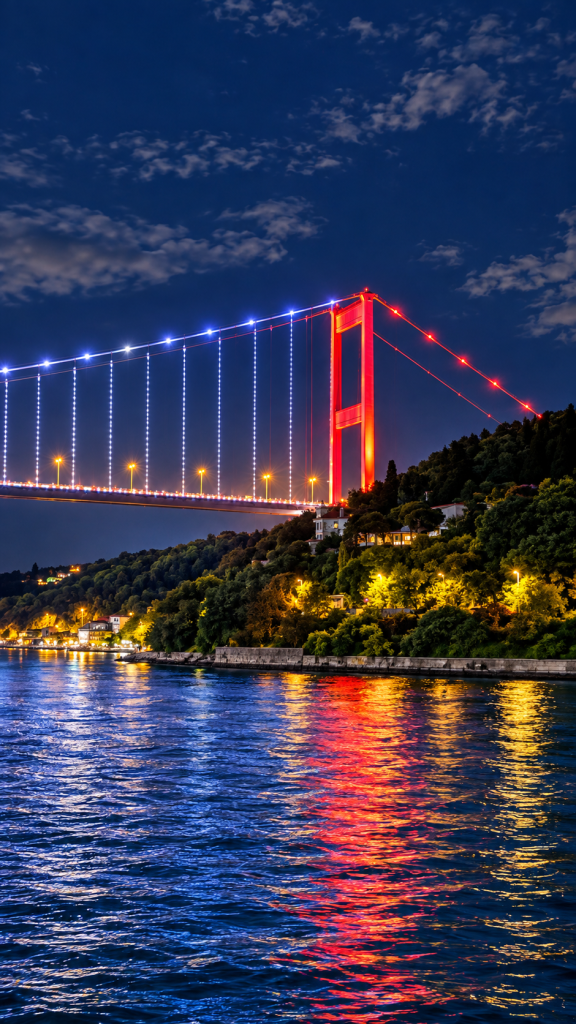
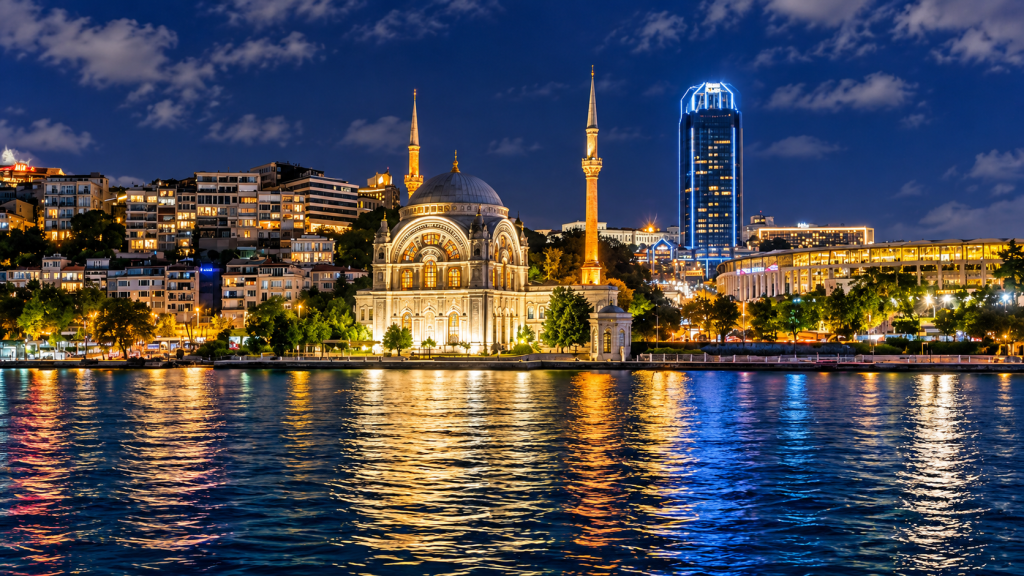
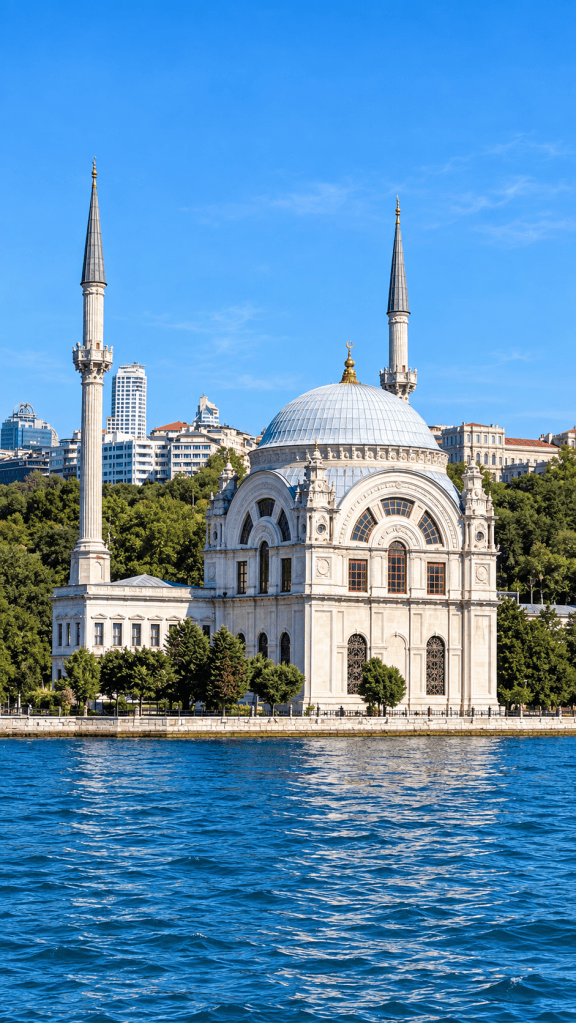
As daylight faded, we moved onto the Bosphorus and the city changed again. Buildings that had seemed crowded together from the streets separated into individual landmarks along the shoreline. Palaces glowed gold. Mosques emerged against the deepening blue. Fortresses stood illuminated among ordinary homes climbing the hillsides. Modern towers appeared behind buildings centuries older, each seemingly quite comfortable in the other’s company.
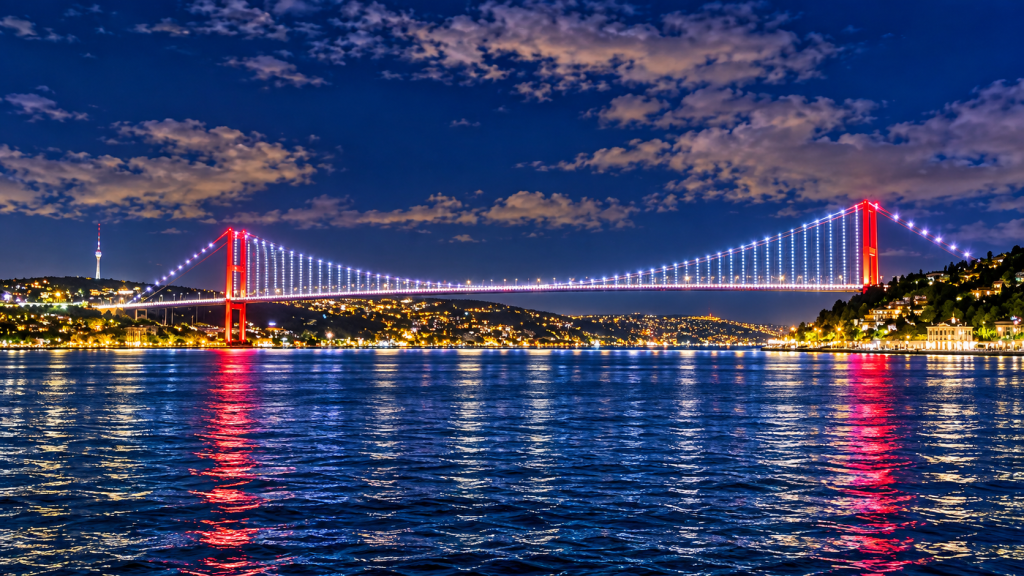
Then came the bridge.
Its red towers rose above the water, white lights tracing the suspension cables from one shore to the other. Beneath it, the Bosphorus refused to keep any of those colors to itself. Red, gold, white and blue broke apart across the moving surface and then disappeared behind us.
Perhaps that is why the city looks so different from the water. From the street you encounter Istanbul one building, one shop, one mosque, one crowd at a time. From the Bosphorus, you see them together.
The water becomes a moving gallery.
Ottoman palaces. Fortresses. Mosques. Waterfront mansions. Modern towers. Bridges. Hillsides crowded with ordinary homes.
Not arranged chronologically. Not separated into museum exhibits.
Just Istanbul.
Dinner was served while the city passed outside, followed by music and local Turkish dance. There was laughter and movement around the tables, and for a while the history lesson gave way to something equally important: people enjoying themselves.
I liked that too.
Cities cannot live entirely on their past.
By then I realized that our rest day had become something rather different from what I had imagined. We had left the hotel without much of a plan in late afternoon and ended up watching Istanbul glow from the Bosphorus while eating dinner and being entertained by Turkish dancers.
My feet, at least, had finally won their argument.
My camera had not rested at all.
Perhaps that is the lesson of a rest day in a city you are seeing for the first time. Rest does not necessarily mean doing nothing. Sometimes it simply means giving up the itinerary and allowing the day to decide what it wants to become.
We had gone out merely to stretch our legs.
Istanbul kept us until nightfall.
Simply O