I do not wish to romanticize a mother’s love. My mother’s love was a practical one, expressed less through grand declarations of affection than through the everyday business of raising children, providing for them, and praying over their lives.
It was always clear to me that she loved my late younger brother more than the rest of us. I have never had a problem with that. As I have grown older, I have come to believe that it is practically impossible to love two people in precisely the same way. We say that we do, but I have my doubts. I believe we can love two people equally, but not necessarily the same.
And I understood why my brother occupied such a special place in her heart. How could he not? He was among the kindest and most generous souls I have ever known. I loved him dearly myself. There was nothing in my mother’s affection for him that diminished my own place in her life, nor did I ever feel the need to compete for what she gave him so freely.
My mother is now of advanced age, and I find myself increasingly drawn to her. Perhaps it is the passage of time, or the growing awareness that the opportunities we have to be together are no longer limitless.
There is a certain irony in how much of her I have inherited. Diabetes, hypertension, and, more recently, glaucoma. Her ailments have become my ailments. But the inheritance goes beyond the physical.
My mother is a woman of strong opinions. So am I. We are both stubborn in our convictions, and perhaps that is why, to an outsider, we sometimes appear not to get along. But appearances can be deceiving. We understand each other remarkably well, perhaps better now than ever before.
As her memory begins to fade, I find myself recognizing more of her in me. The traits I inherited from her seem to grow more pronounced with age, as though time is slowly revealing just how much of who I am began with her.
My mother did the best she could for her children, and I am a full beneficiary of that love.
She fed us. She clothed us. She cared for us. And she prayed for us.
Those things may sound ordinary, but they are not small things. They are the substance of a mother’s devotion, the often-uncelebrated sacrifices upon which entire lives are built.
I do not take any of it for granted.
I believe her prayers have sustained me through more seasons of my life than I can count. They continue to sustain me, even now.
And perhaps that is what I have come to understand about my mother’s love. It did not always announce itself in ways the world might recognize. It did not need to. It was there in what she did, in what she endured, in what she gave, and in the prayers she offered for her children.
Perhaps it has taken the passage of years for me to appreciate fully the sacrifices my mother made and the depth of her devotion. As children, we see our parents largely through the lens of our own needs. We know what they give us, but seldom understand what it costs them to give it. Age has afforded me a different perspective. I now recognize the burdens she carried, the things she went without, and the quiet determination with which she raised her children. I see her not simply as my mother, but as a woman who had her own struggles, disappointments, hopes, and dreams, many of which she may have set aside for our sake. There is a tenderness in that realization, and perhaps a measure of regret that it has taken me so long to arrive at it. But above all, there is gratitude.
Now, as the years advance and her memory slowly retreats, I feel an increasing desire simply to be near her. Not to revisit old disagreements or settle any accounts, but to sit with her, to listen, and to be her son.
The same roads. The same traffic. The same school runs. The familiar turn toward work.
There were meetings waiting, patients and problems, decisions to be made, people expecting me to arrive. Even on the quieter days, the clock belonged partly to someone else.
And then, one day, it stopped.
At first, the absence of all that movement felt strange. I had spent so many years living by a schedule that freedom itself required some adjustment. There was nowhere I had to be. No meeting waiting for me. No problem that required my decision before noon.
Gradually, the strangeness became something else.
Peace.
I began to understand the luxury of being unhurried.
I could wake without immediately calculating the day ahead. I could sit a little longer over breakfast. Travel without wondering what was accumulating in my absence. Read because I wanted to read. Walk because there was nowhere else I needed to be.
For perhaps the first time in my adult life, my time was entirely my own.
That may be one of retirement’s greatest gifts.
Not leisure.
Ownership.
There is an extraordinary freedom in reaching a point where you no longer have to earn a living. I don’t take that for granted. I know what a blessing it is to have worked long enough, saved enough, and been fortunate enough to say: Enough.
Twenty-four years in one organization is a long season.
Long enough to arrive, grow, contribute, lead, make mistakes, solve problems, watch colleagues come and go, and eventually recognize that the work you came to do has been done.
Perhaps that is why I don’t miss medicine in the way people sometimes expect me to.
I don’t feel that something was taken from me.
I feel complete.
Medicine gave me an extraordinary life. It gave me purpose, responsibility, friendships, lessons, and the privilege of entering people’s lives when they were vulnerable and needed someone to help.
I am grateful for all of it.
But gratitude does not require continuation.
There comes a time when even meaningful work must be allowed to become memory.
My shift is over.
There is something wonderfully familiar about those words. For years, a shift ending meant handing responsibility to someone else and going home. You didn’t abandon the work. You simply understood that your part in it, for that day, was finished.
Perhaps retirement is the longest handoff of all.
Others will take the calls now. Others will sit in the meetings. Others will solve tomorrow’s problems.
And I can wish them well without wishing to return.
Because there is a season for everything under the sky.
There was a season to study.
A season to become a physician.
A season to build a career.
A season to raise children while somehow fitting family life around call schedules, school runs, meetings and deadlines.
A season to lead.
A season to provide.
And now there is another season.
A season to wake without rushing.
To travel slowly.
To write.
To photograph.
To sit beside the person I have spent a lifetime rushing alongside and discover what life feels like when neither of us has somewhere else we are supposed to be.
For so many years, time was the thing I never seemed to have enough of.
Now I understand that perhaps the greatest dividend of all those years of work was not simply financial security.
It was time returned to me.
I don’t know how many years of it I have.
None of us does.
Which makes me reluctant to fill this season with obligations merely because I have spent a lifetime accustomed to having them.
I have nothing left to prove to medicine.
And medicine owes me nothing.
We had our season together.
It was long.
It was meaningful.
It was enough.
Now, when morning comes, there is no familiar commute waiting for me. No traffic I must beat. No meeting beginning without me.
Sometimes I still notice the hour and think about where I would once have been.
Then I remember.
My shift is over.
And somewhere between the silence of the morning and the realization that the day ahead belongs entirely to me, I feel something I once spent years rushing past.
Perhaps it was because I had never really thought much about yellow.
Like many people, I have always been drawn to deeper, more commanding colors. Blue has dignity. Red demands attention. Purple carries the ancient associations of royalty, wealth, and power.
Yellow seemed almost ordinary by comparison.
And yet, standing there one day, surrounded by it, I began to wonder whether yellow might be one of the most important colors in our lives.
The sun that rises each morning.
The warm light that enters our homes.
The headlights that guide us through darkness.
The wheat fields that feed nations.
Bananas, lemons, mangoes, and fruits ripening on their branches.
Sunflowers turning instinctively toward the light.
Yellow is everywhere in God’s creation.
Perhaps that is precisely why we hardly notice it.
Red announces itself.
Blue invites admiration.
But yellow simply arrives.
Every morning.
Quietly.
Faithfully.
And somewhere in that realization, I stopped thinking about color.
I began thinking about life.
How many of life’s greatest gifts are experienced rather than noticed?
How many are freely given, so constantly present that we eventually stop recognizing them as gifts at all?
The bright reds and deep blues of life are easy to see. They are the celebrations, achievements, journeys, promotions, milestones, and extraordinary moments. They stand boldly against the canvas of our existence precisely because they are not constant.
But the things that sustain us often resemble yellow.
The spouse who has shared decades of ordinary days beside us.
The friend who always answers the phone.
The faith that quietly steadies us when the road ahead becomes uncertain.
The health we rarely think about until something begins to hurt.
The family members whose presence becomes part of the background of our lives simply because they have always been there.
The home to which we return.
The morning we assume will come.
Another breath.
Another day.
Like sunlight, these gifts illuminate almost everything while asking for very little attention.
Perhaps that is why they are so easily overlooked.
As I have grown older, I have become increasingly aware that gratitude often arrives late.
We spend so much of life searching for the extraordinary that we can fail to appreciate the ordinary blessings that make the extraordinary possible.
We notice health when illness comes.
We understand companionship when someone is gone.
We recognize time when there seems to be less of it ahead.
We appreciate peace after chaos has disturbed it.
And sometimes we understand the magnitude of someone’s presence only when their chair is empty.
The irony is that many of the most valuable things in life are hidden in plain sight.
Not because they are rare.
But because they are constant.
They become so woven into the fabric of our existence that we stop seeing them altogether.
Perhaps gratitude, then, is really an act of seeing.
Not merely giving thanks for the spectacular, but learning to recognize the quiet gifts that have been carrying us all along.
I had spent much of my life admiring the reds and blues.
The achievements.
The milestones.
The places traveled.
The things accomplished.
They were beautiful, and they deserved to be celebrated.
But all along, beneath them and around them, I had been experiencing yellow.
Love.
Family.
Friendship.
Health.
Faith.
Time.
Grace.
The quiet things.
The constant things.
The things without which none of the reds or blues would have mattered very much.
And perhaps this is one of the gifts of growing older: not that the world suddenly reveals something we had never seen before, but that we finally learn how to see what was always there.
Mountains. Oceans. Forests. Cities illuminated at night. Sunsets that seemed to set the entire sky on fire.
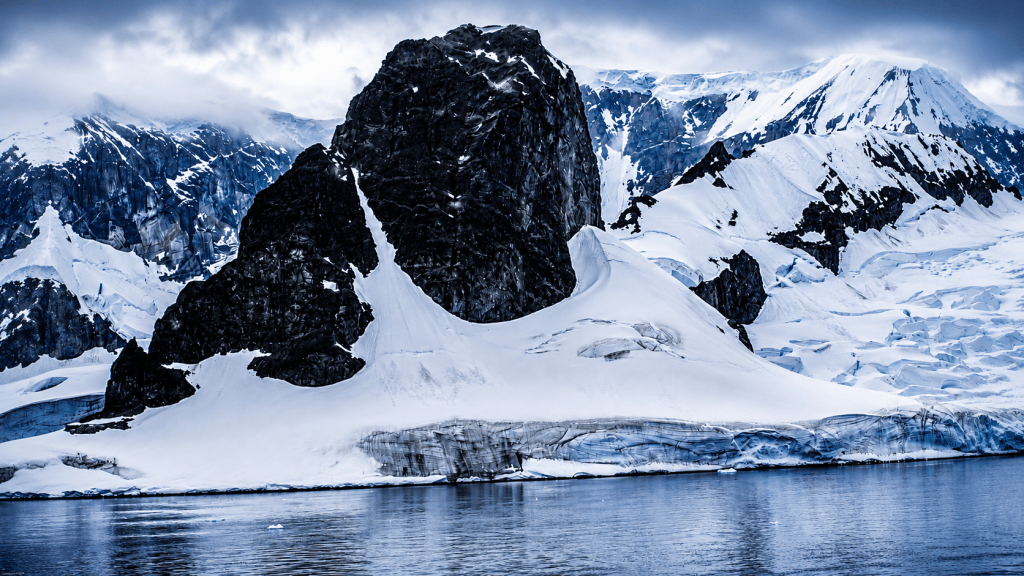
But I had never seen anything quite like Paradise Harbour.
I had travelled almost to the end of the world, to a place that seemed as though it could only have been made by the hands of God.
The landscape was almost devoid of color, and yet I had never seen anything more beautiful.
White snow. Dark water. Charcoal rock. Gray sky. And the luminous blue of ancient ice.
Perhaps that was what made the place so arresting. Nothing competed for attention.
No flowers. No green trees. No brightly painted buildings. No architecture demanding admiration.
Almost nothing we normally depend upon to call something beautiful.
And still, I stood in awe.
The mountains rose directly from the sea, their dark faces disappearing beneath snow. Icebergs drifted across water so still that their reflections sometimes seemed as substantial as the landscape itself.
There were penguins, seals, and orcas—life appearing in places where life seemed almost impossible.
And then there was the silence.
Not an empty silence, but a silence so immense that it seemed almost tangible. Occasionally the wind rushed across the water, but when it passed, the stillness returned.
I could hear myself breathe.
Standing there, surrounded by such scale, I became acutely aware of how small I was.
And strangely, that realization did not diminish me.
It properly placed me.
Creation did not revolve around me.
It never had.
Before me was a world that had existed long before my arrival and would continue long after I was gone. Mountains, oceans, glaciers, wind, and ice carried on without any knowledge of my ambitions, achievements, worries, or plans.
And confronted by such scale, silence, beauty, and mystery, the possibility that all of this existed without meaning seemed harder for me to believe than the possibility that it pointed beyond itself.
Toward a Creator.
Toward an intelligence greater than my own.
Toward something before which the most appropriate human response was not explanation, but awe.
And yes, it was cold.
Bitterly cold.
I understood something of the science before me—the movement of glaciers, the formation of ice, the forces that had shaped those mountains over unimaginable stretches of time.
But knowledge did not diminish my awe.
It deepened it.
Perhaps understanding creation should never lessen our sense of wonder.
Perhaps it should enlarge it.
Perhaps it should enlarge our faith.
Paradise Harbour seemed to have been created largely by subtraction.
Rock. Water. Ice. Light. Silence.
Nothing unnecessary.
Nothing competing.
Nothing trying to impress.
Perhaps beauty does not always require abundance.
Perhaps it requires clarity.
Perhaps the soul is no different.
Far from the noise of cities, the cruelty of the world, the pressures we manufacture for ourselves, and the endless insistence that we must become more, achieve more, possess more, I experienced something I had not realized I needed.
Stillness.
For a little while, ambition gave way to wonder.
Noise gave way to silence.
Achievement gave way to gratitude.
And somewhere between the dark mountains and the blue ice, between the bitter cold and the impossible stillness of the sea, I felt the grace and mercy of God descend upon me.
Before beauty of that magnitude, I did not become smaller.
I became more truthful.
I remembered where I belonged.
Not at the center of creation.
But gratefully within it.
And standing there at the end of the world, surrounded by rock, water, ice, light, and silence, there seemed only one thing left to say:
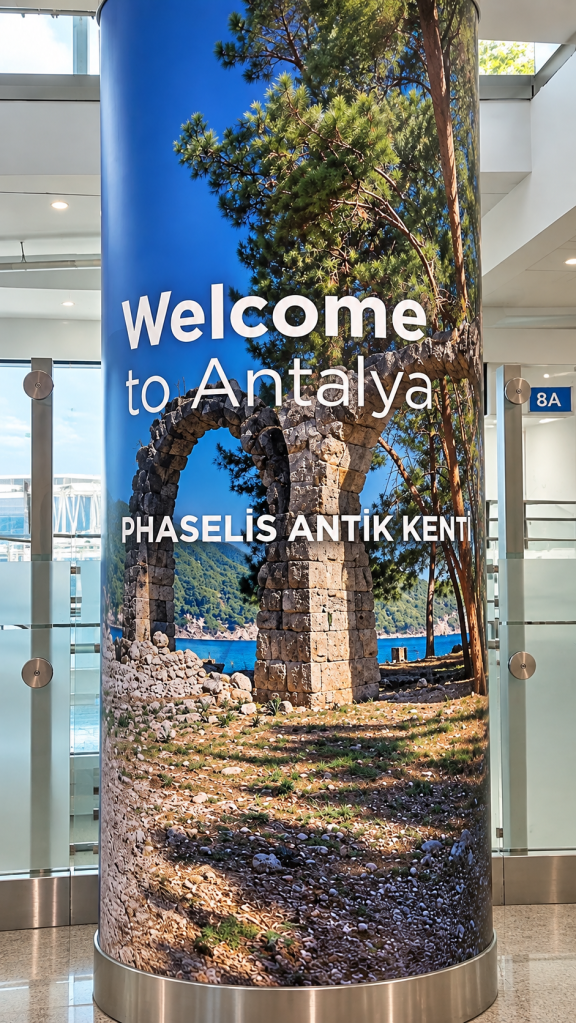
We woke early to catch our flight to Antalya, which meant another encounter with the enormous scale of Istanbul Airport. This time, though, we knew what to expect. The endless corridors, the distances, the sheer size of the place no longer surprised us quite as much. Perhaps that is what travel does. What overwhelms you on arrival can feel almost familiar only a few days later.
The flight to Antalya was short, and the difference was noticeable almost as soon as we stepped outside. It was warmer. Much warmer. The jackets that had occasionally been useful in Istanbul suddenly seemed unnecessary.
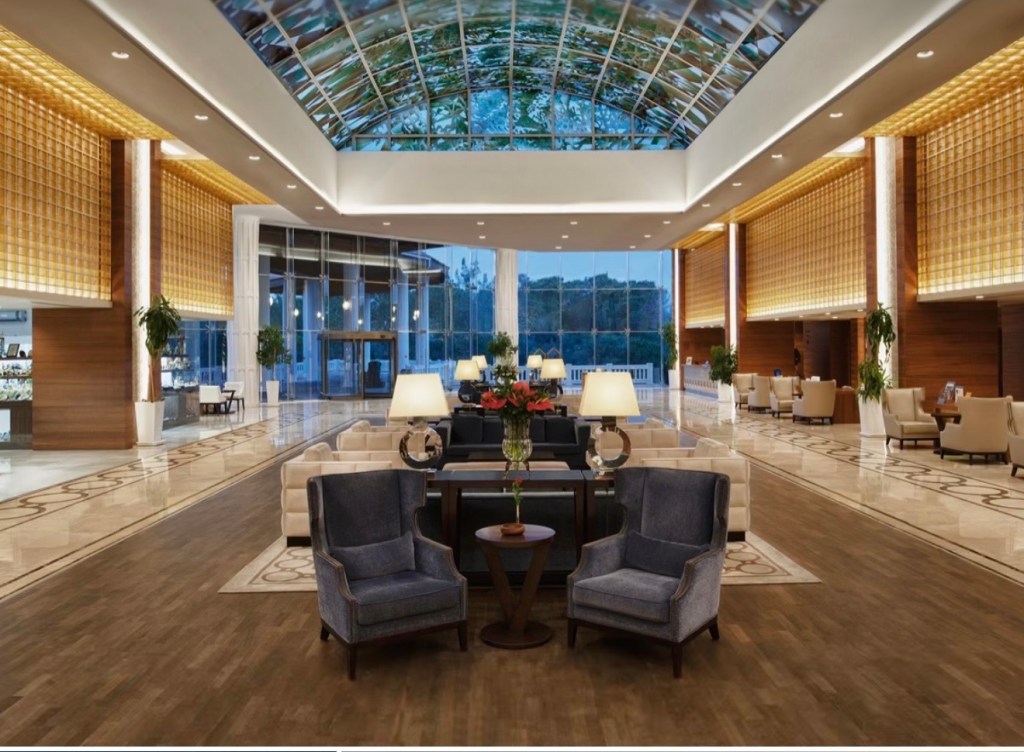
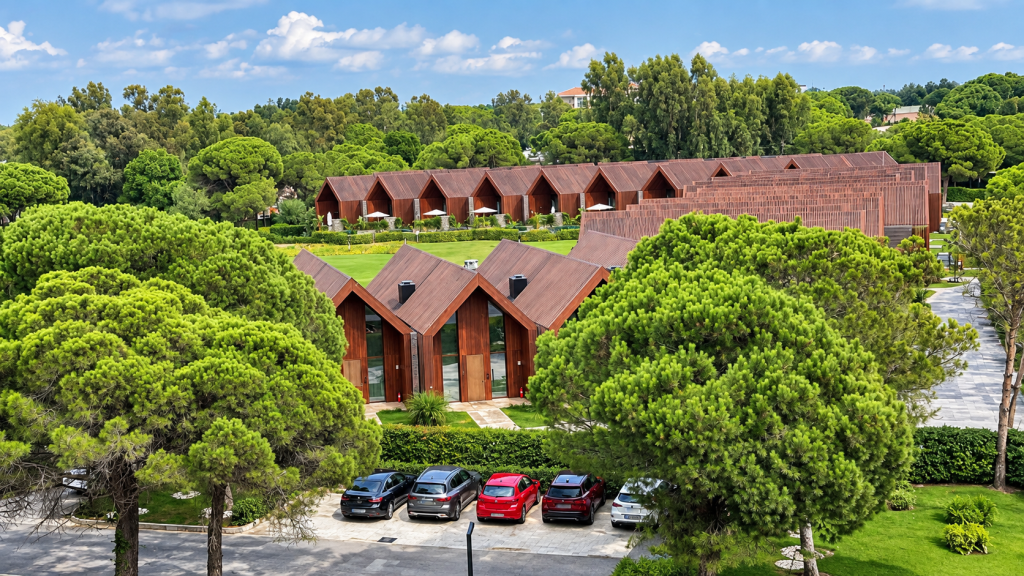
Our drive to the Sirene Belek Hotel took about forty-five minutes. The resort, built in 2001 and renovated in 2012, is enormous in its own way, spreading through beautifully landscaped grounds all the way to the Mediterranean. After several days of navigating Istanbul’s streets, mosques, palaces, bazaars, ferries and crowds, the change of pace was immediate.
We didn’t try to do very much.
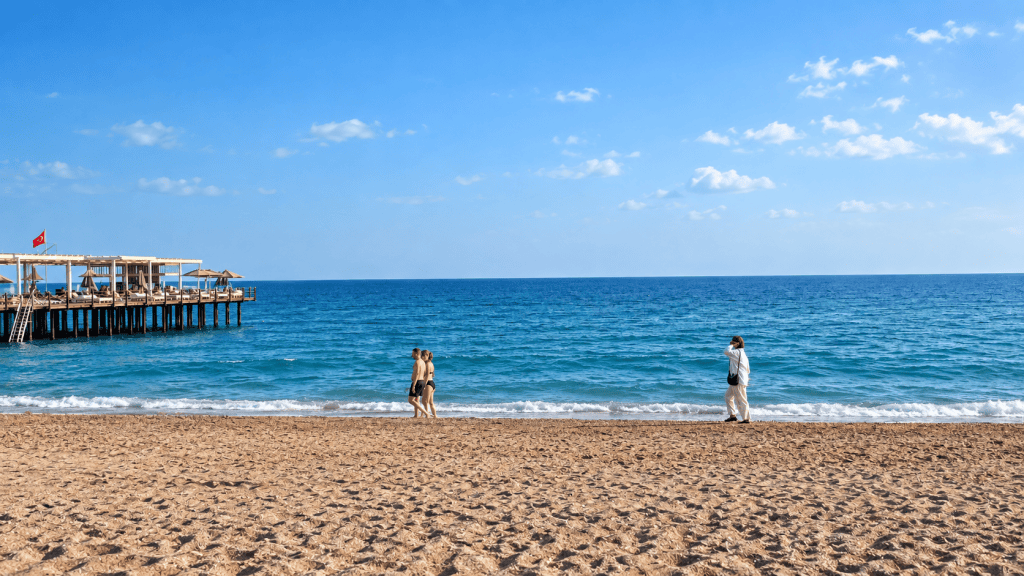
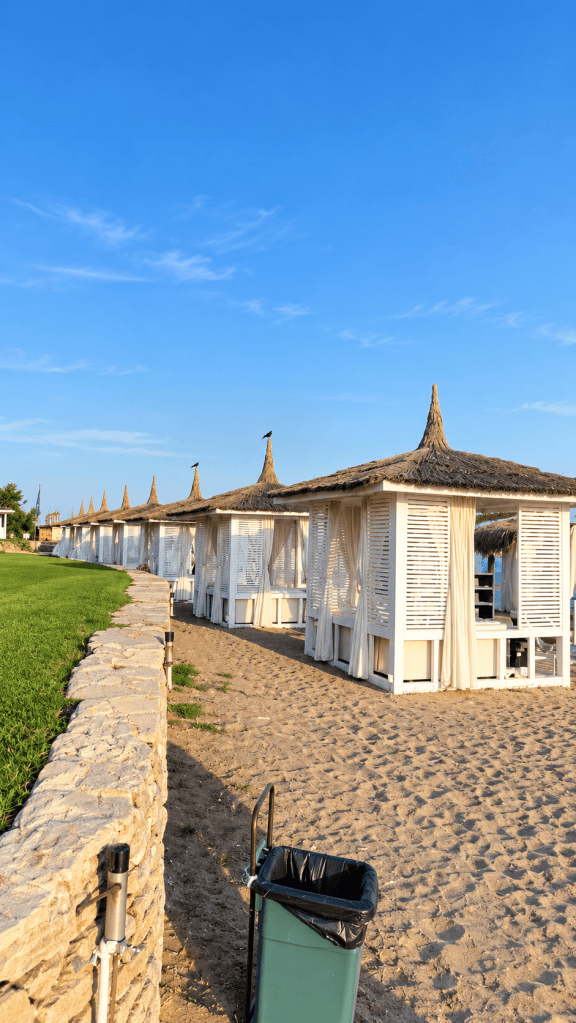
We walked leisurely through the grounds toward the beach, eventually settling down for Turkish tea and cookies while waiting for dinner. The Mediterranean stretched out ahead of us, the resort behind us, and for once there was nowhere we particularly needed to be.
Dinner was an all-you-can-eat affair with more choices than I could reasonably count. Istanbul had already introduced us to the extraordinary relationship Turkey seems to have with food. Antalya appears determined to continue the education.
Later in the evening, we met up with friends at the MAXGOLF Golf Tours gathering to go over the plans for the next few days. There was, however, one small complication: we don’t play golf.
While our friends had come to Antalya partly for the fairways, Yemi and I would have to create an itinerary of our own while the golfers golfed. Somehow that didn’t feel like much of a hardship. We were in a part of Turkey we had never seen before, with the Mediterranean at our doorstep and several days available to explore it.
And then it was time for bed.
Istanbul had been about movement—walking, looking, learning, trying to understand centuries of history compressed into one extraordinary city.
Antalya, at least on this first evening, felt different. Warm air, Turkish tea by the sea, an absurd number of choices at dinner, and friends gathered together before we all went our separate ways in the morning.
They would have their golf courses. We would have Antalya.
That seemed like a perfectly reasonable arrangement.
Five days ago, I wrote that first impressions are not conclusions. They are invitations.
Istanbul had five days to make its case.
It began, appropriately enough, with scale. Everything seemed bigger here. The airport appeared endless. The roads were enormous. Bridges stretched across water as though connecting continents were an entirely ordinary municipal undertaking. Even the traffic seemed determined to impress me.
I come from Lagos. I know traffic.
But Istanbul made a respectable effort.
Then the city began revealing its layers.
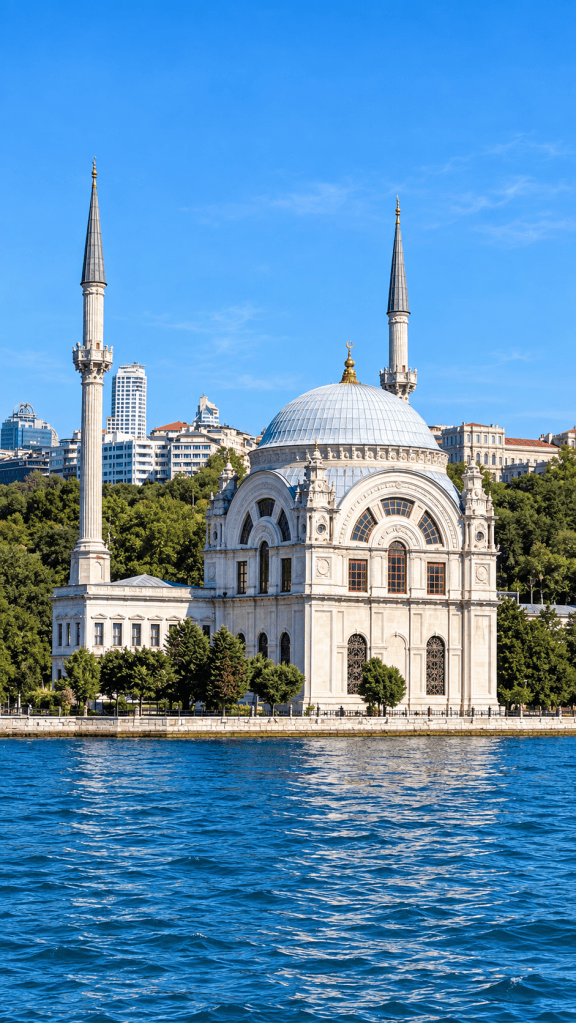
From the Bosphorus, Europe sat on one side and Asia on the other. Ferries crossed between them while tankers moved through a natural waterway that had carried armies, merchants, fishermen and ambitions for centuries. Ottoman palaces lined the shore. Old yalıs faced the water. Fortresses reminded us that beautiful places have not always had peaceful histories.
And everywhere, the call to prayer floated above the noise of the city.
Istanbul seemed comfortable holding contradictions that elsewhere might appear impossible. Christian and Muslim. European and Asian. Ancient and modern. Sacred and commercial.
At Hagia Sophia, those contradictions occupy the same building.
Nearly fifteen centuries of faith, conquest, earthquakes and human ambition are written into its walls and floors. Christian mosaics were covered when the building became a mosque; centuries later some were uncovered again. The building itself shifted and cracked, yet somehow survived.
Standing there, I found myself thinking less about which faith had possessed the building at any particular moment and more about something simpler.
With all the churches, mosques, temples and synagogues humanity has built, one might have expected us to have learned a little more kindness by now.
Perhaps buildings are easier to construct than compassion.
Then came Topkapı.
There were diamonds and jeweled weapons, magnificent rooms and the accumulated treasures of empire. The Spoonmaker’s Diamond glittered behind glass—86 carats surrounded by dozens more diamonds, as though 86 were somehow insufficient.
But the palace became more interesting to me when we moved away from the treasures.
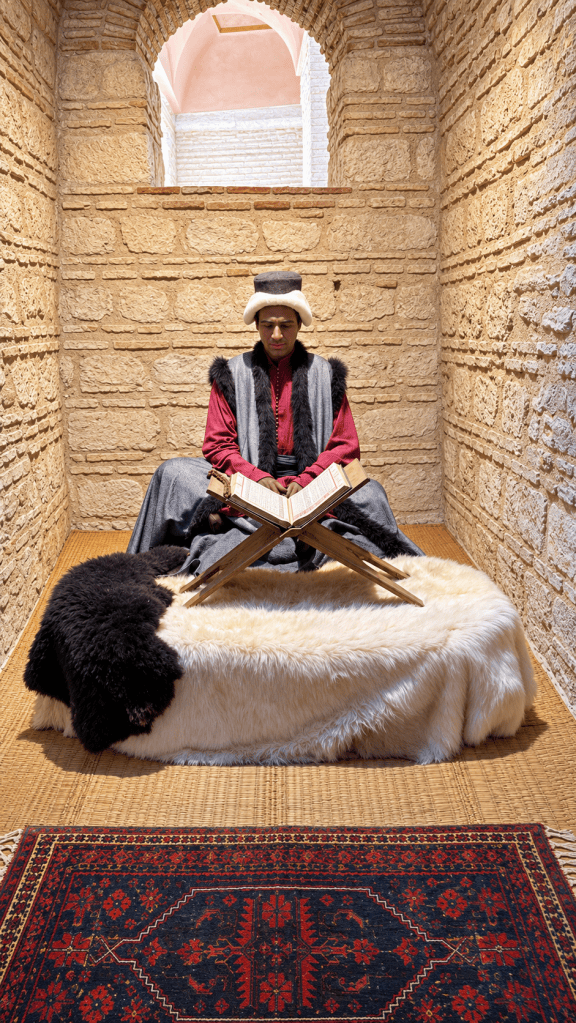
There were the quarters of the halberdiers. Bedding cupboards. Fountains. Baths. Inscriptions recording money left to buy candles for men who became sick. Prayers requested for people long dead.
And suddenly the Ottoman Empire was no longer merely sultans and conquests.
People slept here.
They worked here.
They became ill here.
They worried about money, said their prayers, tried to keep warm and eventually died here.
Earlier in the trip I had encountered the bent figure of the Istanbul porter—the hamal—carrying an enormous burden on his back. I jokingly called him the human camel. But perhaps he and the palace servants were telling the same story.
Great civilizations leave monuments to the powerful.
Look carefully enough, though, and you eventually find the people who carried the load.
Today Istanbul required less interpretation.
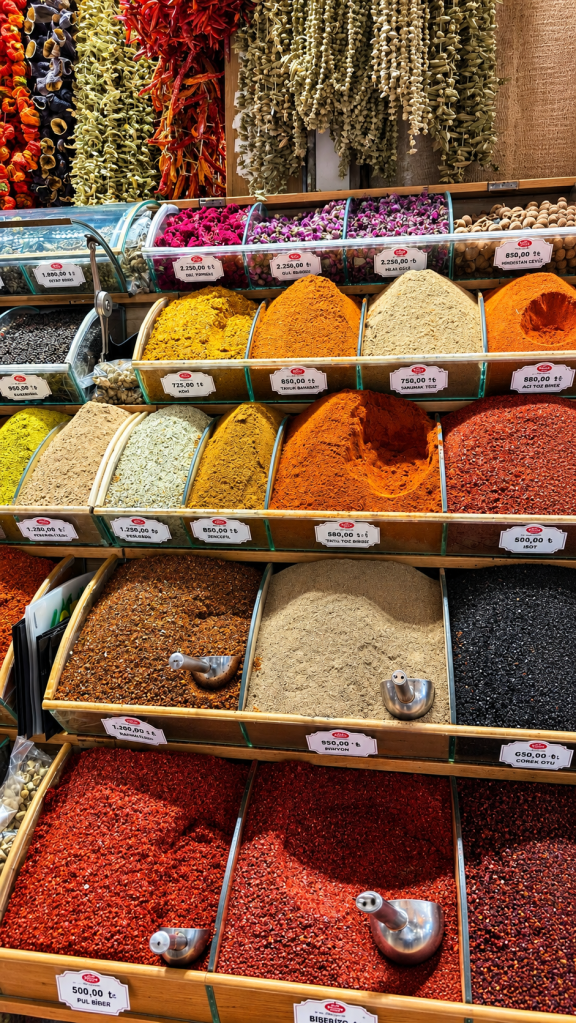
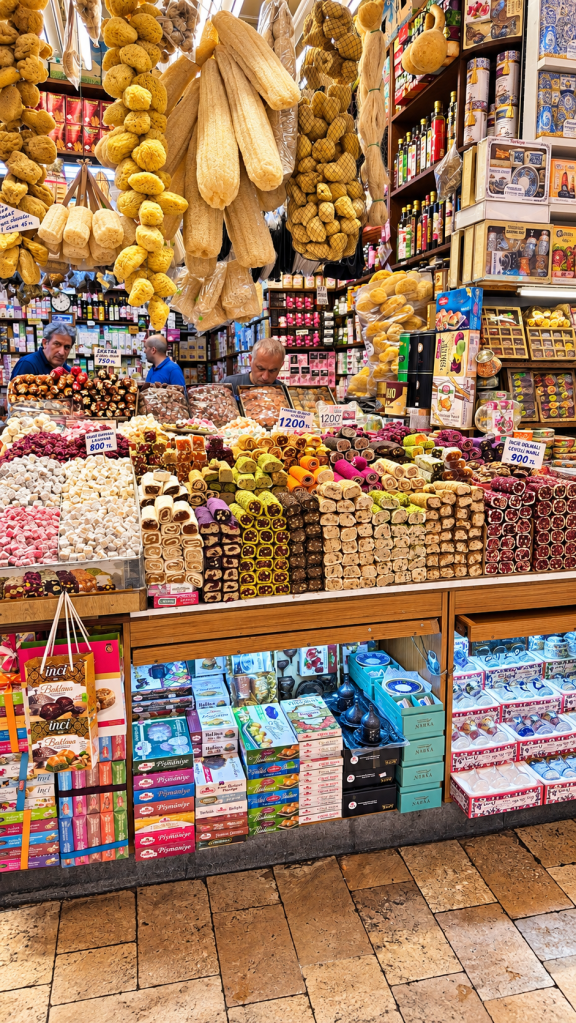
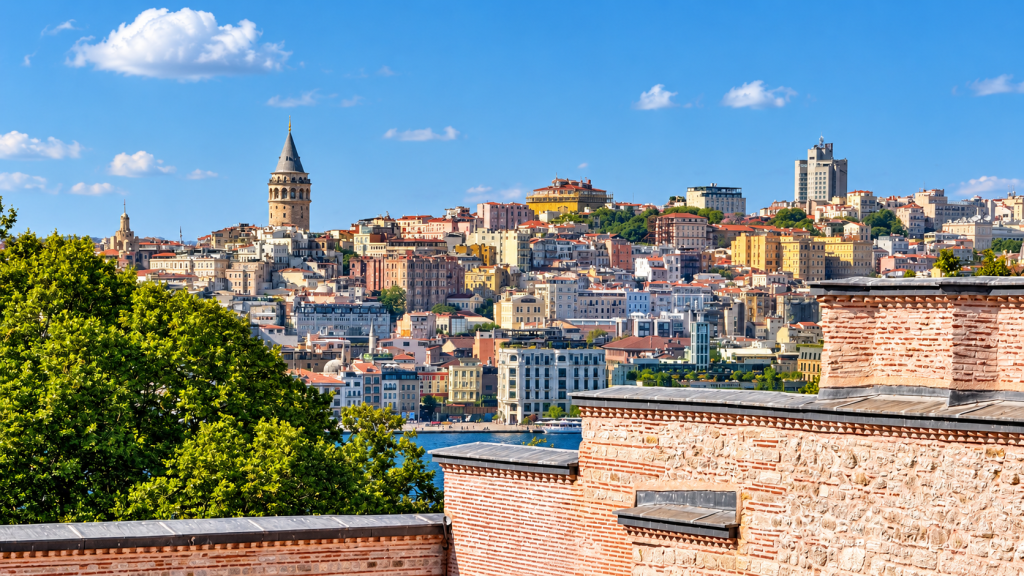
We wandered through streets filled with shops, spices, sweets and people. Turkish delight sat in great colorful piles. Sausages hung over market stalls. The Galata Tower appeared above the city in the distance. There were gulls overhead and crowds everywhere.
And there was food.
Cooking has long been part of my life in Tallahassee, so perhaps it shouldn’t surprise me that markets and spices fascinate me. Here, ingredients I had known in the kitchen seemed to acquire biographies of their own. Even saffron—those tiny red threads—became another lesson in how much human labor can hide inside something beautiful.
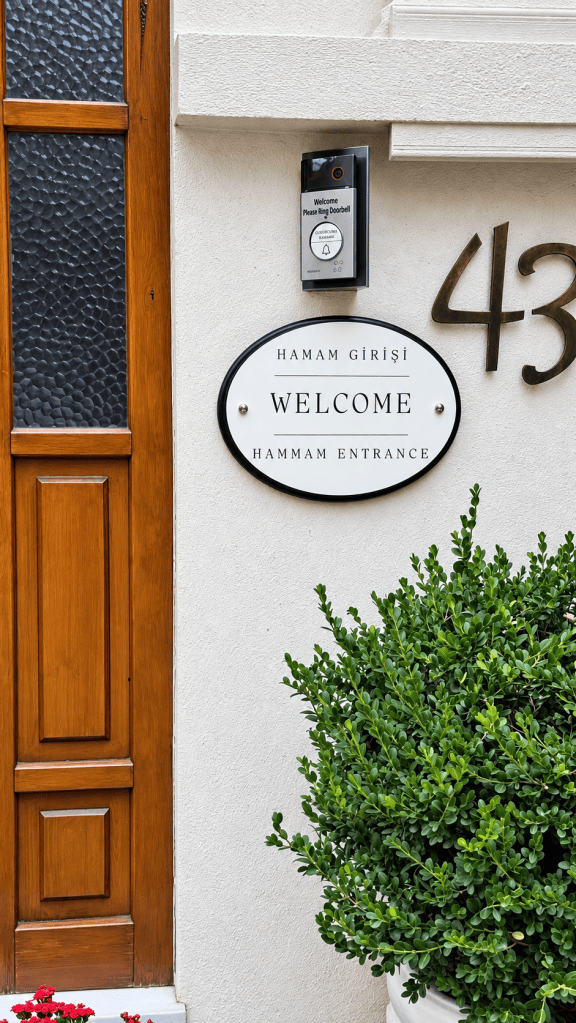
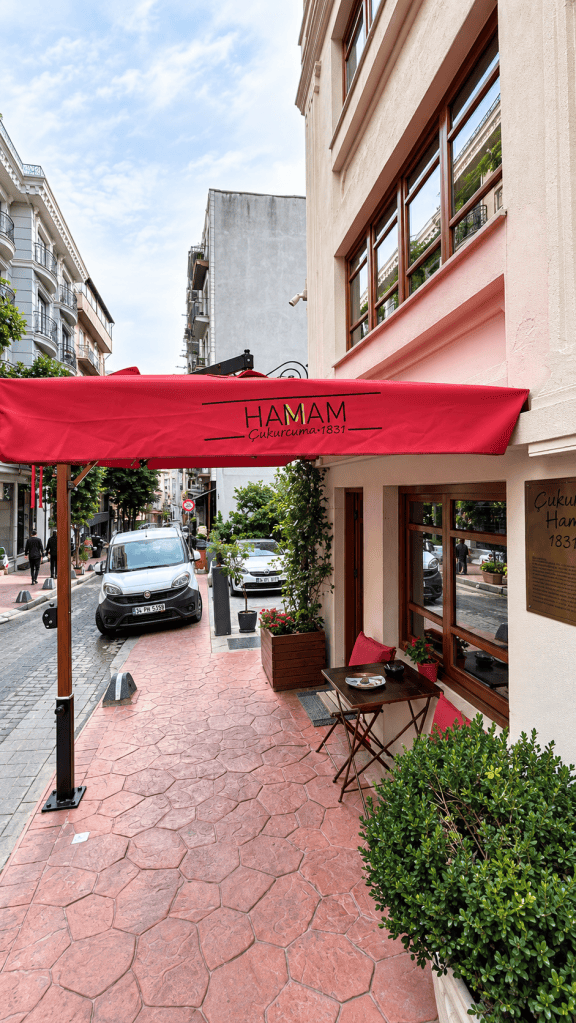
Eventually, after several days of Istanbul walking, we arrived at Çukurcuma Hamamı.
My feet had already lodged a formal grievance.
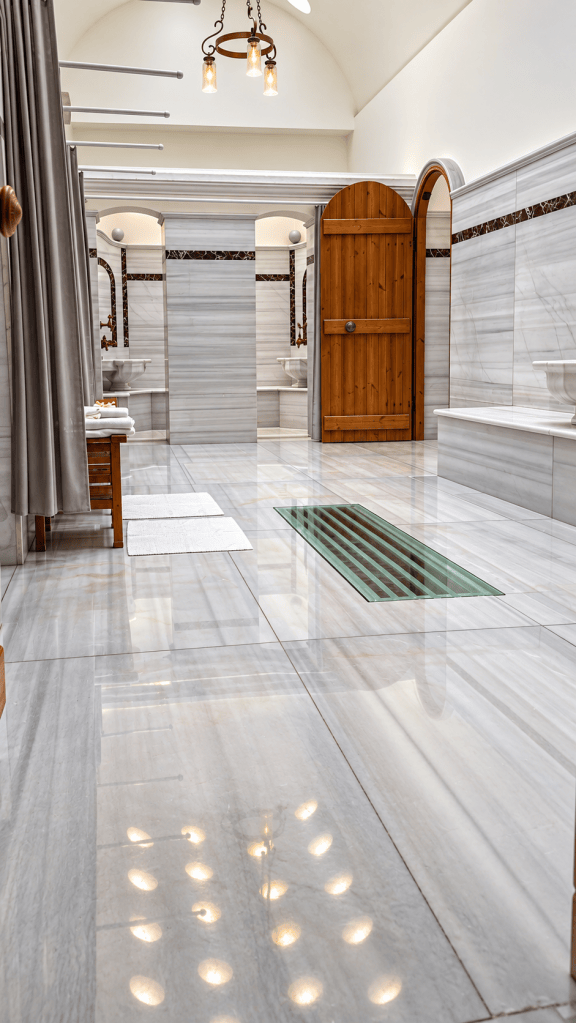
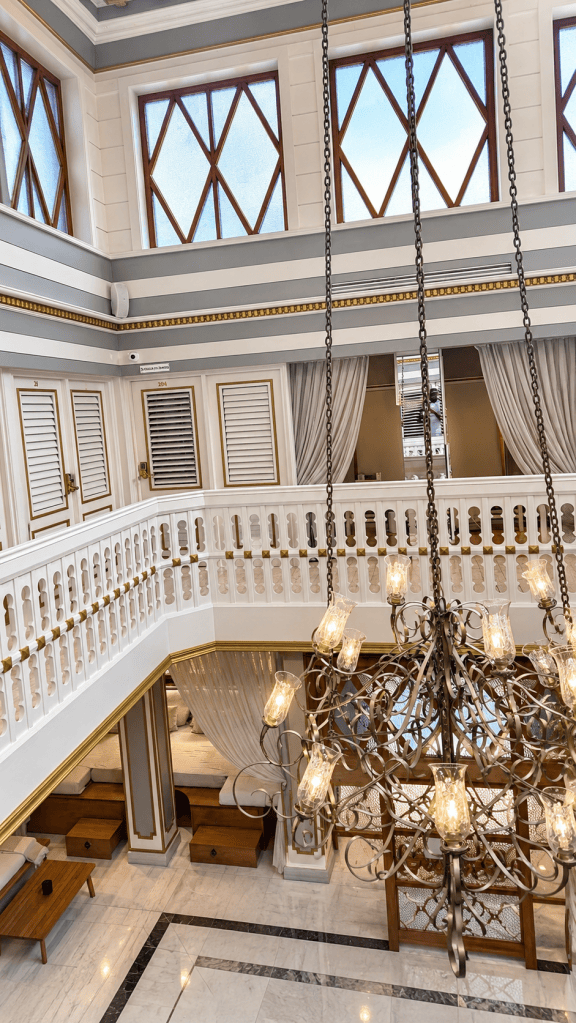
Inside, the city became quiet. Marble replaced cobblestones. Heat, water and steam replaced traffic and crowds. Light entered from above and scattered across the marble floor.
Then came scrubbing and massage.
For once, someone appeared to take my feet’s complaint seriously.
We emerged considerably cleaner and considerably more willing to continue walking.
There was ice cream.
Three scoops.
History is important, but one must maintain perspective.
And tonight we ended beneath the brick vaults of Sarnıç, surrounded by enormous circles of light. We ate well. Very well. And dessert arrived looking less like something one should eat than a small piece of contemporary architecture.
Somewhere during dinner, I realized Istanbul had answered the question I posed when we arrived.
The city had made its case.
Not because of any single mosque, palace, diamond, market or meal. And not because five days is remotely enough to understand a city that has been reinventing itself for thousands of years.
It was something about the accumulation.
The airport and the old telephone.
Sultans and porters.
Christian mosaics and Islamic calligraphy.
Diamonds and bedding cupboards.
The Bosphorus and the back streets.
Saffron and ice cream.
The call to prayer and the noise of traffic.
History and ordinary life continuing beside one another as though neither finds the other particularly remarkable.
Perhaps that is what I will remember most about Istanbul.
It doesn’t seem to discard its previous lives.
It carries them.
Tomorrow we leave for Antalya.
Five days ago, Istanbul was an invitation.
Tonight, it feels more like a conversation we have only just begun.
Every palace has a front door through which history likes to enter. But perhaps we understand power better when we wander through the rooms behind it.
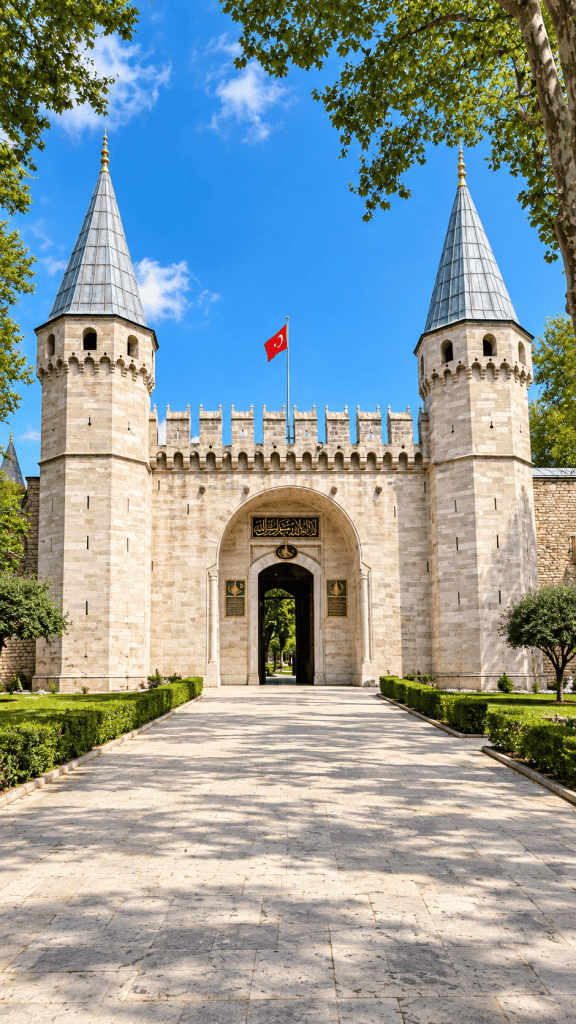
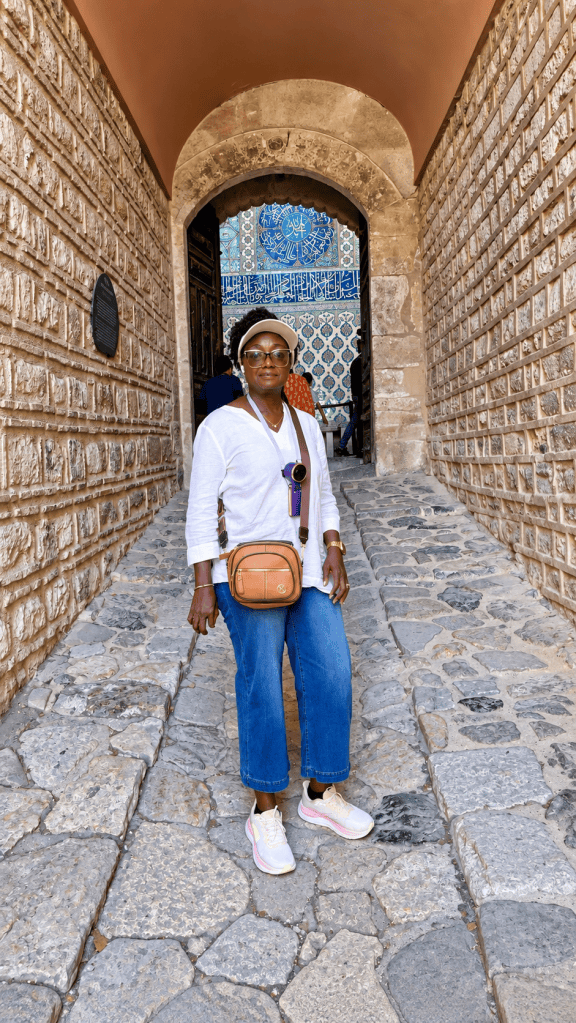
Today took us to Topkapı Palace, and somewhere along the way Istanbul became less about buildings and more about the people who once inhabited them.
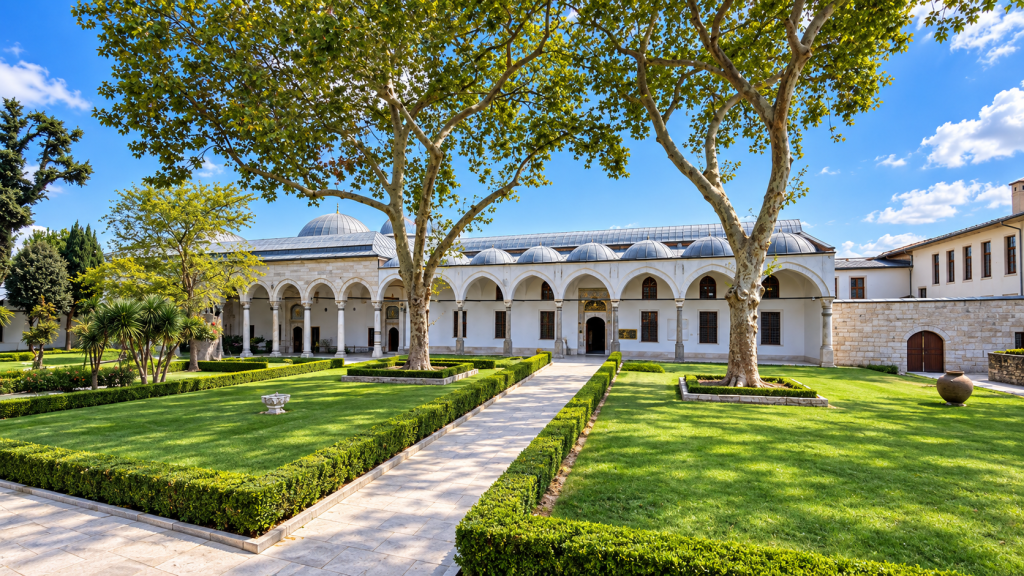
The palace is magnificent. Courtyards open into other courtyards. Domes, gardens, fountains and chambers unfold one after another. From its elevated position, the Bosphorus appears almost as part of the estate. It is easy to imagine the Ottoman sultans looking across the water and believing that the world belonged to them.
But palaces are designed to impress. Their beauty tells only part of the story.
Behind the ceremonial rooms were other lives: wives and concubines, servants, guards, officials and eunuchs. People whose lives existed within an elaborate hierarchy built around one man and the continuation of a dynasty.
And then I read the words Black eunuchs.
My thoughts immediately returned to slavery.
How can any human being think it is right to enslave another?
Perhaps the distance of centuries makes it easier to discuss slavery as history: trade routes, empires, laws, economics and customs. Standing in the place where enslaved people actually lived makes that abstraction much harder.
To enslave another human being is already to deny something fundamental about his humanity. But to take an enslaved boy or man and mutilate his body through castration so that he could occupy a role designed for him by others seems to me an even deeper act of dehumanization. His freedom had already been taken. Now something irreversible was being taken from his body as well.
And when those men were Black Africans, transported far from the places of their birth, the history became impossible for me to regard dispassionately.
Some eventually rose to extraordinary positions within the Ottoman court. They could become powerful, influential and trusted, sometimes operating remarkably close to the center of imperial authority.
There is a terrible irony in that.
A man could become privileged within the very institution that had first stripped him of his freedom.
Privilege did not undo enslavement. Influence could not restore what had been taken from him. Proximity to the Sultan did not somehow make the original violation humane.
And yet, somewhere among all those thoughts, I saw yellow.
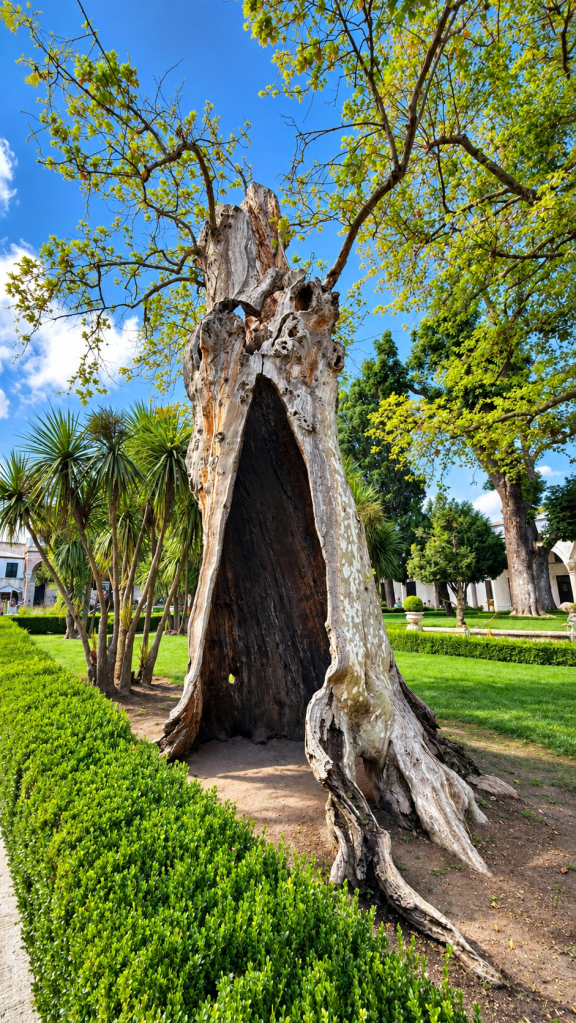
A bed of yellow flowers growing quietly in the palace grounds.
I smiled.
I have been learning to see yellow—not because yellow makes difficult things disappear, but because beauty and darkness somehow continue to occupy the same world.
Here I was, walking through a place that had confronted me with slavery, castration, power and the extraordinary contradictions of religion, and there, completely indifferent to my troubled thoughts, were these small yellow flowers.
They explained nothing.
They excused nothing.
They were simply beautiful.
Perhaps seeing yellow was never about looking away from what is difficult.
Perhaps it is about refusing to let what is difficult become all that we see.
My thoughts returned to religion.
Elsewhere within the same palace were reminders of faith.
Abraham. John the Baptist. Jesus. Muhammad.
Names separated by centuries, yet connected by a remarkable spiritual genealogy.
It struck me that Judaism, Christianity and Islam are not strangers who happened to encounter one another across history. They belong to the Abrahamic family. Their theologies diverge, sometimes profoundly, but their stories repeatedly intersect. Abraham stands within all three traditions. Christianity emerged from Judaism. Islam came centuries later acknowledging Abraham, Moses, John the Baptist and Jesus among the prophets who preceded Muhammad.
Standing there, the family resemblance was difficult to ignore.
And perhaps that makes the history of religious conflict even more bewildering.
Human beings have fought, conquered and killed one another over religions whose sacred histories contain many of the same people.
Perhaps we have spent too much time emphasizing where the branches separate and too little remembering that some of the roots are shared.
And then, amid all these contradictions, I encountered something else that stopped me: the charity stone.
Those who had enough could leave money. Those who needed it could quietly take what they required.
No audience. No applause. No photograph of the giver presenting something to the recipient. No requirement that poverty perform its gratitude.
Just one human being leaving something for another.
I loved that.
Perhaps this was religion expressing itself in its simplest and most beautiful form—not through power, conquest or magnificent buildings, but through compassion.
There was dignity built into the arrangement. The person who left the money did not know who would receive it. The person in need did not have to stand before the giver and explain their poverty.
One gave without recognition.
The other received without humiliation.
Perhaps that is what faith was always supposed to look like.
And suddenly the contradiction of Topkapı became even more profound.
Within the same civilization were systems capable of enslaving human beings and traditions capable of protecting the dignity of a stranger. One diminished humanity. The other quietly restored it.
The problem was never that humanity did not know what goodness looked like.
We knew.
We simply did not always choose it.
Yesterday, walking through the Blue Mosque and Hagia Sophia, I found myself wondering how a world containing so many churches, mosques, temples and synagogues could still contain so much cruelty. With so many places built in honor of God, one might expect us to have become considerably better at being kind to one another.
Today the question followed me into the palace.
Religious traditions have existed alongside slavery throughout much of human history. People found ways to regulate it, justify it and live comfortably beside it. Others would eventually draw upon those same traditions to argue for human dignity and abolition.
Perhaps that is where the uncomfortable question lies.
Not simply in what religion teaches, but in the remarkable ability of human beings to reconcile what we profess to believe with what we are prepared to do to one another.
We can construct magnificent houses for God while sometimes treating God’s children abominably.
Perhaps the great contradiction of religion has never been what we profess to believe.
Perhaps it is what we permit ourselves to do to one another while believing it.
Eventually we left the palace.
And Istanbul did what Istanbul seems particularly good at doing.
It changed the subject.
We found ourselves back among ordinary streets and shops. Cobbled pavement beneath our feet. Cats wandering around as though they owned the neighborhood. Jewelry shops. Restaurants. People talking. People shopping.
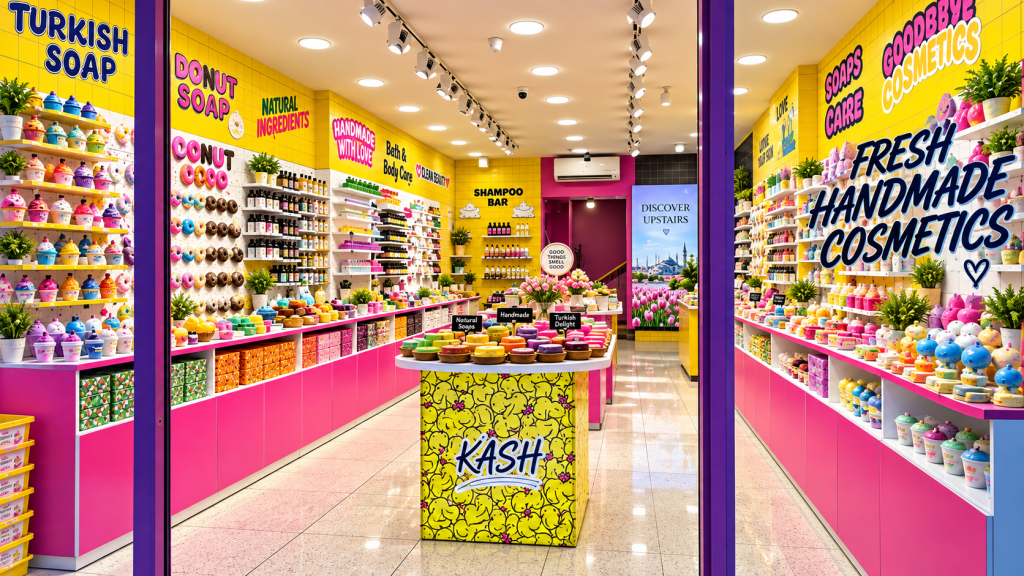
And then we wandered into a shop filled with handmade cosmetics.
Bright walls. Rows of colorful soaps. Creams and scrubs. Felted soaps in almost every imaginable fragrance. And, apparently, something called Turkish Delight Soap.
After sultans, harems, slavery, eunuchs and several centuries of Ottoman history, we were shopping for soap.
I had to smile.
History can be unbearably heavy.
And five minutes later, someone is deciding between lavender and Turkish Delight.
Perhaps that, too, is travel.
You move between the monumental and the mundane, between things that trouble the soul and things that simply make you smile. Neither experience cancels the other. Somehow they occupy the same day.
As we walked back through Istanbul, I kept thinking about the palace we had left behind.
The empire is gone.
The sultans are gone.
The people who once competed desperately to stand closest to power are gone.
Topkapı remains, but now ordinary people walk through its gates carrying cameras and water bottles, listening to stories about people who once believed their world would last forever.
Outside, Istanbul continues.
A cat crosses a cobbled street.
A shopkeeper waits for the next customer.
Yemi examines another bar of soap.
And perhaps history offers its quietest lesson there.
Power seeks to be remembered. Kindness does not require it.
After more than twelve thousand steps yesterday, my feet had lodged a fairly convincing protest, and I had every intention of listening to them. No ambitious itinerary. No long walking tour. No attempt to conquer another corner of Istanbul.
Istanbul, apparently, had other plans.
By late afternoon, the pull of the city became difficult to resist, and before long we were wandering again—not really touring, not following an itinerary, simply walking and seeing where the streets took us.
Perhaps that is when a city begins to reveal itself differently. You stop looking only for the things you came to see and begin noticing the things that are simply there.
The Galata Tower appeared above the rooftops. Ferries moved constantly across the water. Mosques rose from the hills on the opposite shore. People crowded the bridge. Gulls circled overhead. Fishermen stood along the railings, seemingly indifferent to the millions of people moving around them.
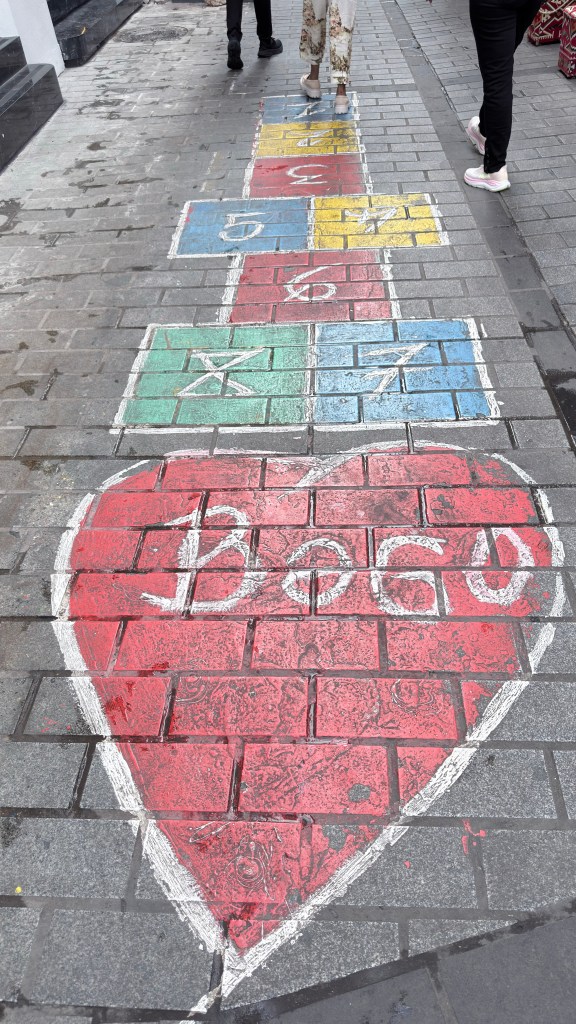
And somewhere amid all this history, someone had drawn a hopscotch court on the pavement.
I loved that.
Empires come and go. Children still play.
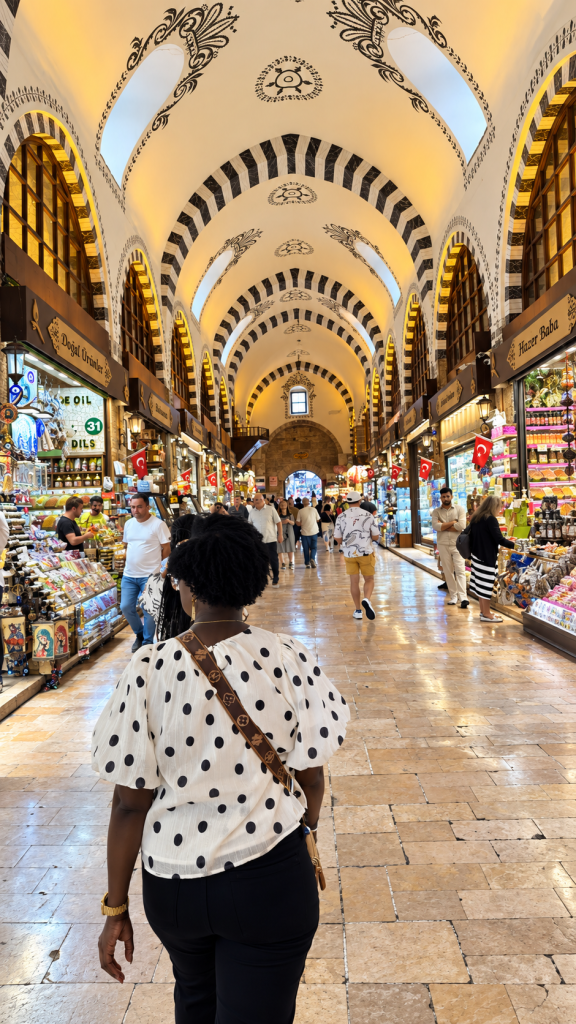
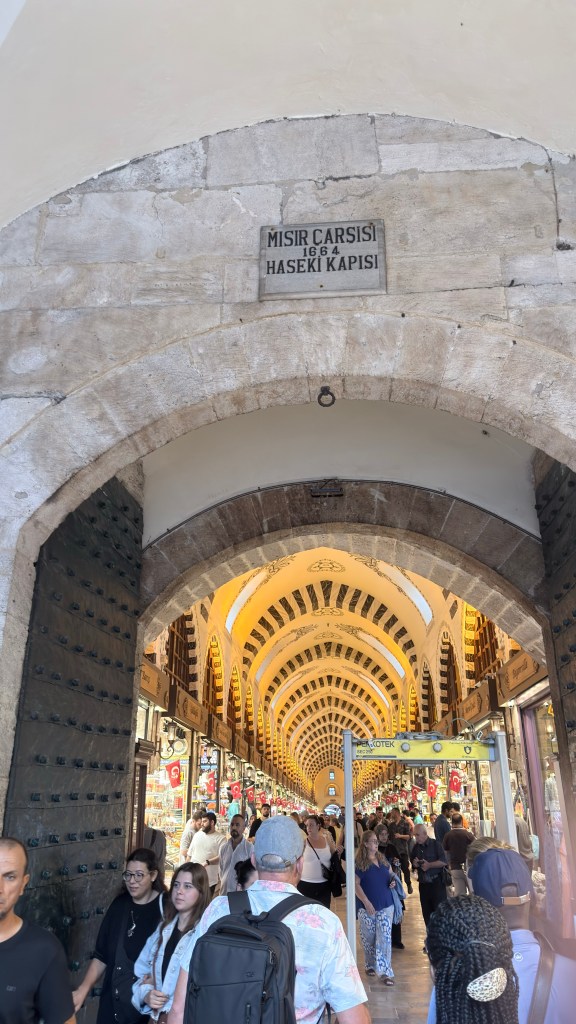
Eventually our supposedly aimless wandering brought us to the Spice Bazaar. Construction began at the end of the sixteenth century and the bazaar was completed in the seventeenth, but what interested me was not simply its age. It was how alive it remains.
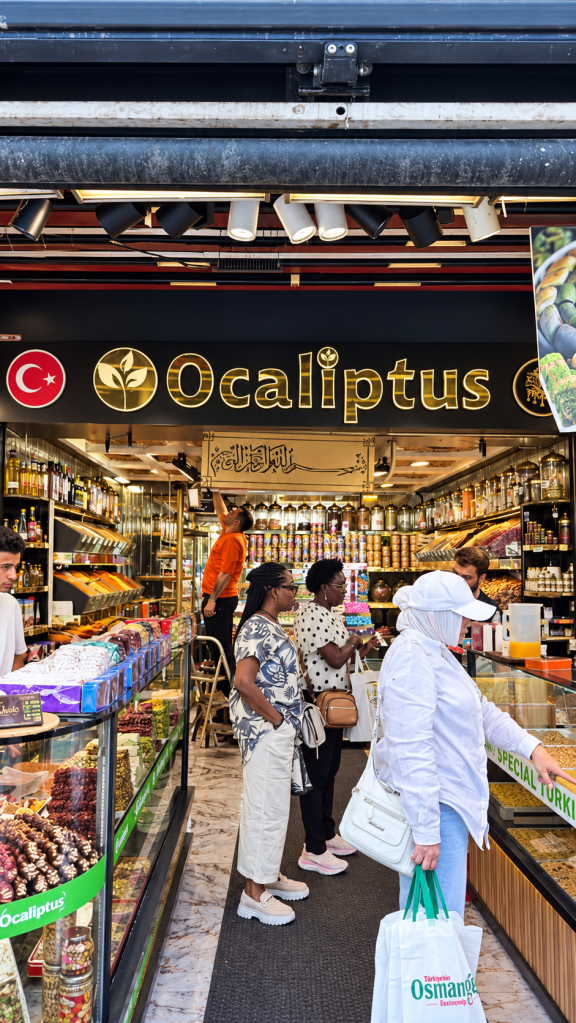
The vaulted ceilings and Ottoman decoration remind you that you are walking through history, but underneath them people are still doing essentially what people came there to do centuries ago: buying, selling, bargaining, talking, tasting and moving on. Spices overflow from stalls. Turkish delight competes for attention with teas and sweets. Shopkeepers call out to passing customers. Tourists stop to photograph everything.
It is not history preserved behind a rope.
It is history still earning a living.
That may be what I noticed most today. Yesterday Istanbul confronted me with its great monuments and the complicated histories of faith and empire. Today there was less need to interpret it. Istanbul was simply getting on with being Istanbul.
People ate. People shopped. Ferries crossed the water. Fishermen cast their lines. Children played. Somewhere someone was late for work. Somewhere else someone was sitting over tea with nowhere particularly urgent to be.
And people who had declared a rest day were somehow still wandering around the city.
By evening, however, I found the perfect compromise.
A dinner cruise.
My feet could finally remain stationary while Istanbul continued moving.
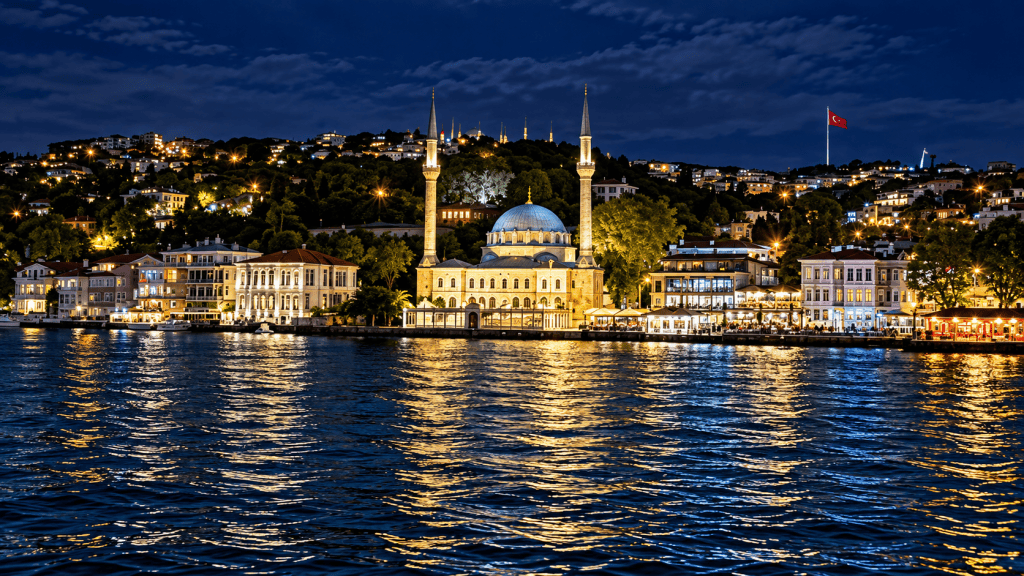
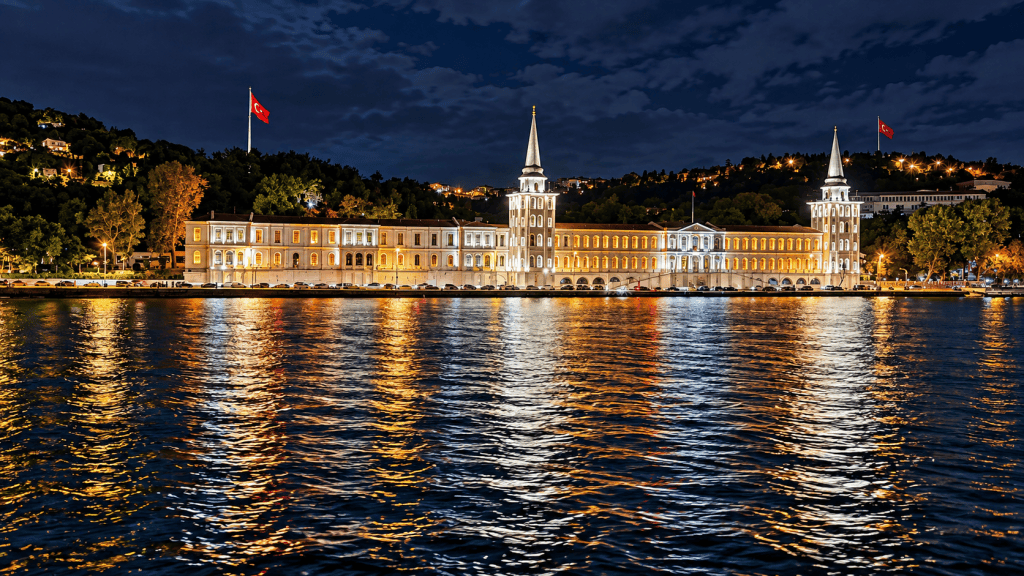
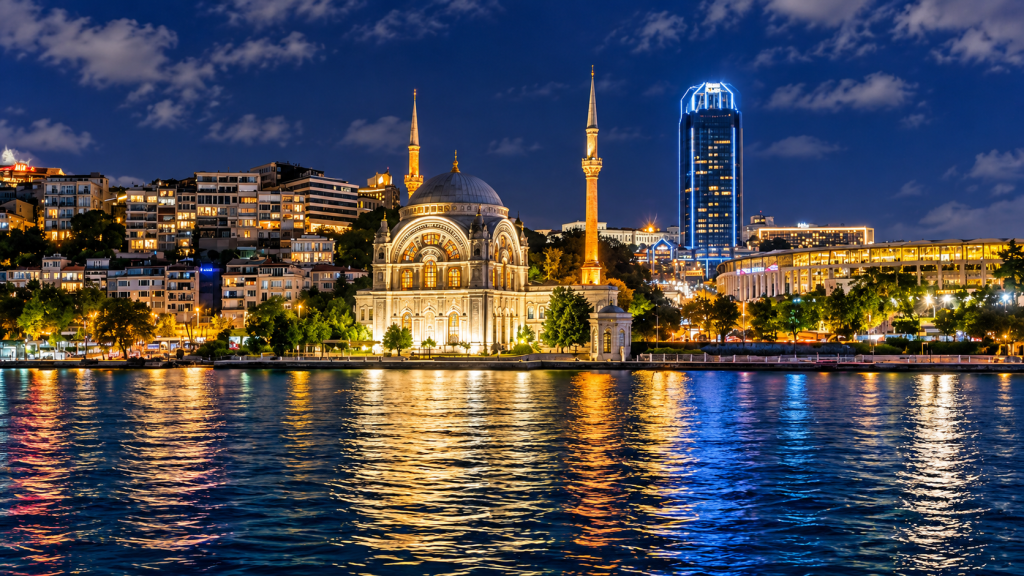
As daylight faded, we moved onto the Bosphorus and the city changed again. Buildings that had seemed crowded together from the streets separated into individual landmarks along the shoreline. Palaces glowed gold. Mosques emerged against the deepening blue. Fortresses stood illuminated among ordinary homes climbing the hillsides. Modern towers appeared behind buildings centuries older, each seemingly quite comfortable in the other’s company.
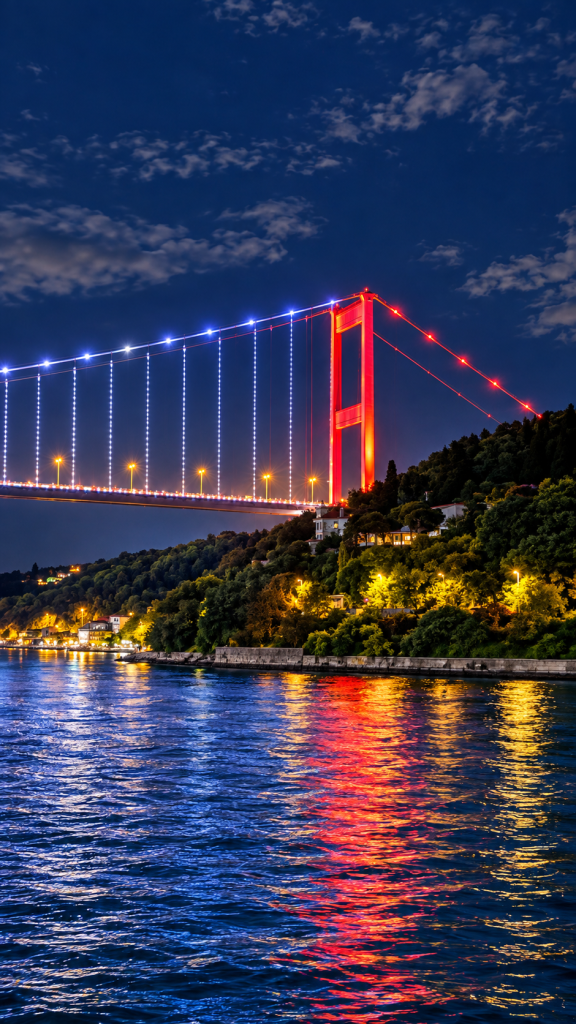
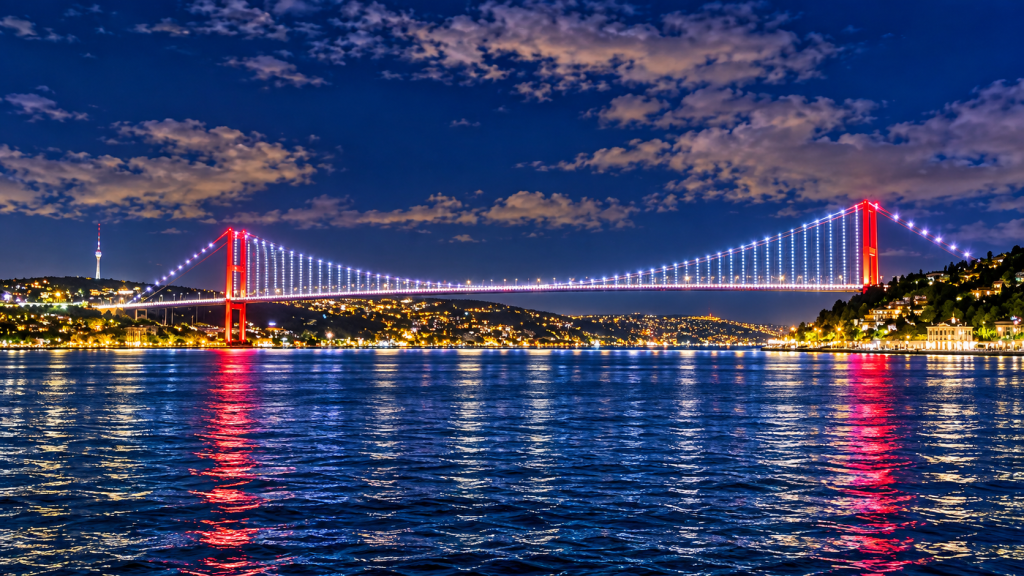
Then came the bridge.
Its red towers rose above the water, white lights tracing the suspension cables from one shore to the other. Beneath it, the Bosphorus refused to keep any of those colors to itself. Red, gold, white and blue broke apart across the moving surface and then disappeared behind us.
Perhaps that is why the city looks so different from the water. From the street you encounter Istanbul one building, one shop, one mosque, one crowd at a time. From the Bosphorus, you see them together.
The water becomes a moving gallery.
Ottoman palaces. Fortresses. Mosques. Waterfront mansions. Modern towers. Bridges. Hillsides crowded with ordinary homes.
Not arranged chronologically. Not separated into museum exhibits.
Just Istanbul.
Dinner was served while the city passed outside, followed by music and local Turkish dance. There was laughter and movement around the tables, and for a while the history lesson gave way to something equally important: people enjoying themselves.
I liked that too.
Cities cannot live entirely on their past.
By then I realized that our rest day had become something rather different from what I had imagined. We had left the hotel without much of a plan in late afternoon and ended up watching Istanbul glow from the Bosphorus while eating dinner and being entertained by Turkish dancers.
My feet, at least, had finally won their argument.
My camera had not rested at all.
Perhaps that is the lesson of a rest day in a city you are seeing for the first time. Rest does not necessarily mean doing nothing. Sometimes it simply means giving up the itinerary and allowing the day to decide what it wants to become.
By the time we returned to the hotel, we had walked more than 12,000 steps, and my feet were crying for help.
We began by climbing uphill toward the old city on a hot, muggy Istanbul morning. Tourists seemed to be everywhere. Cruise ships had emptied their passengers into the city, tour groups moved from monument to monument, and the narrow streets around Sultanahmet were alive with people speaking languages from every corner of the world.
Yesterday, Istanbul impressed me with its size.
Today, it impressed me with its age.
Istanbul sits between two continents, divided by the Bosphorus, with Europe on one side and Asia on the other. The Golden Horn cuts into the European side, and the Sea of Marmara lies below. Empires understood the significance of this geography long before tourists arrived with cameras and cruise ships.
We stood in what was once the Hippodrome of Constantinople, where chariots raced before enormous crowds. What is now an open public square was once one of the great gathering places of the Byzantine world. Ancient monuments still rise from it, survivors of civilizations that believed, as civilizations often do, that they would last forever.
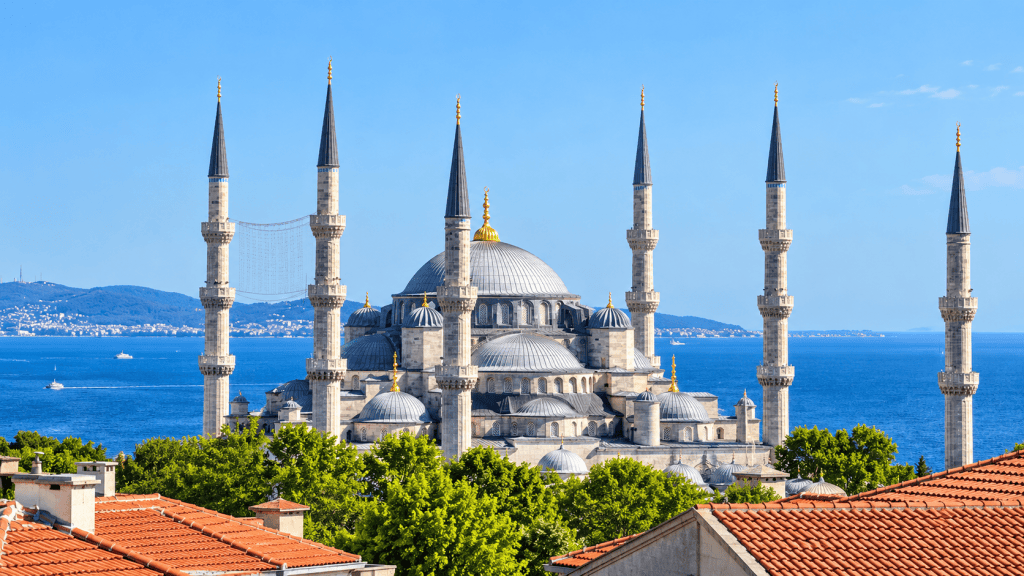
Then came the Blue Mosque.
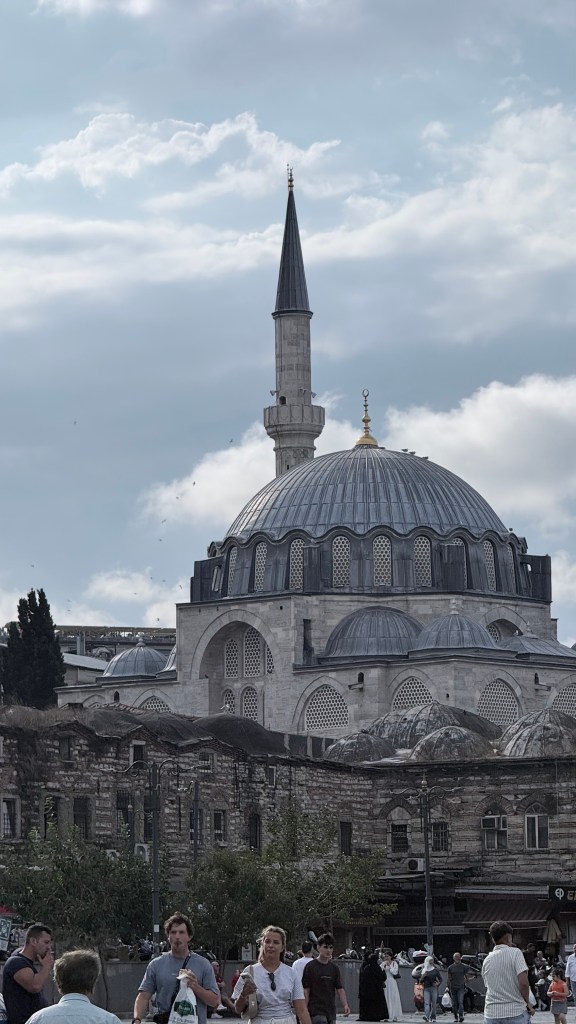
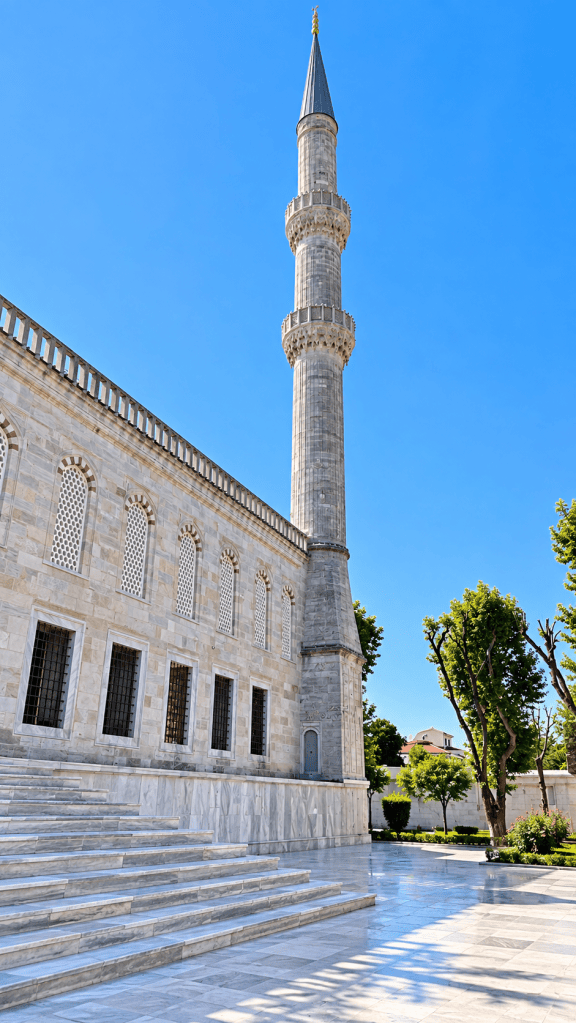
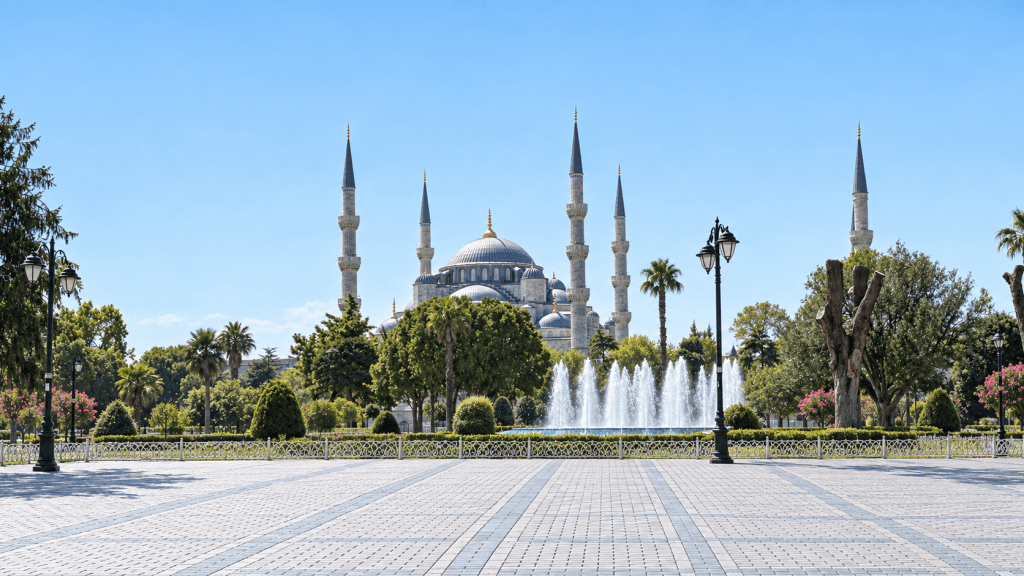
There are buildings that photographs prepare you for, and others whose scale only becomes apparent when you stand beneath them. The Blue Mosque belongs to the latter. Domes rise upon domes, framed by six minarets reaching into an impossibly blue sky. Inside, decoration replaces imagery—flowers, geometric patterns and calligraphy rather than human figures.
Our guide explained some of the differences between Islamic and Christian traditions, particularly the reluctance in Islam to depict God or prophets in places of worship. His explanations occasionally wandered into theology, and I found myself listening less for doctrine than for what it revealed about how differently human beings have tried to understand the same mysteries.
But it was Hagia Sophia that stayed with me.
Nearly fifteen centuries old, it has been a church, a mosque, a museum and now once again a mosque. Few buildings can tell the story of human civilization simply by allowing you to look at their walls.
And the walls speak.
Christian mosaics were covered after the Ottoman conquest when Hagia Sophia became a mosque. Centuries later, efforts were made to uncover and preserve them. But history does not always surrender itself cleanly. In places, the plaster protected what lay beneath it. In others, attempts to remove it damaged the mosaics themselves.
We stood before the great Deësis mosaic.
Christ remains at its center, with the Virgin Mary on one side and John the Baptist on the other. Large portions have disappeared, leaving irregular expanses where images once existed.
Strangely, I found the missing pieces almost as moving as those that survived.
You are not simply looking at Christian art. You are looking at what centuries of belief, conquest, preservation, destruction and changing ideas have done to the same wall.
The building itself carries other wounds. Earthquakes and centuries of structural movement have left their marks. Marble floors are cracked and uneven. Parts of the building seem almost to lean beneath the accumulated weight of history. Restoration continues even now.
Empires have risen around Hagia Sophia.
Empires have disappeared around it.
Christians have prayed there.
Muslims have prayed there.
Millions of tourists have walked through it.
And somehow the building remains.
Standing there, I began thinking about religion and conquest.
So much of human history has involved people marching beneath one religious banner or another, each convinced that God somehow belonged more to them than to the people on the other side.
And yet, with all the churches, mosques, synagogues and temples we have built across the world, you would think by now we might have learned to be a little kinder to one another.
Perhaps that is the greater monument still waiting to be built.
Fortunately, Istanbul does not allow one to remain philosophical for too long.
Eventually, hunger intervened.
We stopped for lunch at Galeyan, where the menu presented an impressive collection of kebabs. I settled on No. 7 — Alenazik: lamb served over eggplant and strained yogurt with garlic, butter and pepper.
After walking uphill through Istanbul in the heat, No. 7 required very little philosophical contemplation.
It disappeared.
Dessert followed—baklava with Turkish ice cream. The ice cream here has a distinctive dense, almost elastic texture, quite different from what we are accustomed to at home. Somehow baklava and ice cream after several thousand steps felt less like indulgence and more like medical necessity.
Then we went shopping.
At Bilgin’s, we found ourselves surrounded by leather jackets and receiving an enthusiastic education in Turkish leather. There was talk of lambskin, softness, durability, reversible jackets and techniques that apparently allow a jacket to be folded into remarkably small spaces.
Somewhere during the demonstration, education became commerce.
We bought leather jackets.
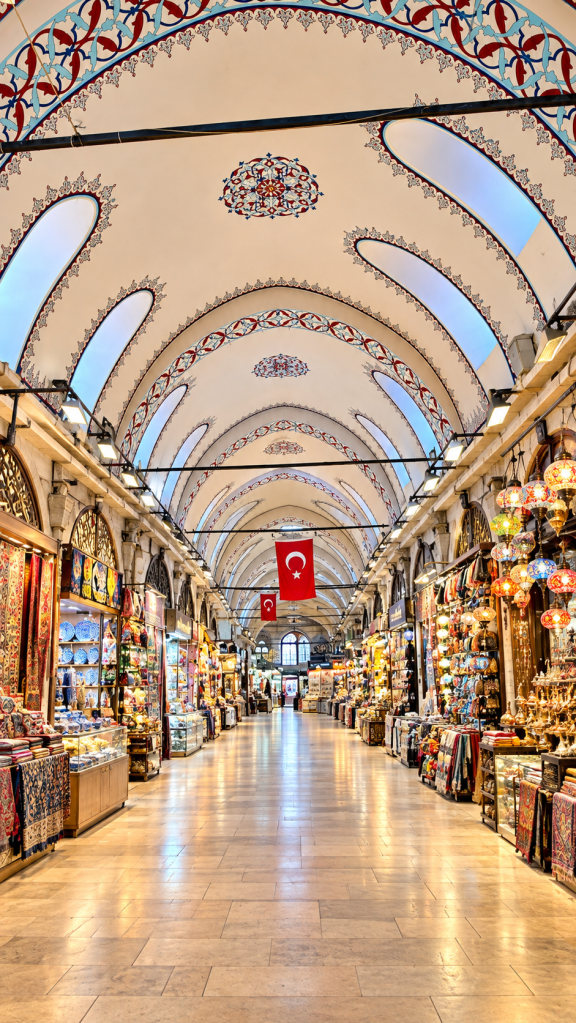
Then came the Grand Bazaar.
Nothing quite prepares you for it. Vaulted passageways stretch in every direction beneath painted ceilings, lined with jewelry, lamps, ceramics, carpets, spices, leather, sweets and almost anything else one might imagine. People flowed through the corridors in both directions while shopkeepers competed gently—and sometimes not so gently—for attention.
It is shopping, certainly.
But it is also theater.
Eventually we found ourselves in a spice shop, where jars of deep-red saffron sat on the counter like something considerably more precious than seasoning.
Which, apparently, it is.
I had always heard that saffron was the world’s most expensive spice, but seeing how it is sold helped explain why. Each tiny strand is part of a flower and must be harvested painstakingly. The best-known premium saffron is strongly associated with Iran, which dominates global production.
We tasted saffron tea.
After yesterday’s encounter with rakı, Istanbul was continuing my education one drink at a time.
Nearby were enormous bins of teas and dried flowers with wonderfully ambitious labels promising solutions for cholesterol, pain and probably several problems I didn’t know I had.
And then there were the sweets.
Rows of baklava. Pistachios. Rose petals. Chocolate. Turkish delight in colors that looked almost too beautiful to eat.
Almost.
We bought Turkish delight to take home to our daughters.
I liked that moment.
After a day spent contemplating emperors, religions, earthquakes, conquests and buildings nearly fifteen centuries old, something as ordinary as parents buying sweets for their children brought the day back to its proper scale.
Perhaps travel works that way.
We cross oceans searching for great monuments, and they deserve our attention. Today I stood inside buildings that have witnessed more history than I can easily comprehend.
But the memories we carry home are often smaller.
A cracked mosaic.
Sunlight against six minarets.
The smell of spices.
The taste of saffron tea.
Baklava melting into Turkish ice cream.
A leather jacket we probably hadn’t planned to buy.
Two boxes of Turkish delight for two daughters thousands of miles away.
And two very tired feet that had carried me through 12,000 steps of history.
Yesterday, Istanbul introduced itself.
Today, we walked into its past.
And my feet can confirm that we walked quite a long way into it.
It is strange how time changes everything, and yet leaves certain moments untouched.
The anniversary of September 11 has made me think about that. Twenty-five years also happens to approximate the length of my career at Capital Health Plan. I had only just begun working there in July 2001. I was still finding my way, settling into my office at Governor’s Square, beginning what I could not then have known would become one of the defining chapters of my life.
And then came September 11.
I remember that morning vividly.
There were no televisions in our offices. There were no sophisticated cell phones delivering breaking-news alerts every few seconds. Social media, as we know it today, did not exist. In many ways, we were isolated from what was happening beyond the walls of the clinic.
Our patients became our windows to the outside world.
Someone would come in and tell us that a plane had struck the World Trade Center. Then another patient brought another piece of news. Another plane. Another tower. Washington. Pennsylvania.
Fragments of an unimaginable story arrived through the people walking into our examination rooms.
And still, we continued seeing patients.
That detail has always stayed with me. The world had changed, although I don’t think any of us yet understood how profoundly, and there we were doing what we had come to work to do. Patients needed to be seen. Illness had not suspended itself because history was unfolding elsewhere.
We worked until the end of the day.
On my drive home, I turned on the radio. There was nothing else. Every station seemed consumed by what had happened.
Then I arrived home and turned on the television.
Only then did I truly see it.
The planes.
The towers.
The smoke.
People running through streets covered in ash.
And eventually, those enormous buildings collapsing into themselves.
I remember thinking about the depravity of which human beings are capable.
Evil does not always announce itself with horns and banners. Sometimes it begins in ordinary places—in grievance, hatred, resentment, fanaticism, the gradual dehumanization of another person.
Evil springs from common places if we give it the capacity to grow.
When we water evil, it flowers.
And on September 11, 2001, the world witnessed its terrible bloom.
But behind the images and the numbers were human beings.
A husband who kissed his wife goodbye that morning and never came home.
A mother who left for work expecting to see her children that evening.
A wife.
A son.
A daughter.
A grandparent.
Thousands of ordinary lives interrupted in the middle of ordinary days.
There were children who went to school that morning with two parents and returned to a world in which one was suddenly gone. Those children are adults now. They have negotiated adolescence, college, careers, marriages, parenthood and the thousand small decisions of life without the guidance of someone who should have been there.
Twenty-five years does not restore what was taken from them.
And then there were the first responders.
Firefighters running upward while others were running down. Police officers, paramedics and ordinary citizens moving toward danger because someone they did not know needed help.
Some died that day.
Others survived only to discover that September 11 had not finished with them. Years later, many would suffer illnesses associated with what they breathed and encountered in those ruins.
The casualties of that morning did not end when the smoke cleared.
I have always believed September 11 was a day I would never forget. I hope the nation never forgets it either—not simply because of what was done to us, but because of what we briefly became afterward.
For a moment, the distinctions that so often consume us seemed smaller.
We were frightened. We were grieving. We were angry.
But we were also together.
Over the years I have come to believe that what is best about us is us—what becomes possible when we remember that, despite all our disagreements, we belong to one another.
Perhaps that is what I miss most when I look at the country today.
That sense of common purpose.
That instinct to reach toward rather than retreat from one another.
That understanding that another person’s suffering diminishes all of us.
Oh, how I long for that again.
Twenty-five years have passed.
In almost exactly that span of time, I began a career, practiced medicine, cared for thousands of people, grew older, watched my children become adults, and eventually walked away from the office for the last time.
A quarter of a century.
Long enough for an entire life to change.
And yet I can still see that young physician sitting in his office at Governor’s Square, hearing fragments of terrible news from the patients coming through his door.
Perhaps that is the peculiar nature of memory.
Time moves.
We move with it.
But some days refuse to move at all.
September 11 is one of those days.
It reminds us of the depths to which human beings can descend. But it also reminds us of the heights to which ordinary people can rise.
Both possibilities live within us.
Hatred can be cultivated.
So can compassion.
Division can be fed.
So can community.
Evil can be watered.
But so can hope.
And perhaps that remains our responsibility—to decide, individually and collectively, what we choose to water.
Twenty-five years later, I still believe there is more goodness in us than hatred, more capacity to build than destroy, more that binds us together than separates us.