Amsterdam has a way of opening conversations you did not know you needed.
We arrived in the city before beginning our Tauck river cruise, expecting the usual rhythm of travel: check in, settle down, have dinner, rest, and prepare for the journey ahead. But sometimes the most memorable part of a trip is not the monument, the museum, or the carefully planned itinerary. Sometimes it is the person sitting at the next table.
At dinner, a pleasant couple sat beside us. Before long, we were talking easily — so easily, in fact, that we had not even asked one another’s names. What was supposed to be a quick dinner became several hours of warm conversation.
The most intriguing part was how closely our lives seemed to intersect. We were both at similar stages of transition, negotiating retirement, family dynamics, and the emotional shift from years of saving to the unfamiliar act of spending from retirement accounts. For so long, the discipline had been accumulation. Save. Invest. Plan. Defer. Prepare.
Now, with earned income fading or gone, the challenge becomes permission — permission to spend, to enjoy, to travel, to live from what we spent decades building.
There was comfort in discovering that we were not alone in that paradox.
We were both travelers at heart. We had both come from Florida. We had both visited five continents, with two still waiting. As husbands we found ourselves sharing many similar thoughts, and our spouses seemed to recognize similar rhythms in each other as well. There was an ease to the conversation that surprised me — the kind of ease that usually belongs to old friends, not strangers sharing a dining room in Amsterdam.
Only after hours of conversation did we finally ask each other’s names. We exchanged Facebook contacts, and I shared my blog handle. We even learned a new acronym: the SKI Club — Spending the Kids’ Inheritance. It made us laugh, but beneath the humor was a very real transition: learning how to enjoy what we had spent decades building, while still honoring family, legacy, and responsibility.
It felt like one of those small travel moments that may quietly remain with you long after the trip is over.
That, I think, is one of the great gifts of travel. It opens our lives beyond our familiar borders. It places us beside people whose stories mirror, challenge, or expand our own. Seeing how other people live helps us understand how we are living. Sometimes a chance meeting becomes a gentle confirmation that we are all navigating transitions, uncertainties, and dreams in our own way.
⸻
Amsterdam and the Weight of Memory
Earlier that day, Amsterdam had already placed us in a reflective mood.
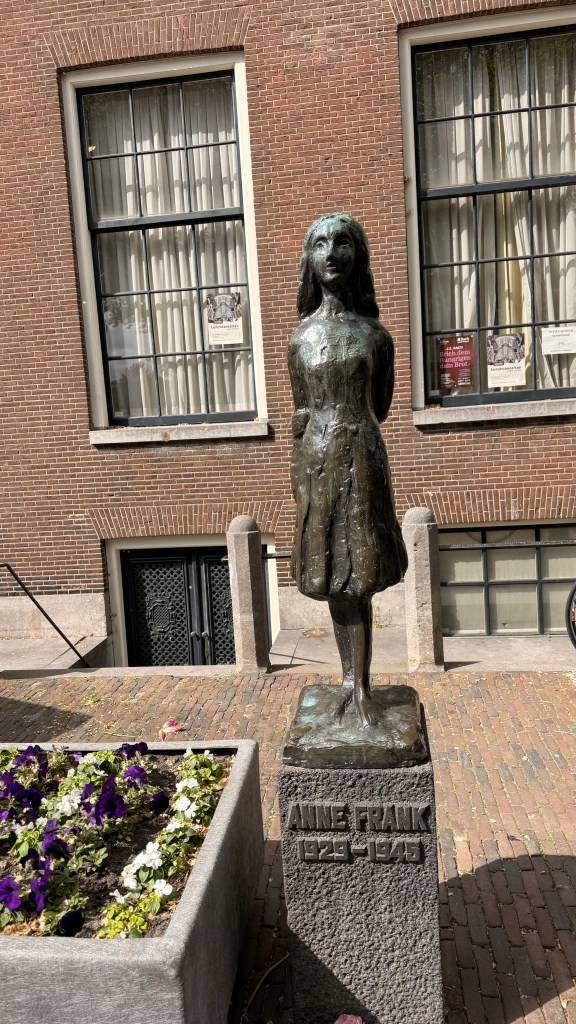
We visited the Anne Frank House, and outside stood the statue of Anne — young, still, fragile, and yet somehow enduring. The bronze figure felt small against the brick buildings around it, but the moral weight of her story filled the entire street.
There are places where history does not shout. It simply stands there and asks you to remember.
Nearby, the church tower rose above the neighborhood, bicycles lined the streets, and ordinary Amsterdam life continued around us. That contrast was striking: daily life moving forward in a place where the past still breathes through brick, stone, and silence.
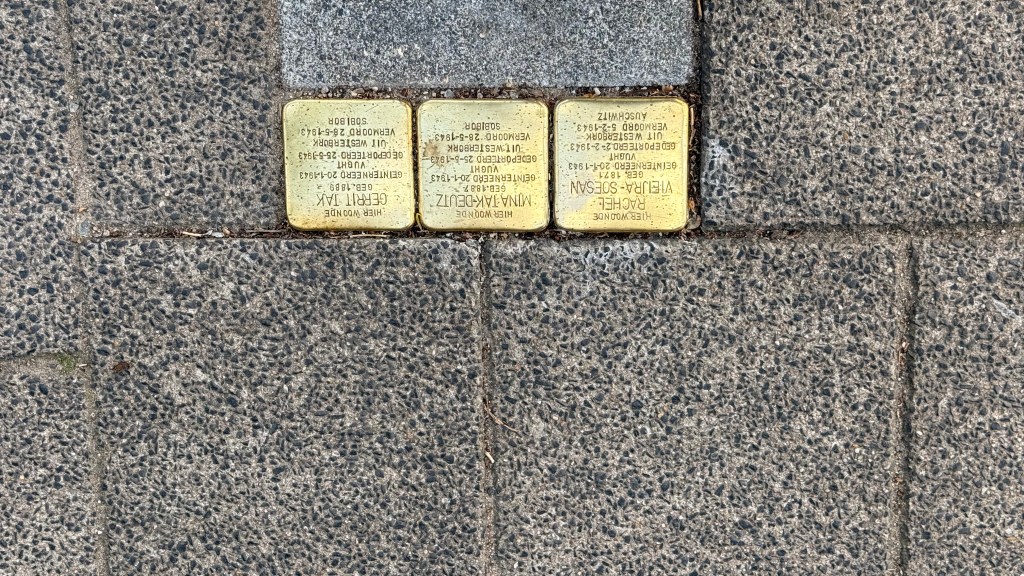
The small brass memorial stones embedded in the pavement were especially moving. Names underfoot. Lives interrupted. Families erased from ordinary streets. They reminded me that history is not only held in museums; sometimes it is built into the ground we walk on.
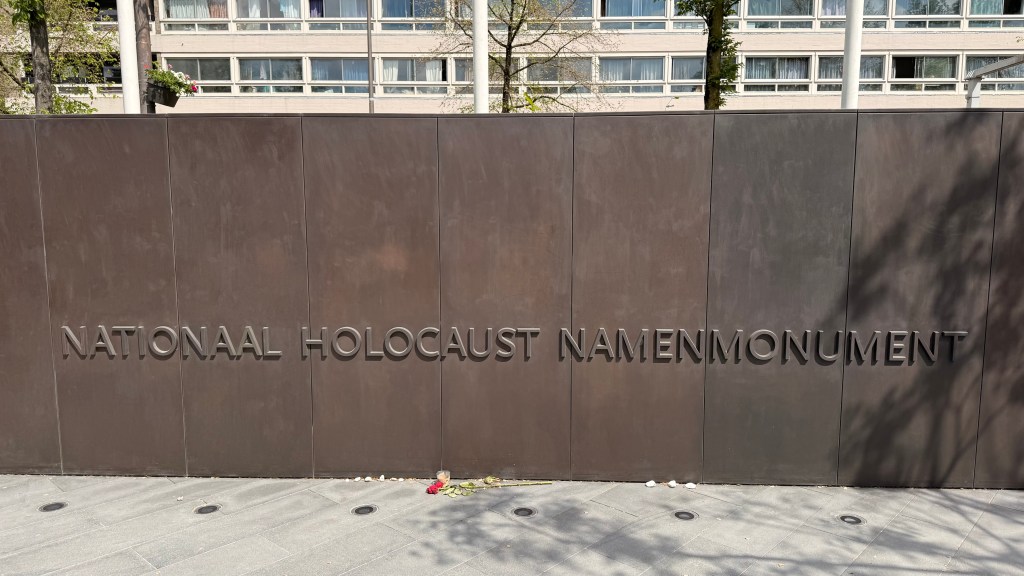
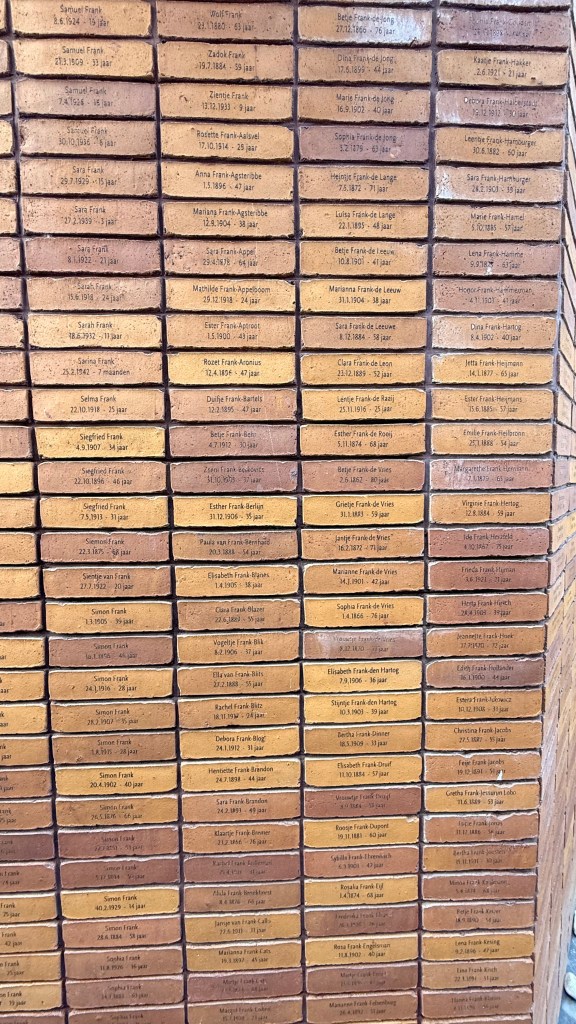
Later, at the National Holocaust Namenmonument, the scale of remembrance became almost overwhelming. The monument bears the names of more than 102,000 Jews, Sinti, and Roma from the Netherlands who were murdered during the Holocaust and never received a grave. Seeing those names transformed the tragedy from abstraction into presence.
It is one thing to know history.
It is another thing to stand before names.
I was struck again by the extent of depravity human beings are capable of when fear, hatred, and narrowness replace empathy. The Anne Frank House and the Holocaust memorial both reminded me that an expansive worldview is not a luxury — it is a moral necessity. When we stop seeing the humanity of others, we become capable of terrible things.
Travel matters because it enlarges us.
It moves us beyond the smallness of our assumptions.
It teaches us that borders may define nations, but they should never define compassion.
⸻
Van Gogh, Yellow, and the Self-Portrait of a Life
From the heaviness of memory, we moved into the world of Van Gogh.
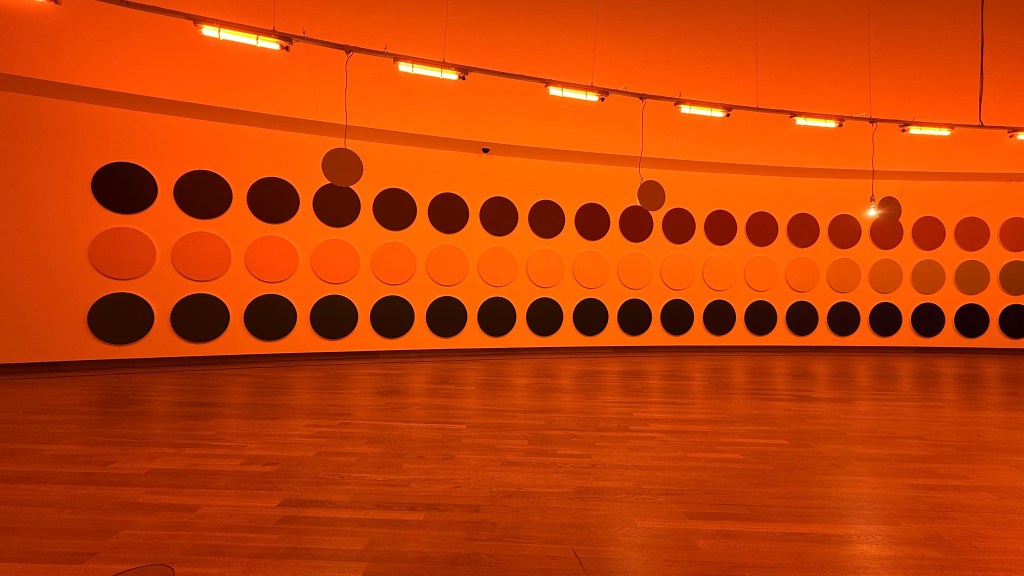
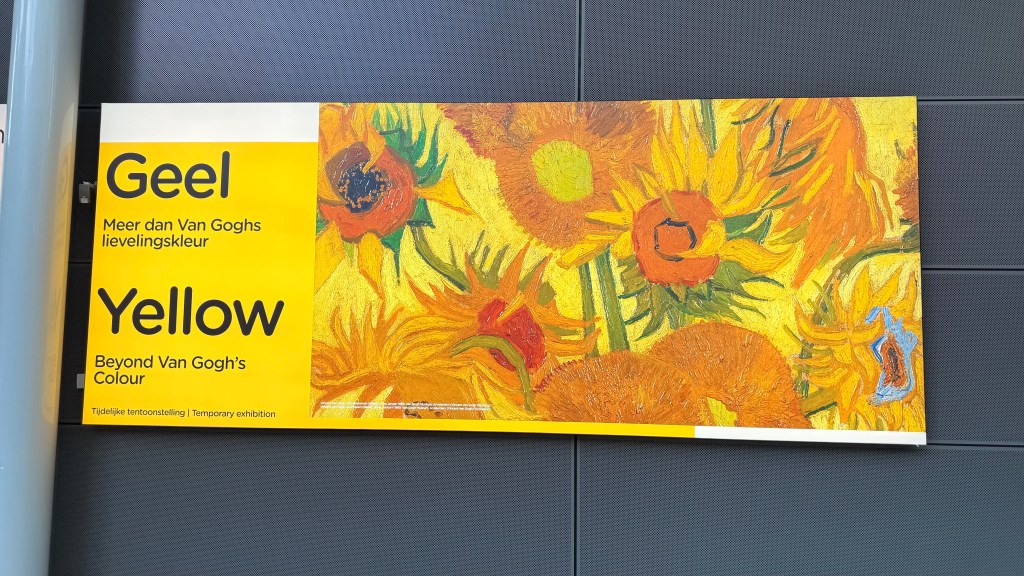
At the Van Gogh Museum, I found myself unexpectedly captivated by yellow. Not just as a color, but as an emotion. Yellow as sunlight. Yellow as longing. Yellow as brightness trying to break through suffering.
One display described sunshine as a light that, for want of a better word, could only be called yellow. Another suggested that yellow is not merely seen, but experienced. That stayed with me.
Van Gogh’s work seems to hold both anguish and radiance at once. Despite his inner struggles, he created with astonishing intensity. His paintings were not casual expressions; they were urgent attempts to translate feeling into color.
His self-portraits were especially revealing.
They were not simply paintings of a face. They felt like examinations of a life.
And I wondered: perhaps we all need self-portraits of our own lives.
Not the polished version. Not the curated version. Not the version we show at dinner parties or post online. But the honest one — the one that reflects our fears, our transitions, our joys, our wounds, our contradictions, and our unfinished hopes.
We may not always like what is reflected back.
But if we are willing to look closely, we may see something true.
Van Gogh died tragically, but his paintings continue to speak. Anne Frank’s life was cut short, but her words continue to bear witness. And in a quiet Amsterdam dinner, four travelers from Florida found unexpected companionship at the edge of a new chapter.
That is the beauty of travel.
It can take you from a memorial wall to a museum of color, from a stranger’s table to a reflection on your own life. It can remind you that the world is both wounded and beautiful, both tragic and luminous.
Amsterdam gave us all of that in one day.
A statue.
A name.
A stone in the pavement.
A wall of remembrance.
A room filled with yellow.
And a conversation that began before we even knew each other’s names.
⸻
Closing Reflection
Some journeys begin with a boarding pass.
Others begin with a shared table, an unexpected conversation, and the quiet courage to see yourself in someone else’s story.
Amsterdam reminded me that retirement is not simply an ending or a reward. It is a transition into a different kind of seeing. We are learning not only how to spend what we saved, but how to inhabit the life we prepared for.
And perhaps that is what travel does best.
It gives us new mirrors.
It gives us new colors.
It gives us yellow.
“Travel enlarges the portrait of a life. It adds light where routine had drawn only lines.”
Simply O.