On a lighter note — though perhaps no less profound — I want to talk about canals.
I have always been fascinated by them. Maybe it began years ago watching locks and waterways in North America, or later standing in awe before the Panama Canal. This journey through Europe has only deepened that fascination. We have passed through canals in Prague, navigated countless locks along the rivers, and today encountered what may be the most astonishing engineering achievement of them all: the Main–Danube Canal.
There is something almost poetic about it.
A man-made waterway connecting two great river systems — the Rhine flowing toward the North Sea and the Danube flowing toward the Black Sea — effectively linking one side of Europe to the other. For centuries it existed only as a dream. Today we are floating through it.
What struck me most was not merely the scale, but the precision.
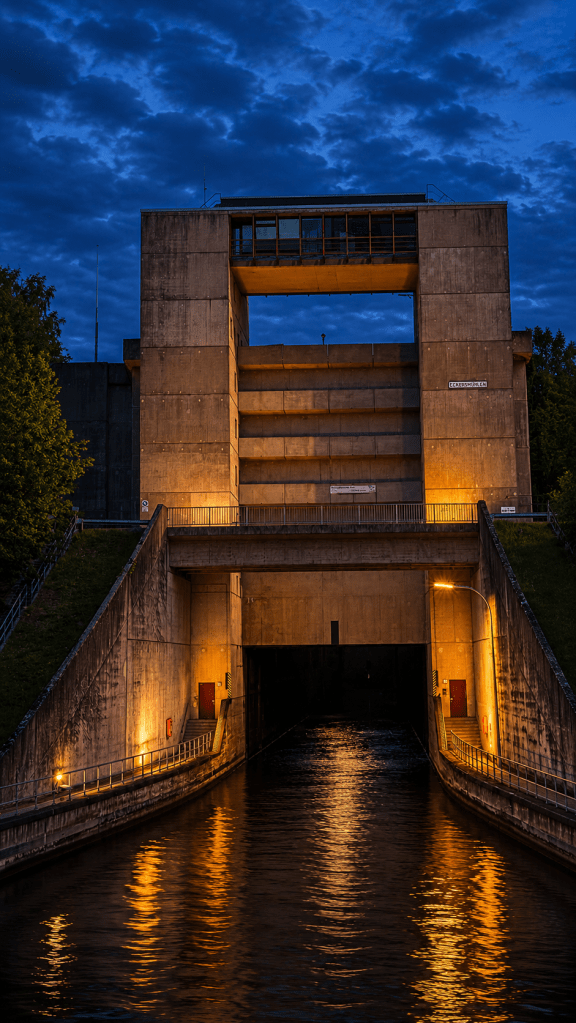
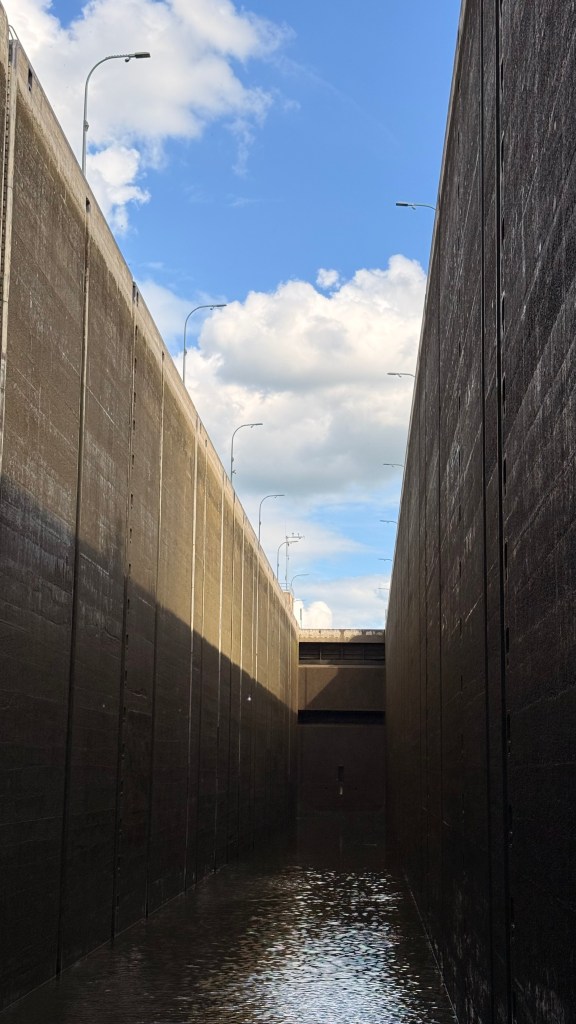
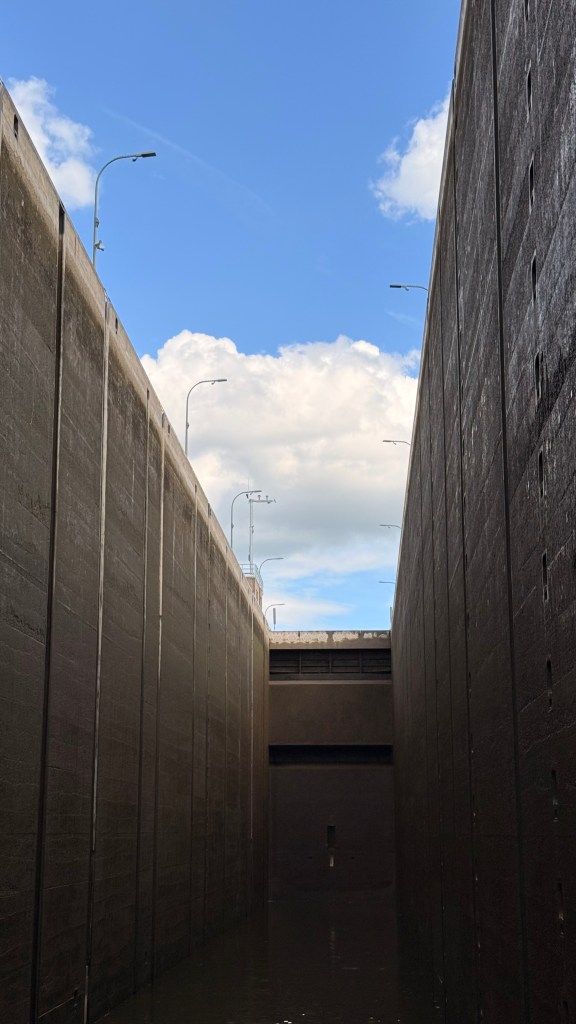
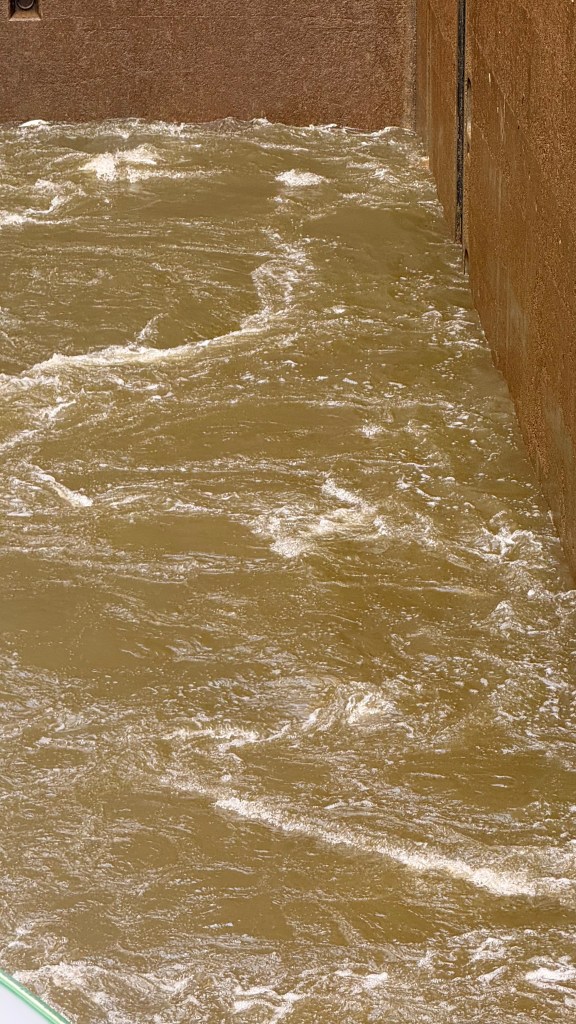
Today we passed through three of the largest locks on the canal system, each lifting our ship roughly 15 meters — nearly five stories high — with extraordinary smoothness. Watching it happen feels almost impossible at first. The gates close behind you, and then millions of gallons of water begin entering the chamber from openings hidden beneath the floor and along the walls. There is surprisingly little turbulence. No violent surge. Just a gradual, almost silent rising.
And the margins are astonishingly small.
Standing on deck, you could practically touch the concrete walls on either side. The clearance felt scarcely more than a foot in places, yet this massive vessel floated upward with calm precision, as though guided by invisible hands.
The engineering behind it is extraordinary. Each lift uses roughly 15 million gallons of water and takes about twenty minutes. Much of that water is recycled through ingenious gravity-fed reservoirs built into the lock system itself — a design so efficient that even the modern Panama Canal studied it while addressing its own water challenges.
And all of this exists for a singular purpose: to carry ships over Europe’s continental divide.
Then, almost quietly, we passed the divide itself.
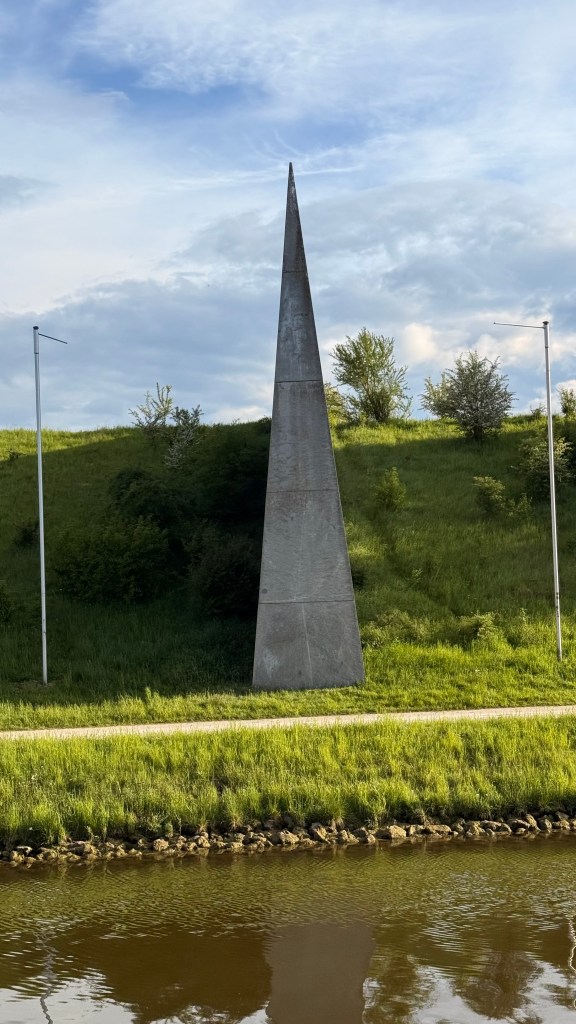
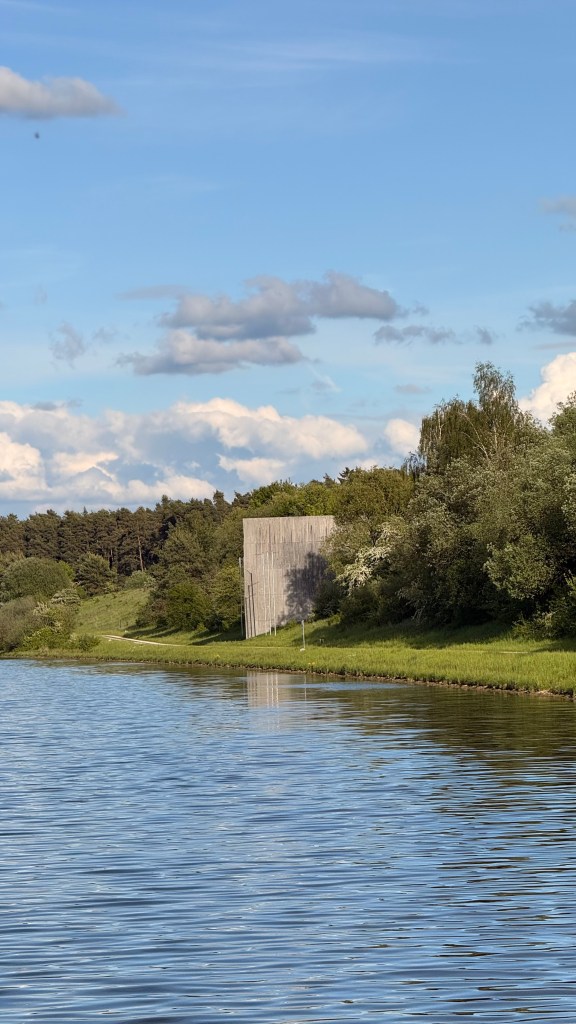
Not a dramatic mountain ridge. Not some towering alpine crossing. Just a slender monument rising beside the canal — easy to miss if you did not know its significance.
Yet few places on earth represent geography, engineering, and history converging so elegantly.
At that point, we were floating across the invisible line separating Europe’s waters.
To one side, every drop eventually journeys northward through the Main and Rhine Rivers toward the North Sea. To the other, the waters begin their long descent through the Danube toward the Black Sea.
And somehow, through locks, reservoirs, pumps, and centuries of human persistence, we crossed between them almost effortlessly.
I found that strangely moving.
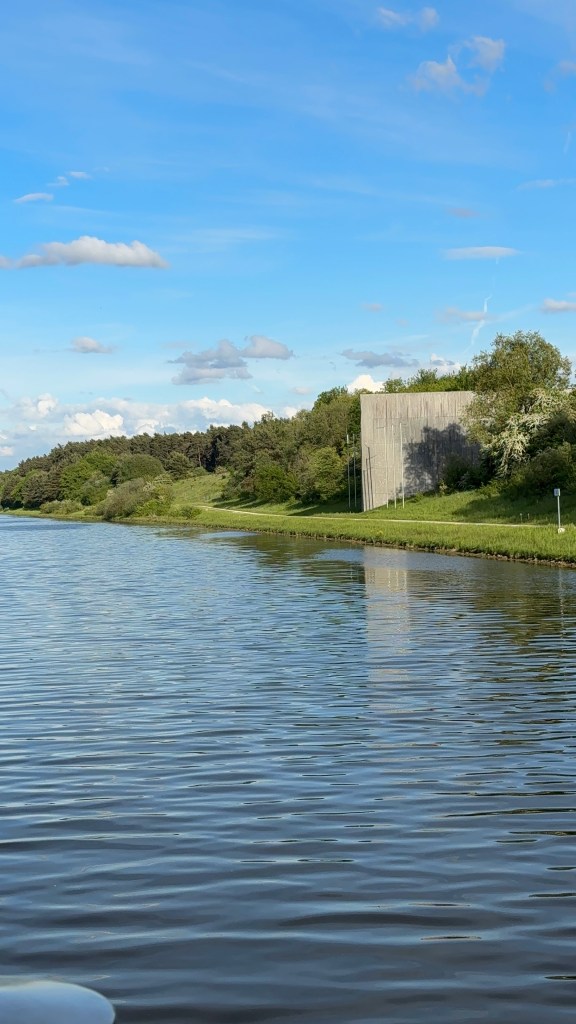
There was no announcement from nature itself. No thunder. No visible boundary. Only calm water, evening light, and an austere concrete monument standing silently beside the canal — like a marker not merely of geography, but of human imagination.
The monument itself felt fittingly understated. A narrow concrete sail cutting upward into the sky, almost like the bow of a ship emerging from the earth. Our lecturer joked that some people think it resembles a wall more than a sail, but perhaps that ambiguity is appropriate. Divides and connections often look similar depending on where one stands.
What fascinated me equally was the history behind it.
The dream of linking these waterways dates back over a thousand years to Charlemagne himself, who attempted to build an early canal in 793 AD. Imagine that: medieval engineers trying to connect Europe’s great river systems long before modern machinery existed. Their effort may or may not have succeeded fully, but the vision endured through generations until the modern canal finally opened in 1992 — after 32 years of construction.
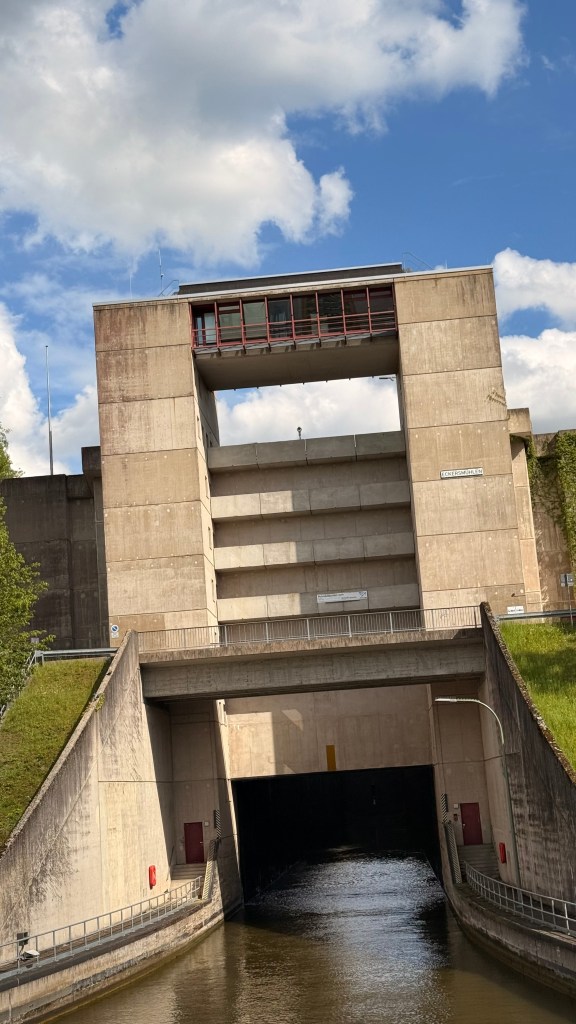
There is something deeply human about that persistence.
We often speak of civilization through wars, kings, borders, and politics. But canals remind us of another side of humanity: cooperation, engineering, patience, and imagination. They are monuments not to conquest, but to connection.
As we rose slowly inside those immense locks today, I found myself thinking about how often the greatest achievements in human history are not loud at all. Sometimes they are quiet systems working beneath the surface — carefully calculated, elegantly designed, almost invisible unless someone takes the time to understand them.
A lock chamber filling beneath your feet.
Water seeking its own level.
A ship lifted gently toward another sea.
And somewhere in all of it, the enduring human desire to bridge what nature once left apart.
Tonight, somewhere between the Rhine and the Danube, between the North Sea and the Black Sea, between ancient dreams and modern engineering, we drifted quietly over the roof of Europe.
Simply O.


Wonderful description of the emotional impact and insights on a Much Larger scale.
LikeLike