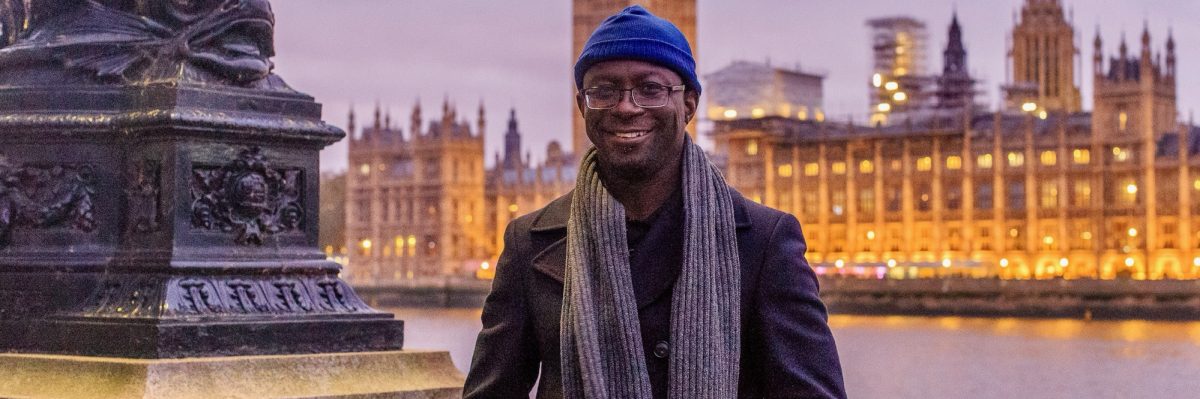
I am quintessentially African.
I grew up in Nigeria, in a society where identity mattered deeply. We did not call it racism. We called it tribalism. Politics was often shaped by region, language, and ancestry. A government official might give a job to someone from his own region even if that person was less qualified. It was unfair. It was frustrating. But it was also understandable within its context.
Our tribalism was rooted more in familiarity and survival than in metaphysical hatred. In a young post-colonial nation, where institutions were fragile and trust was local, people leaned toward “their own.” It was proximity bias. It was patronage. It was human nature amplified by insecurity.
What it was not, at least in my experience, was a doctrine that another tribe was inherently less human.
Ironically, Nigeria had very few white people when I was growing up, and those who were present were often treated better than natives. That reality complicates simplistic narratives about power and identity. Human beings form in-groups wherever they are. The categories change. The instinct does not.
I then spent a decade living and training in the United Kingdom. That experience added another layer. The UK carried its own history — empire, immigration, class stratification. There, I encountered a society more subtle in its expressions of difference. Identity was shaped not only by race, but by class, accent, schooling, postcode. You could feel the gradations. Some of it was overt; much of it was understated.
Living in both Nigeria and the UK allowed me to see that group identification is universal. It is expressed differently across cultures, but it persists. Tribe. Class. Region. Race. Nation.
Now I live in America — a country that has long described itself as a “shining city on a hill.” That phrase carries moral aspiration. It suggests a society that strives not merely for prosperity, but for example. A nation that understands its diversity as strength, not threat.
Yet I find myself disappointed.
Not angry. Disappointed.
There seems to be an innate human tendency toward group identification. That much I accept. I have seen it in Nigeria. I have seen it in the United Kingdom. I see it here. But what troubles me is not the existence of group identity. It is the elevation of that identity into hierarchy — into the belief that one human being is intrinsically superior to another.
That is where tribal preference crosses into something darker.
As a man of faith, I struggle with the sins of racism because they strike at something sacred. If every human being bears divine image, then to diminish another person’s worth on the basis of race is not merely a social flaw — it is a moral contradiction.
I am not a descendant of American slaves. My lineage is African in a direct and uninterrupted sense. And yet racism still cuts deep. It cuts because it attempts to assign lesser value to people who look like me. It cuts because it suggests that history’s ugliest hierarchies are not as buried as we hoped. It cuts because it forces one to ask how a society so educated, so powerful, so globally influential can still wrestle so publicly with basic human equality.
Perhaps group bias is universal. But dehumanization is not inevitable.
Nations can discipline their worst instincts. Leaders can elevate rather than inflame. Citizens can choose moral maturity over tribal reflex. That is what I had hoped America — with its resources, its history of civil rights struggle, and its global example — would embody more consistently.
Disappointment implies expectation.
I expected better. Not perfection. Not the erasure of human bias. But progress — visible, steady, undeniable progress toward seeing one another fully.
The shining city on a hill was always aspirational. It was never flawless. But aspiration requires maintenance. It requires courage. It requires truthfulness about our impulses and restraint in how we wield them.
I do not hate this country. I have built my life here. I have raised my daughters here. I have contributed to its institutions. I believe in its promise.
But belief does not prevent disappointment when the promise feels dimmed.
And perhaps this is why it matters so much to me. My daughters are growing up in this country. They will inherit not only its opportunities, but its tensions. I want them to live in an America that sees them fully — not as categories, not as demographic abstractions, but as complete human beings endowed with dignity. I want them to engage the world with confidence, not defensiveness; with moral clarity, not bitterness.
The deeper question I continue to wrestle with is this: How does one human being come to see another as less?
History offers explanations — fear, scarcity, political manipulation, inherited prejudice. Psychology offers mechanisms — in-group bias, threat perception, social conditioning. But explanation does not equal justification.
The moral line remains clear.
Group identity may be human.
Hierarchy of human worth is not.
And perhaps the true measure of a shining city is not whether it avoids tension, but whether it resists the temptation to sanctify its divisions — for the sake of the next generation.
Hope, after all, is a discipline.
SimplyO
 Simply O