A Broken World, A living Hope.

Another Easter Reflection

There is so much turmoil in the world today. Much of it, at least on the surface, appears to be driven by religion. Conflicts rooted in belief systems, identities shaped by faith, divisions that seem irreconcilable.
And yet, when you step back, a different truth begins to emerge. We are more alike than we are different.

Science tells us that all humans share a common genetic origin. Faith traditions, in their own ways, trace humanity back to a shared beginning—a family, not fragments.

So the question becomes unavoidable:

If we are, in essence, one family… why so much hate?

An Old Problem, Not a New One

It is tempting to think this is a modern crisis. But history tells us otherwise.

Even in the time of Jesus Christ, the world was deeply divided.

Truth was not universally embraced—it was challenged.

Love was not always received—it was rejected.

And those who carried the message forward paid a heavy price.

With the exception of one, His disciples were martyred.

This is not a new story.

Where the Tension Lies

Perhaps the issue is not religion itself—but what we, as humans, do with it.

At its core, faith calls us to:

  • Love one another
  • Show mercy
  • Walk in humility
  • Seek peace

And yet, in practice, we often:

  • Defend identity over truth
  • Choose tribe over unity
  • React in fear rather than understanding

The tension lies in the gap between what we believe… and how we live.

A Broken World

It may simply be that the world has always been broken.

Not irredeemable—but fractured.

Capable of great compassion… and great division.

Capable of grace… and of harm.

And perhaps the discomfort we feel when we observe this is not a weakness—but an awareness. A recognition that something is not as it should be.

The Easter Perspective

And this is where Easter speaks most clearly.

Easter does not pretend the world is whole.

It acknowledges betrayal.

It confronts suffering.

It does not deny injustice.

But it does something else—it introduces hope into brokenness.

It reminds us that even in a fractured world, redemption is possible.

A Personal Responsibility

We may not be able to fix the world.

But we are not without influence.

In our words.

In our actions.

In how we choose to see others.

We can either contribute to division… or to healing.

Final Reflection

If we are all part of the same human family, then perhaps the question is not why the world is broken—

but what each of us chooses to do within it.

Closing Thought

In a world that has been broken for centuries, choosing love is not weakness… it is resistance.

—Simply O

The Skin We Live In.

An Easter Reflection

From a biological standpoint, there is something quietly profound about the human body.

Our skin—the part of us most visible to the world—is composed of layers. The dermis beneath, and the epidermis above. And at the very surface lies what is known as the stratum corneum—a layer made up almost entirely of dead cells.

Cells that have fulfilled their purpose.

Cells that no longer live… yet still cover us.

They protect us.

They define our outward appearance.

And they are constantly being shed, replaced, renewed.

In a sense, we are all walking around covered in what is no longer alive.

The Illusion of Permanence

And yet, despite this remarkable process of renewal, we age.

The body changes.

Time leaves its imprint.

And slowly, unmistakably, we are reminded of a truth that no advancement in science has been able to reverse:

This body was never designed to last forever.

What We See… and What We Are

There is something humbling in realizing that our most outward expression—our skin, our appearance—is, in large part, composed of what has already passed.

What the world sees first… is not the essence of who we are.

It is a covering.

A temporary layer.

A reflection, not the core.

A Quiet Message Over Time

Perhaps this is why aging brings with it a different kind of clarity.

The things we once held tightly—appearance, perception, external identity—begin to loosen their grip.

And in their place, something deeper emerges:

Character.

Wisdom.

Faith.

Grace.

Things that do not shed.

Things that do not fade in the same way.

The Easter Connection

And in this, Easter offers a profound reminder:

That life is not defined by what is outward and temporary…

but by what is enduring and unseen.

That what fades is not the final story.

And what is renewed is not always visible to the eye.

Final Reflection

We spend much of our lives tending to what is seen…

yet the deeper work is always within.

Closing Thought

The body may age, the surface may fade, but the essence of who we are was never meant to be confined to what is visible.

— Simply O

The Mirror We Fight

The Story I read somewhere and my reflection.

The dog wandered into a strange museum.

Every wall was a mirror.

The ceiling, the floor—even the doors.

The moment he stepped inside, he froze.

Everywhere he looked, dogs stared back at him—

in front, behind, above, below.

A whole pack surrounding him.

Fear took over.

He bared his teeth.

They did the same.

He barked.

They barked back—louder, sharper, multiplied.

Panic exploded.

He lunged left, then right.

They lunged too.

He snapped his teeth—

thousands of teeth snapped back.

The more he fought, the more enemies appeared.

The more afraid he became, the more terrifying the world looked.

He never realized the truth.

There was no pack.

No threat.

No enemy.

Only himself.

The next morning, the guards found him lifeless—

lying alone in the mirror hall,

surrounded by thousands of reflections of his own body.

No one attacked him.

No one harmed him.

He died fighting what he believed was the world…

but was only his own reflection.

Reflection

Life has a way of placing us in rooms like this.

Not always made of glass—

but of perception.

There are moments when everything feels adversarial:

the market, the workplace, even relationships.

And in those moments, something subtle happens.

Fear sharpens.

Assumptions harden.

Reactions escalate.

What we see begins to reflect what we feel.

Not every challenge is imagined.

The world is not always kind, and it is not always fair.

But often—more often than we admit—

our response amplifies our reality.

Fear can turn uncertainty into threat.

Anger can turn difference into opposition.

Defensiveness can turn silence into hostility.

And before long, we find ourselves surrounded—

not by enemies,

but by echoes.

Closing Thought

The world is not always a mirror…

but it often echoes what we bring into it.

Before assuming the world is against you, pause.

Sometimes the noise you hear

is your own reflection speaking back.

“We see the world not as it is, but as we are.”

— Anaïs Nin

Simply O

The Illusion of Flight

“Not everything that feels like ascent is progress. Sometimes, we are simply falling—with confidence.”

There is a quiet illusion that often accompanies success.

A sense of lift. Of movement. Of ascent.

We mistake motion for direction.

We mistake speed for purpose.

And sometimes… we mistake falling for flying.

There is a moment—early on—when everything feels right.

The wind rushes past.

The world expands beneath you.

You feel elevated… chosen… unstoppable.

In that moment, there is no fear.

Only the intoxicating belief that you are rising.

But perception is not truth.

And elevation is not always ascent.

Then something shifts—subtly at first.

The ground, once distant, begins to take shape.

Clarity replaces illusion.

What felt like control begins to feel uncertain.

What felt like progress begins to feel… fast.

Too fast.

But by then, momentum has taken over.

And momentum does not ask for permission.

And then—the truth arrives.

Not gradually.

Not gently.

But all at once.

The realization that what felt like flight…

was never flight at all.

It was descent—misunderstood.

And in that final moment, clarity comes—

but too late to change direction.

Closing Reflection

We all have seasons like this.

In our careers.

In our finances.

In our decisions.

Even in our convictions.

Moments when everything feels like upward movement—

until reality reminds us otherwise.

Wisdom is not just in rising.

It is in discerning.

Are we truly flying…

or simply falling with confidence?

“True elevation is not measured by how high we feel, but by how firmly we are grounded in truth.”

Simply O.

From Accumulator to Steward

The Psychology of Retirement

For most of my life, I was an accumulator.
Across three continents, I worked, studied, saved, sacrificed, and built.

Nigeria to the United Kingdom.

United Kingdom to the United States.

Resident to physician.

Physician to Medical Director.

The formula was simple:

Work hard.

Spend carefully.

Save aggressively.

Delay gratification.

Let time compound.

It worked.

But something curious happened when I retired.

The operating system flipped.

The Jarring Transition

In less than a month, I moved from accumulation to distribution.

For over four decades, I trained myself to say:

“Not yet.”

Not yet on indulgence.

Not yet on luxury.

Not yet on upgrades.

Even when I could afford more, I chose restraint.

Then, after retirement, I bought my first first-class ticket.

And I hesitated.

Not because I couldn’t afford it.

Not because it was irresponsible.

But because it violated the psychological wiring that built my success.

That surprised me.

The Strange Irony of Compounding

What makes this transition even stranger is this:

Even at average market returns, our wealth continues to grow.

The machine I spent decades building now runs on its own.

And yet, instinctively, I still guard it —

as if one indulgent decision might unravel everything.

That is the dichotomy.

Mathematically secure.

Psychologically vigilant.

The Immigrant Mindset

Perhaps this is common among immigrants.

When you build from uncertainty, security becomes sacred.

Frugality isn’t just a habit —

it’s armor.

Savings isn’t just financial planning —

it’s emotional protection.

Letting go of that armor, even partially, feels vulnerable.

The Realization About Time

There is another layer.

I am now 63.

Statistically, two-thirds of my life is behind me.

That realization does something profound.

Retirement is not simply a financial event.

It is an existential one.

You are forced to confront:

  • How much time remains.
  • What truly matters.
  • What legacy means.
  • Who you are when you are no longer “the doctor.”

That reorientation is far more significant than the balance sheet.

From Accumulator to Steward

I’ve come to realize something important.

I am not moving from accumulation to consumption.

I am moving from builder to steward.

The goal is no longer:

“How much can I grow this?”

It is now:

“How intentionally can I deploy this?”

Deploy toward:

  • Experiences with my wife.
  • Travel with purpose.
  • Family structure and legacy.
  • Philanthropy.
  • Health.
  • Writing.
  • Reflection.
  • Time.

This is not indulgence.

It is alignment.

A Different Question

For most of my life, I asked:

“Can I afford this?”

Now I’m learning to ask:

“Does this serve the life I am intentionally crafting?”

That is a harder question.

But it is a better one.

Do All Retirees Go Through This?

I suspect many do — especially those who built wealth rather than inherited it.

When your identity is tied to discipline, productivity, and accumulation,

retirement requires psychological recalibration.

You must learn to trust the system you built.

You must learn to enjoy what you delayed.

You must learn that spending wisely in retirement is not erosion.

It is execution.

Final Reflection

There is a quiet shift that happens when the drive to prove gives way to the freedom to choose.

I am no longer building for survival.

I am shaping for legacy.

And perhaps the greatest discipline of this stage of life

is not saving more.

It is releasing well.

— Simply O

The Arc, The Dream, and Why I Still Believe

I am an immigrant. I came to America not as a descendant of its earliest wounds, but as someone who chose it. I built my life here. I trained, worked, led, invested, raised daughters, paid taxes, and contributed to the institutions that make this country function. I have lived the American dream — not perfectly, not effortlessly — but honestly and through discipline.

That is why I care.

When public discourse becomes careless with truth — when arithmetic is stretched beyond recognition, when rhetoric replaces seriousness — it unsettles me. Not because I expect perfection from leaders. No democracy has ever had that. It unsettles me because words matter. Facts matter. Institutions matter. A republic depends on shared reality.

Yet even in moments of disappointment, I remain grounded.

I believe in the arc of justice. History is not linear, but over time it has bent toward broader inclusion, deeper rights, and greater opportunity. There have been dark chapters — civil war, segregation, corruption, political hysteria — but the constitutional core endured. The system corrected. Not instantly. Not painlessly. But steadily.

I also believe in the fundamental goodness of the human spirit.

I grew up in Nigeria, lived for a decade in the United Kingdom, and ultimately built my life in the United States. Across continents and cultures, I have seen the same thing: ordinary people want dignity, opportunity, and fairness. They want to work. They want their children to rise higher than they did. They want stability more than spectacle.

America, at its best, uniquely affirms that your origin does not determine your ceiling. That you can come from anywhere, work hard, contribute meaningfully, and build something lasting. I am evidence of that promise. My daughters are evidence of that promise.

The American dream does not depend on flawless speeches. It depends on durable institutions — rule of law, capital markets, education, civic participation — and on citizens who take their responsibilities seriously. Those foundations remain.

I am disappointed at times. But I am not cynical.

Disappointment means I expect more. Cynicism would mean I expect nothing.

I choose not to surrender to cynicism. Because I have seen too much evidence — in my own life and in the broader sweep of history — that the arc does bend. Slowly. Imperfectly. But persistently.

And I want my daughters to inherit not just wealth or security, but confidence in the idea that effort still matters, integrity still matters, and justice, though delayed at times, is not defeated.

That is why I still believe.

Simply O

On Tribalism, Racism, and the Struggle to Understand

I am quintessentially African.

I grew up in Nigeria, in a society where identity mattered deeply. We did not call it racism. We called it tribalism. Politics was often shaped by region, language, and ancestry. A government official might give a job to someone from his own region even if that person was less qualified. It was unfair. It was frustrating. But it was also understandable within its context.

Our tribalism was rooted more in familiarity and survival than in metaphysical hatred. In a young post-colonial nation, where institutions were fragile and trust was local, people leaned toward “their own.” It was proximity bias. It was patronage. It was human nature amplified by insecurity.

What it was not, at least in my experience, was a doctrine that another tribe was inherently less human.

Ironically, Nigeria had very few white people when I was growing up, and those who were present were often treated better than natives. That reality complicates simplistic narratives about power and identity. Human beings form in-groups wherever they are. The categories change. The instinct does not.

I then spent a decade living and training in the United Kingdom. That experience added another layer. The UK carried its own history — empire, immigration, class stratification. There, I encountered a society more subtle in its expressions of difference. Identity was shaped not only by race, but by class, accent, schooling, postcode. You could feel the gradations. Some of it was overt; much of it was understated.

Living in both Nigeria and the UK allowed me to see that group identification is universal. It is expressed differently across cultures, but it persists. Tribe. Class. Region. Race. Nation.

Now I live in America — a country that has long described itself as a “shining city on a hill.” That phrase carries moral aspiration. It suggests a society that strives not merely for prosperity, but for example. A nation that understands its diversity as strength, not threat.

Yet I find myself disappointed.

Not angry. Disappointed.

There seems to be an innate human tendency toward group identification. That much I accept. I have seen it in Nigeria. I have seen it in the United Kingdom. I see it here. But what troubles me is not the existence of group identity. It is the elevation of that identity into hierarchy — into the belief that one human being is intrinsically superior to another.

That is where tribal preference crosses into something darker.

As a man of faith, I struggle with the sins of racism because they strike at something sacred. If every human being bears divine image, then to diminish another person’s worth on the basis of race is not merely a social flaw — it is a moral contradiction.

I am not a descendant of American slaves. My lineage is African in a direct and uninterrupted sense. And yet racism still cuts deep. It cuts because it attempts to assign lesser value to people who look like me. It cuts because it suggests that history’s ugliest hierarchies are not as buried as we hoped. It cuts because it forces one to ask how a society so educated, so powerful, so globally influential can still wrestle so publicly with basic human equality.

Perhaps group bias is universal. But dehumanization is not inevitable.

Nations can discipline their worst instincts. Leaders can elevate rather than inflame. Citizens can choose moral maturity over tribal reflex. That is what I had hoped America — with its resources, its history of civil rights struggle, and its global example — would embody more consistently.

Disappointment implies expectation.

I expected better. Not perfection. Not the erasure of human bias. But progress — visible, steady, undeniable progress toward seeing one another fully.

The shining city on a hill was always aspirational. It was never flawless. But aspiration requires maintenance. It requires courage. It requires truthfulness about our impulses and restraint in how we wield them.

I do not hate this country. I have built my life here. I have raised my daughters here. I have contributed to its institutions. I believe in its promise.

But belief does not prevent disappointment when the promise feels dimmed.

And perhaps this is why it matters so much to me. My daughters are growing up in this country. They will inherit not only its opportunities, but its tensions. I want them to live in an America that sees them fully — not as categories, not as demographic abstractions, but as complete human beings endowed with dignity. I want them to engage the world with confidence, not defensiveness; with moral clarity, not bitterness.

The deeper question I continue to wrestle with is this: How does one human being come to see another as less?

History offers explanations — fear, scarcity, political manipulation, inherited prejudice. Psychology offers mechanisms — in-group bias, threat perception, social conditioning. But explanation does not equal justification.

The moral line remains clear.

Group identity may be human.
Hierarchy of human worth is not.

And perhaps the true measure of a shining city is not whether it avoids tension, but whether it resists the temptation to sanctify its divisions — for the sake of the next generation.

Hope, after all, is a discipline.

SimplyO

A Rupturing World: On Power, Legitimacy, and What Travel Reveals.

Ancient ruins showcasing the remnants of a historical structure against a blue sky.

“The past explains how we arrived here. It does not decide what comes next.”

I have come to believe that travel is not only about seeing places, but about seeing systems—how they rise, how they fracture, and how fragile they truly are. That belief frames how I see the world today, a world that is not merely changing, but rupturing.

The language of continuity—of transition, reform, or rebalancing—no longer describes our moment. What is breaking is not only the geopolitical order, but the moral scaffolding that once made that order appear coherent. Questions of sovereignty, legitimacy, and power—once politely deferred—are now being asked openly, and once asked, they refuse easy answers.

It is in this context that claims about territory and historical entitlement take on renewed urgency. Recent assertions that Denmark has no legitimate claim to Greenland because Europeans arrived there “only” five centuries ago expose a deeper contradiction. By that logic, the same question rebounds onto the United States and other settler societies. How long ago did Europeans arrive in North America to make it their own? Four hundred years? Five hundred? And what of the Indigenous peoples who lived on, governed, and cultivated the land for thousands of years before colonization began?

If temporal priority alone determines legitimacy, then much of the modern world collapses under its own weight.

Modern states were not born of moral clarity. They emerged through conquest, coercion, and unequal power, later stabilized by laws and institutions that transformed force into permanence. International norms did not erase these origins; they normalized them. Over time, repetition became legitimacy, and legitimacy became assumed. This is why appeals to history, when used selectively, are so dangerous. They are rarely about justice. More often, they are about leverage.

This tension—between how nations came into being and how they justify themselves today—is not abstract for me. It is one of the reasons I travel. To move through the world is to see, firsthand, how fragile governance really is, how contingent borders are, and how deeply history lives in the present. In ancient cities, colonial capitals, and post-conflict societies, the past is not a chapter—it is architecture, memory, grievance, and silence.

Travel strips away the illusion that governance is permanent or inevitable. It reveals how quickly order can fracture, how easily institutions fail, and how much of what we call stability rests on collective belief rather than unshakable truth. Standing in places shaped by empire, revolution, or collapse, one learns that sovereignty is less a fixed fact than a negotiated condition—renewed or eroded with every generation.

This understanding reframes the question of legitimacy. Modern states cannot justify themselves solely by how they came into being, because few would survive that reckoning. Legitimacy today must flow forward, not backward. It must rest on present consent, self-determination, and the agency of the people who live within those borders now. The past explains how we arrived here; it does not, by itself, determine who decides what comes next.

Greenland illustrates this distinction clearly. The question is not whether Denmark once claimed or administered the territory, but whether the people who live there now possess genuine agency over their future. Modern legitimacy depends not on the age of a claim, but on the reality of self-determination.

Applied honestly, this same standard exposes America’s unresolved contradiction. The United States exists as a sovereign state, yet its foundations rest on the dispossession of Indigenous nations who never truly consented to that loss. Tribal sovereignty persists, but uneasily. Land acknowledgments multiply, but restitution remains limited. Reconciliation is spoken of more often than it is achieved. America’s legitimacy today rests not on its origins, but on whether it continues to confront its history and expand justice in the present. That work remains incomplete.

These are not lessons learned from textbooks alone. They are learned by walking through cities where borders have shifted, by listening to people whose lives have been shaped by decisions made far away, long ago, and by witnessing how fragile peace and governance can be when trust erodes. Travel becomes, in this sense, a moral education. It reveals the cost of pretending that power is neutral, that history is settled, or that injustice fades on its own.

In a rupturing world, history is being reopened not to heal old wounds, but to justify new ones. Ancient grievances are revived selectively, pressed into service of modern domination. Moral language is stripped of consistency and used as strategy. That path leads not to justice, but to fragmentation and fear.

The only defensible response is an honest one: to acknowledge past injustice without allowing it to become a tool of opportunism; to reject nostalgia for an order that never fully lived up to its ideals; and to ground sovereignty not in conquest or myth, but in present agency and shared responsibility.

Travel has taught me that the world is held together not by inevitability, but by choice. The past explains how we arrived here. What matters now is whether we have the courage to see the world as it is—and to decide, together, what comes next. And whether this fracture becomes a collapse, or an opportunity to build something more honest, depends on whether we are willing to apply the principles we already accept, consistently and without exception.

Simply O

Reflection from the Road: What Work Reveals

What Travel Helps Us Remember

 I picked up a new book to read and within a few chapters of the book- what the happiest retirees know by Wes Moss he quoted an alarming statistic he cribbed from a Gallup poll a few years back.

“What the Gallup numbers reveal is something many of us have felt quietly, but seldom say aloud: work, for most people, is not the sanctuary it pretends to be.”

As I read that passage, I found myself thinking of the many colleagues, patients, leaders, and young physicians I’ve known over the years. Some arrived every day with fire in their spirit—those rare 20% whose work felt like calling. I’ve met them: the nurse who stayed late to comfort a frightened patient, the pharmacist who looked past numbers to see the human story, the physician who found joy in mentoring rather than metrics.

But for the majority, work was simply the thing that allowed life to happen.

A means, not a meaning.

And then there were the others—the ones quietly suffocating under toxic leadership, impossible expectations, or the slow erosion of dignity. Talented, kind, capable people swallowed by systems that did not see them. For them, work became a place of depletion rather than purpose.

Now, in this next chapter of retirement, it is liberating to step outside that structure. To realize that purpose was never tied to the badge, the inbox, the meetings, or the title. It was tied to the impact we made, the people we lifted, the stories we shaped, and the legacy that remains long after the shift ends.

Retirement does not silence purpose.

It simply removes the walls around it.

There are moments in travel when the world becomes a mirror—reflecting not only landscapes but long-buried truths. On this journey, somewhere between airport terminals, open skies, and the rhythm of my camera shutter, I came across that Gallup statistic again:

Only one in five Americans feel engaged in their work.

Three in five drift through it.

One in five are crushed by it.

Reading this while unbound from schedules and calendars hit differently.

Because for decades many of us believed that work was the centerpiece of our purpose. That identity lived inside job titles, performance reviews, and the approval of structures that seldom paused to see our humanity.

But the truth I’m learning—step by step across continents—is this:

Purpose is not a location. It is not an office. It is not a role.

Purpose is a way of being.

As I walked the rocky coastline of Dubrovnik…

As I wandered through the quiet alleys of Vilnius scented with morning bread…

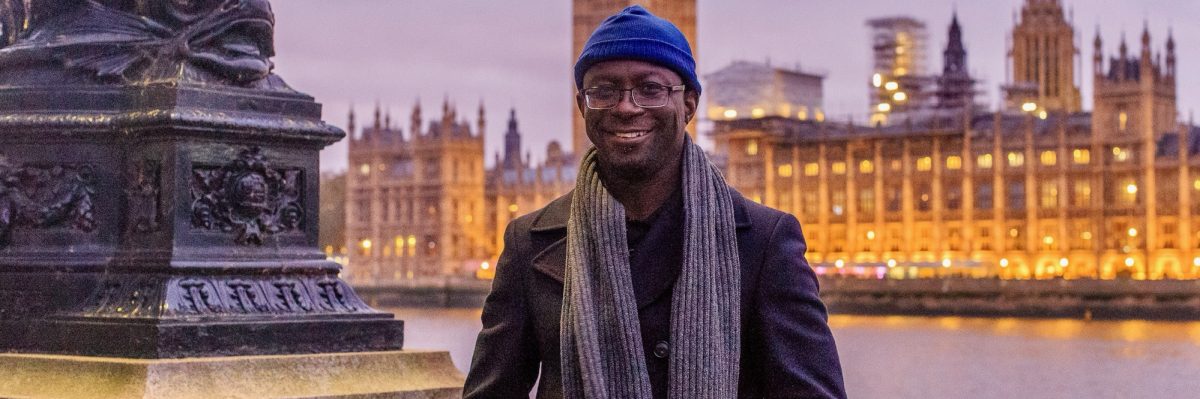
As I stood in the golden light of London’s South Bank or climbed the hills of Patmos…

I realized that distance clarifies what routine obscures.

Travel reveals the difference between living and merely enduring.

In my former life as a medical director, I saw all three categories Gallup describes:

the delighted few,

the steady middle,

and the exhausted many.

All trying—often against the tide—to find meaning in systems that drained more than they restored.

Now, moving freely between cities and seasons, I see more clearly:

Work gave me service. Travel gives me perspective.

Work gave me responsibility. Travel gives me breath.

Work shaped my days. Travel is reshaping my life.

And somewhere on this journey, a quiet truth rose in my spirit—one I now claim as my own:

“Purpose is not earned by our labor; it is revealed by our living.”

And so, as I write from yet another corner of the world—today perhaps a café in Athens, tomorrow a quiet street in Paris, or a bustling market in Singapore—I’m learning that fulfillment was never confined to employment.

It was waiting for spaciousness.

For curiosity.

For rediscovery.

For this.

We don’t retire from purpose; we simply retire from whatever once dimmed it.

This travel series isn’t just about the places I’m seeing.

It is about the pieces of myself I am recovering along the way.

This journey is teaching me that the world is wide, life is fleeting, and meaning often waits just beyond the borders of familiarity—ready for those courageous enough to step into the unknown.

SimplyO

Another Trip To London:

🎉 A Reflection on My Sister’s 60th Birthday Celebration 🎉

The Manor at Bickley, Bromley — St. Andrew’s Day, November 30th

I had the privilege of attending my sister’s 60th birthday celebration on St. Andrew’s Day, November 30th, at the serene and charming Manor at Bickley in Bromley, London. The weather was brisk and characteristically English — cold enough to make you question your life choices, yet perfectly in keeping with the season. But even that chill could not dull the warmth of the occasion. My sister was radiant, surrounded and supported by her three lovely daughters, who stood proudly by her throughout the event.

The evening itself was unforgettable. Guests were welcomed with generous servings of finger foods and pies, leading into an abundant spread of dishes that reminded us of home — smokey jollof rice, white rice with designer stew, and of course, the ever-present swallow selections. And then came my personal favorite: a steaming bowl of spicy pepper soup, perfectly suited for the cold weather outside. Hot tea and coffee flowed freely, fortifying everyone against the brisk London night.

My sister danced her heart out, joined by family, friends, and loved ones who traveled from near and far just to celebrate her. Even those who couldn’t attend sent their heartfelt messages, prayers, and support. And while everyone did their part to honor her on the dance floor, I must mention Temitope — the undisputed dancing queen of the family. Though she began the night modestly, once she warmed up, she lit up the room with her energy, ably supported by Tayme. My nieces and nephews were also in attendance, impeccably dressed and glowing — but none of us could rival the elegance of the three sculptured dresses worn by the celebrant herself. She understood the assignment.

My sister called, and we all showed up — because that is what family does.

And speaking of family, I was blessed with the best company at my table. I was flanked by my brothers Gbenga and Leke, and their adorable wives Nada and Margaret, whose warmth, laughter, and easy companionship added richness to the evening. We ate together, toasted together, and enjoyed the kind of fellowship that reminds you why family bonds are priceless.

The refreshments flowed generously — Irish cream for the ladies, a variety of single-malt selections, and, unbeknownst to me, a box of Cointreau, my favorite, tucked away just behind my seat. It wasn’t discovered until long after the party had ended — perhaps a blessing in disguise, as the bar had already provided more than enough delightful, alcohol-infused cocktails to keep spirits high.

The music was absolutely banging — an electric mix of 80s and 90s classics blended seamlessly with Nigerian hits that have now become global staples. At this stage, no one should be surprised to hear Afrobeats at parties in every corner of the world. It was a soundtrack worthy of the celebration.

Yes, African timing made its appearance, as always. But in the end, none of it mattered.

What mattered was the love, the laughter, the dancing, and above all, the celebration of a woman who has lived 60 meaningful years — filled with achievements, memories, grace, resilience, and triumph over many of life’s challenges.

Sister, I raise my glass to you.

I wish you many more years of joy, abundance, and—above all—peace.

The grace of God that has carried you this far will continue to go ahead of you, surround you, and sustain you.

Your faith will continue to light your path.

Amen.

Processed with Lensa with Magic Correction