There are monuments that command attention, and there are monuments that whisper.
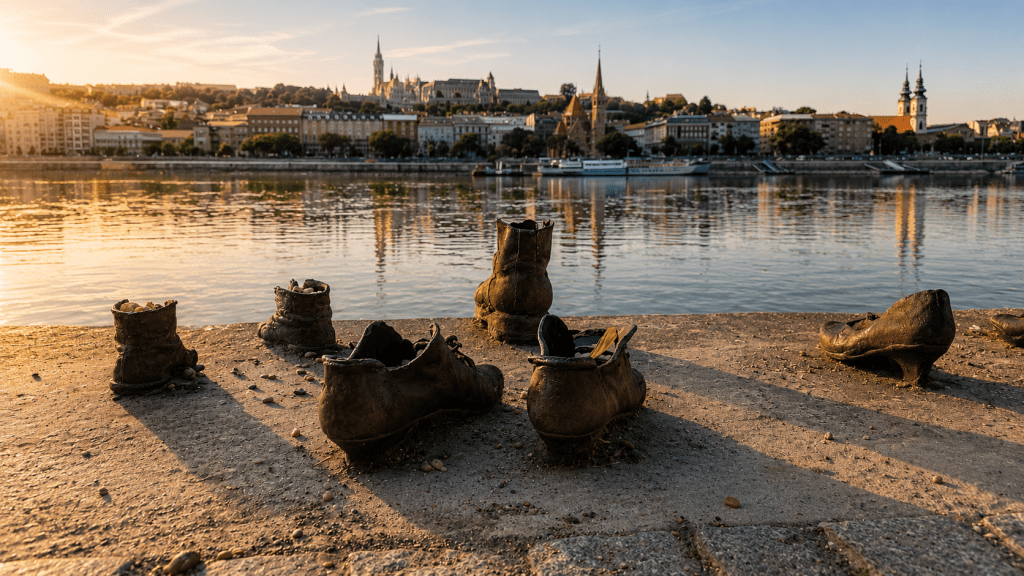
The Shoes on the Danube whispered.
At first glance, they appear almost ordinary—pairs of worn shoes scattered along the riverbank. Some are work boots. Some are dress shoes. One looks small enough to belong to a child. They sit quietly facing the water as though their owners might return at any moment.
But they never will.
During the winter of 1944–1945, thousands of Hungarian Jews were brought to this very riverbank by members of the Arrow Cross militia. Before they were executed, they were ordered to remove their shoes. In a time of scarcity, shoes were valuable. The victims were lined up at the edge of the Danube, shot, and their bodies fell into the river.
The shoes remained.
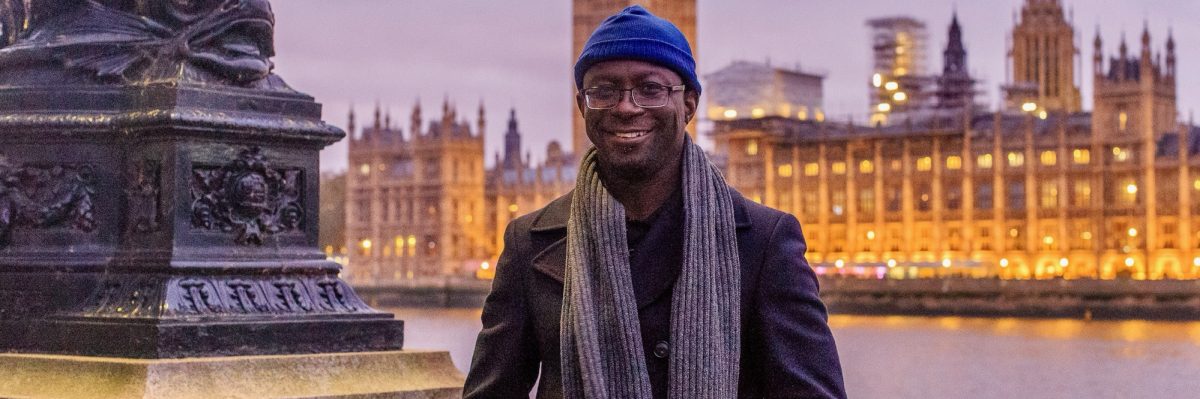
Standing there in the evening light, with Budapest reflected in the water and the city carrying on around us, I found myself thinking about how easily human beings can become capable of extraordinary cruelty.
History often records numbers.
Six million.
Hundreds of thousands.
Millions more displaced, imprisoned, or forgotten.
But numbers can create distance.
Shoes do not.
Shoes remind us that every number was a person.
Someone who laughed.
Someone who worried about their children.
Someone who planned for tomorrow.
Someone who believed they would see another sunrise.
And yet, as I looked across the Danube toward the beauty of Budapest, another thought emerged.
Human history is not only the story of cruelty.
It is also the story of remembrance.
Someone chose to build this memorial.
Someone decided that these lives would not disappear into the current of history.
Someone believed memory matters.
Throughout our travels, I was struck by how often this tension appeared. Again and again we encountered evidence of humanity at its worst—and evidence of humanity at its best. Tyranny and courage. Hatred and sacrifice. Destruction and rebuilding.
The same species capable of creating death camps is capable of creating memorials.
The same hands that once pulled triggers can, generations later, place flowers.
The same world that wounds can also heal.
Perhaps that is why places like this matter.
They remind us that civilization is more fragile than we like to believe and more resilient than we sometimes fear.
As the sun settled over the Danube, the empty shoes cast long shadows across the stone.
The river kept moving, as rivers always do.
But memory remained.
And perhaps that is redemption—not the erasure of evil, but the refusal to forget those who suffered because of it.
For as long as the shoes remain on the riverbank, their owners are not entirely gone.
And as long as we remember, history still has something to teach us.
Simply O.

