Five days ago, I wrote that first impressions are not conclusions. They are invitations.
Istanbul had five days to make its case.
It began, appropriately enough, with scale. Everything seemed bigger here. The airport appeared endless. The roads were enormous. Bridges stretched across water as though connecting continents were an entirely ordinary municipal undertaking. Even the traffic seemed determined to impress me.
I come from Lagos. I know traffic.
But Istanbul made a respectable effort.
Then the city began revealing its layers.
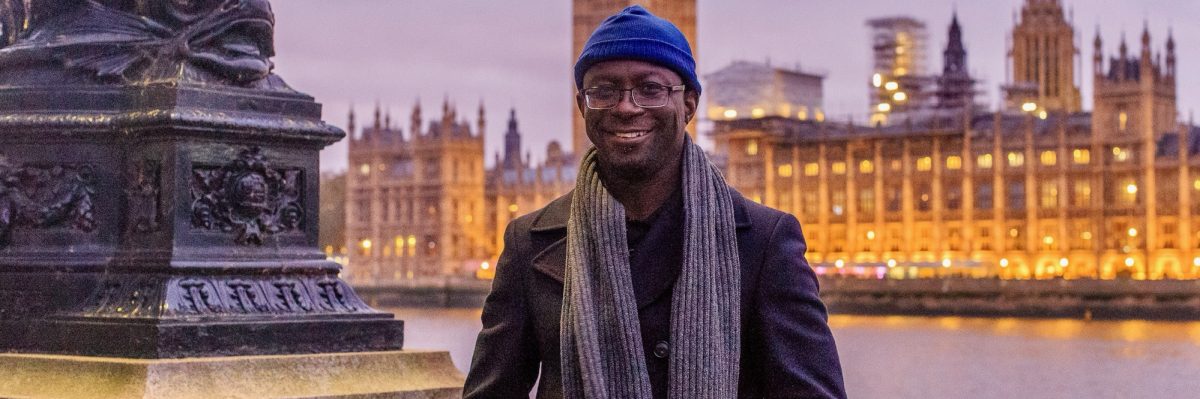
From the Bosphorus, Europe sat on one side and Asia on the other. Ferries crossed between them while tankers moved through a natural waterway that had carried armies, merchants, fishermen and ambitions for centuries. Ottoman palaces lined the shore. Old yalıs faced the water. Fortresses reminded us that beautiful places have not always had peaceful histories.
And everywhere, the call to prayer floated above the noise of the city.
Istanbul seemed comfortable holding contradictions that elsewhere might appear impossible. Christian and Muslim. European and Asian. Ancient and modern. Sacred and commercial.
At Hagia Sophia, those contradictions occupy the same building.
Nearly fifteen centuries of faith, conquest, earthquakes and human ambition are written into its walls and floors. Christian mosaics were covered when the building became a mosque; centuries later some were uncovered again. The building itself shifted and cracked, yet somehow survived.
Standing there, I found myself thinking less about which faith had possessed the building at any particular moment and more about something simpler.
With all the churches, mosques, temples and synagogues humanity has built, one might have expected us to have learned a little more kindness by now.
Perhaps buildings are easier to construct than compassion.
Then came Topkapı.
There were diamonds and jeweled weapons, magnificent rooms and the accumulated treasures of empire. The Spoonmaker’s Diamond glittered behind glass—86 carats surrounded by dozens more diamonds, as though 86 were somehow insufficient.
But the palace became more interesting to me when we moved away from the treasures.
There were the quarters of the halberdiers. Bedding cupboards. Fountains. Baths. Inscriptions recording money left to buy candles for men who became sick. Prayers requested for people long dead.
And suddenly the Ottoman Empire was no longer merely sultans and conquests.
People slept here.
They worked here.
They became ill here.
They worried about money, said their prayers, tried to keep warm and eventually died here.
Earlier in the trip I had encountered the bent figure of the Istanbul porter—the hamal—carrying an enormous burden on his back. I jokingly called him the human camel. But perhaps he and the palace servants were telling the same story.
Great civilizations leave monuments to the powerful.
Look carefully enough, though, and you eventually find the people who carried the load.
Today Istanbul required less interpretation.
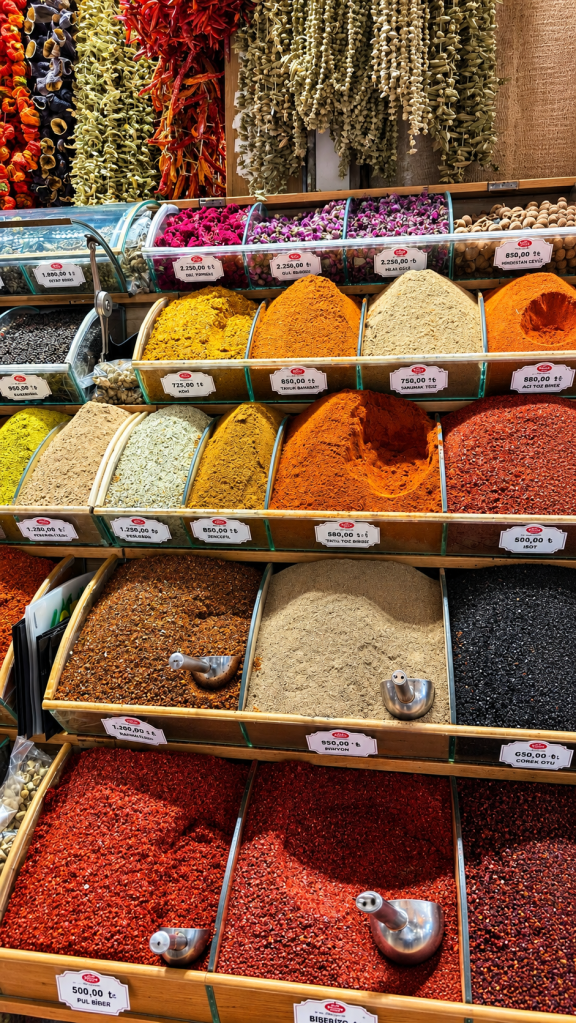
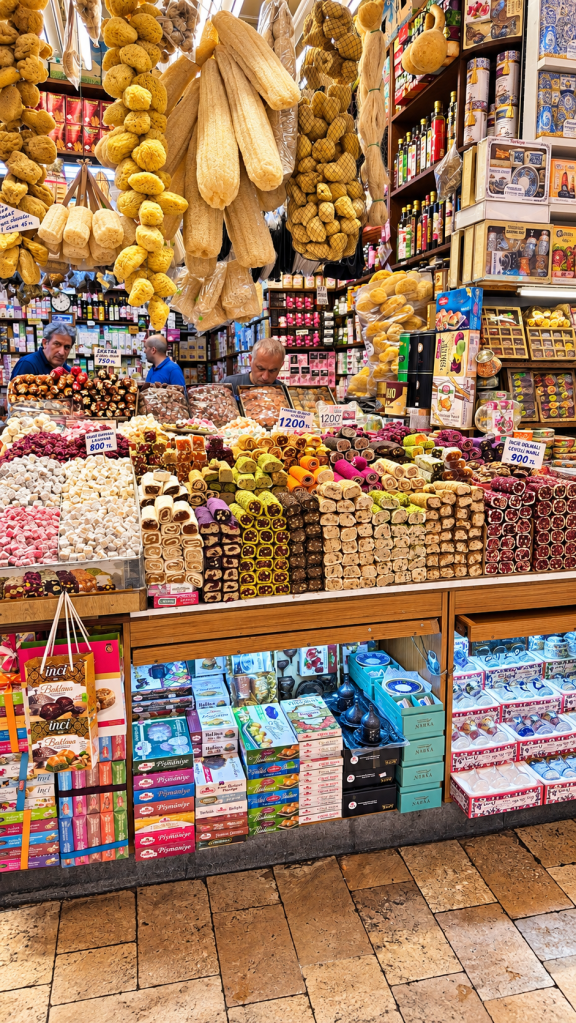
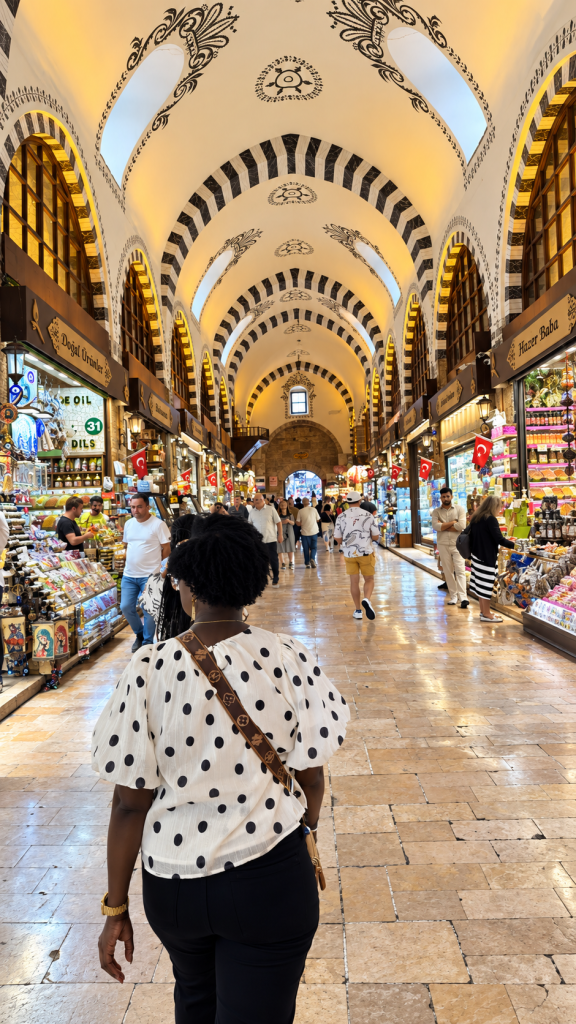
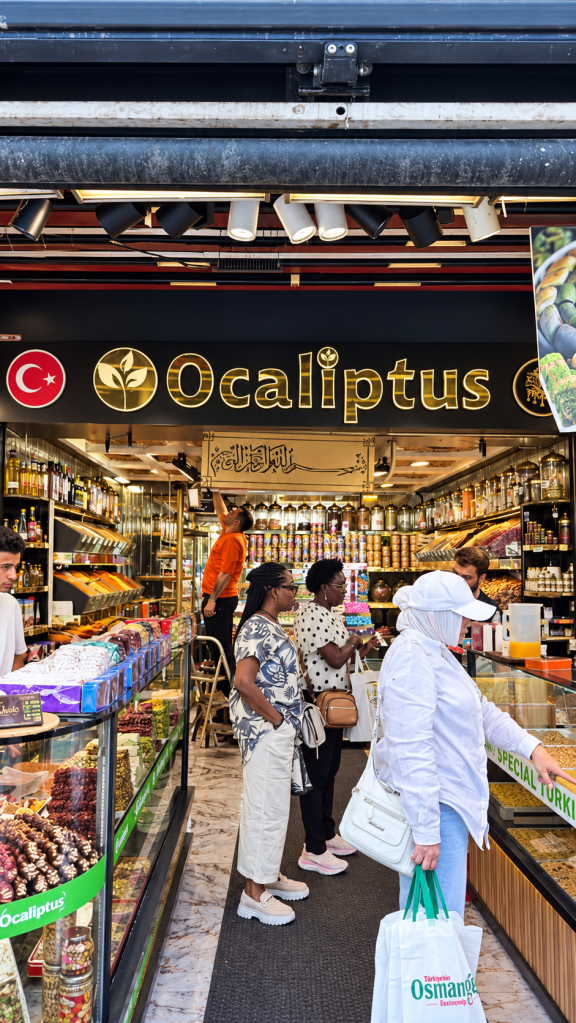
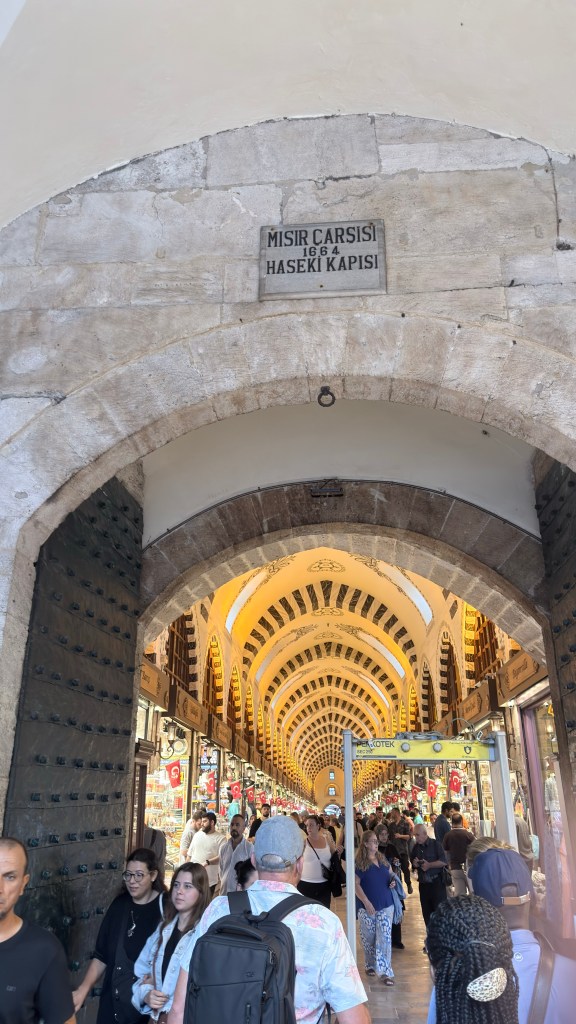
We wandered through streets filled with shops, spices, sweets and people. Turkish delight sat in great colorful piles. Sausages hung over market stalls. The Galata Tower appeared above the city in the distance. There were gulls overhead and crowds everywhere.
And there was food.
Cooking has long been part of my life in Tallahassee, so perhaps it shouldn’t surprise me that markets and spices fascinate me. Here, ingredients I had known in the kitchen seemed to acquire biographies of their own. Even saffron—those tiny red threads—became another lesson in how much human labor can hide inside something beautiful.
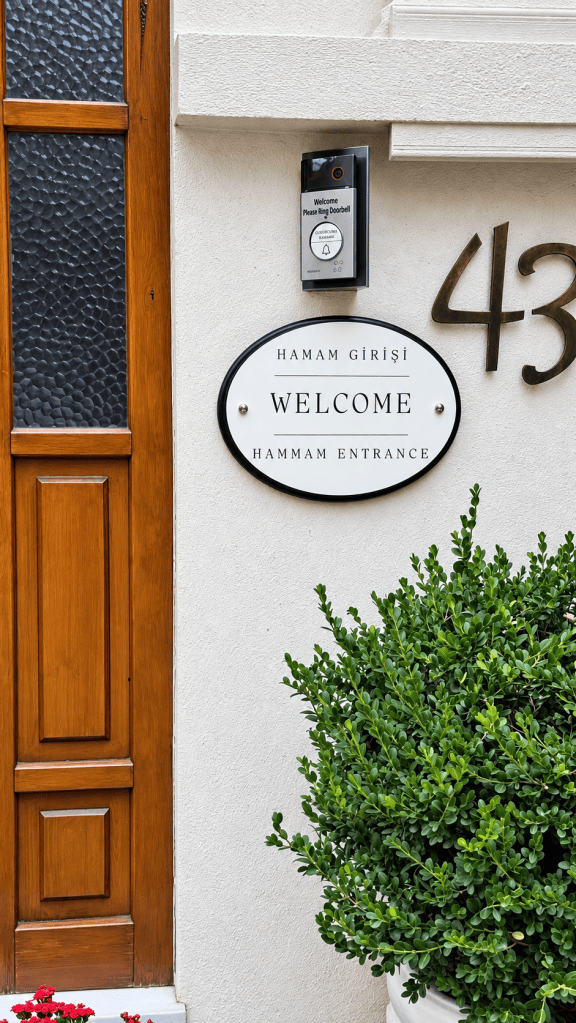
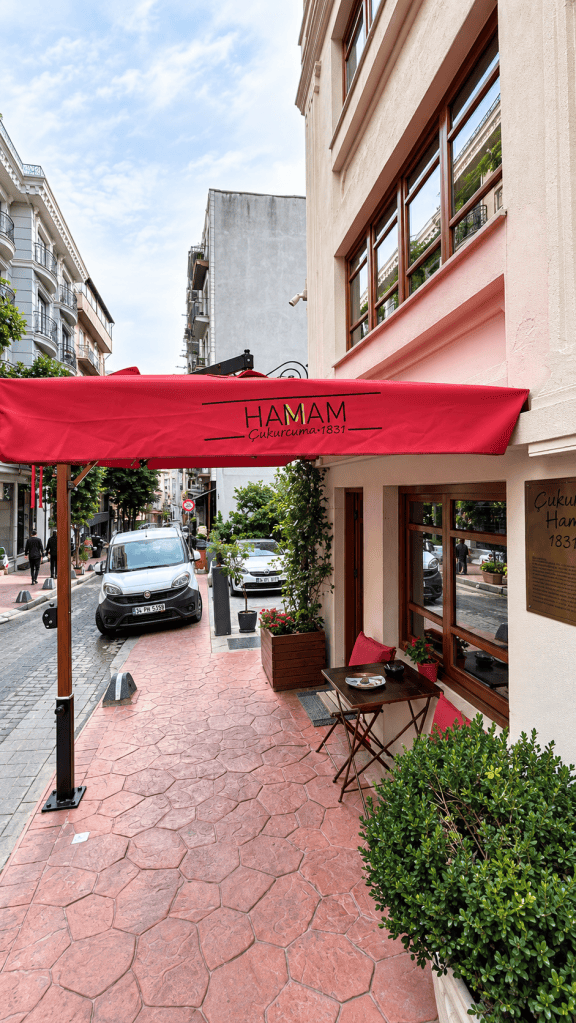
Eventually, after several days of Istanbul walking, we arrived at Çukurcuma Hamamı.
My feet had already lodged a formal grievance.
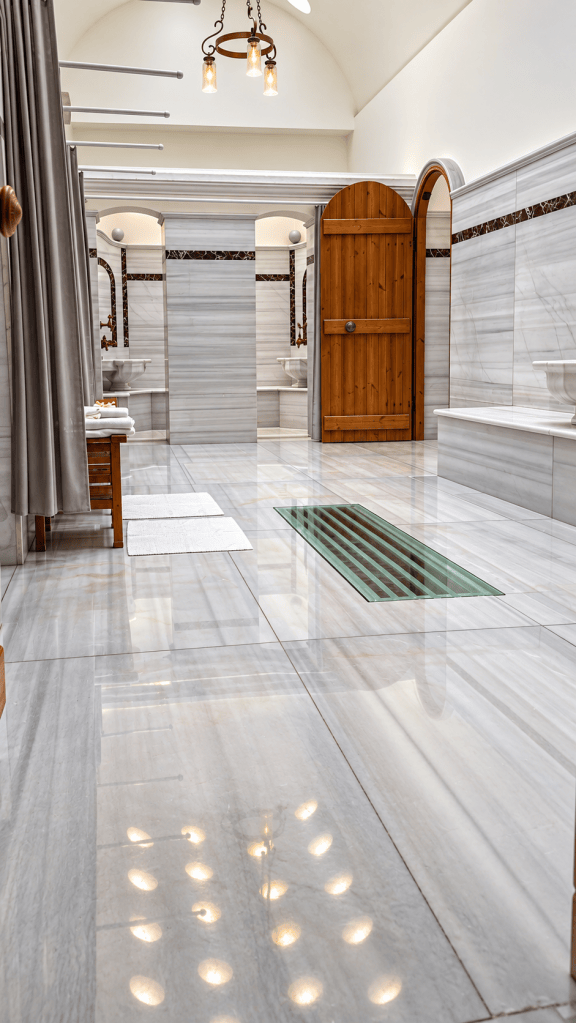
Inside, the city became quiet. Marble replaced cobblestones. Heat, water and steam replaced traffic and crowds. Light entered from above and scattered across the marble floor.
Then came scrubbing and massage.
For once, someone appeared to take my feet’s complaint seriously.
We emerged considerably cleaner and considerably more willing to continue walking.
There was ice cream.
Three scoops.
History is important, but one must maintain perspective.
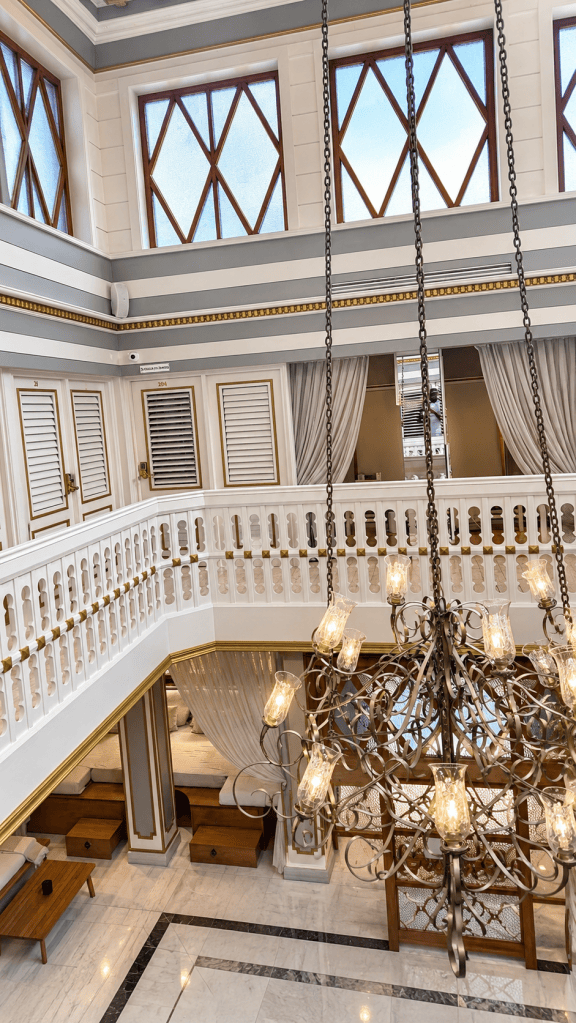
And tonight we ended beneath the brick vaults of Sarnıç, surrounded by enormous circles of light. We ate well. Very well. And dessert arrived looking less like something one should eat than a small piece of contemporary architecture.
Somewhere during dinner, I realized Istanbul had answered the question I posed when we arrived.
The city had made its case.
Not because of any single mosque, palace, diamond, market or meal. And not because five days is remotely enough to understand a city that has been reinventing itself for thousands of years.
It was something about the accumulation.
The airport and the old telephone.
Sultans and porters.
Christian mosaics and Islamic calligraphy.
Diamonds and bedding cupboards.
The Bosphorus and the back streets.
Saffron and ice cream.
The call to prayer and the noise of traffic.
History and ordinary life continuing beside one another as though neither finds the other particularly remarkable.
Perhaps that is what I will remember most about Istanbul.
It doesn’t seem to discard its previous lives.
It carries them.
Tomorrow we leave for Antalya.
Five days ago, Istanbul was an invitation.
Tonight, it feels more like a conversation we have only just begun.
Simply O

