The Skin We Live In.

An Easter Reflection

From a biological standpoint, there is something quietly profound about the human body.

Our skin—the part of us most visible to the world—is composed of layers. The dermis beneath, and the epidermis above. And at the very surface lies what is known as the stratum corneum—a layer made up almost entirely of dead cells.

Cells that have fulfilled their purpose.

Cells that no longer live… yet still cover us.

They protect us.

They define our outward appearance.

And they are constantly being shed, replaced, renewed.

In a sense, we are all walking around covered in what is no longer alive.

The Illusion of Permanence

And yet, despite this remarkable process of renewal, we age.

The body changes.

Time leaves its imprint.

And slowly, unmistakably, we are reminded of a truth that no advancement in science has been able to reverse:

This body was never designed to last forever.

What We See… and What We Are

There is something humbling in realizing that our most outward expression—our skin, our appearance—is, in large part, composed of what has already passed.

What the world sees first… is not the essence of who we are.

It is a covering.

A temporary layer.

A reflection, not the core.

A Quiet Message Over Time

Perhaps this is why aging brings with it a different kind of clarity.

The things we once held tightly—appearance, perception, external identity—begin to loosen their grip.

And in their place, something deeper emerges:

Character.

Wisdom.

Faith.

Grace.

Things that do not shed.

Things that do not fade in the same way.

The Easter Connection

And in this, Easter offers a profound reminder:

That life is not defined by what is outward and temporary…

but by what is enduring and unseen.

That what fades is not the final story.

And what is renewed is not always visible to the eye.

Final Reflection

We spend much of our lives tending to what is seen…

yet the deeper work is always within.

Closing Thought

The body may age, the surface may fade, but the essence of who we are was never meant to be confined to what is visible.

— Simply O

The Illusion of Flight

“Not everything that feels like ascent is progress. Sometimes, we are simply falling—with confidence.”

There is a quiet illusion that often accompanies success.

A sense of lift. Of movement. Of ascent.

We mistake motion for direction.

We mistake speed for purpose.

And sometimes… we mistake falling for flying.

There is a moment—early on—when everything feels right.

The wind rushes past.

The world expands beneath you.

You feel elevated… chosen… unstoppable.

In that moment, there is no fear.

Only the intoxicating belief that you are rising.

But perception is not truth.

And elevation is not always ascent.

Then something shifts—subtly at first.

The ground, once distant, begins to take shape.

Clarity replaces illusion.

What felt like control begins to feel uncertain.

What felt like progress begins to feel… fast.

Too fast.

But by then, momentum has taken over.

And momentum does not ask for permission.

And then—the truth arrives.

Not gradually.

Not gently.

But all at once.

The realization that what felt like flight…

was never flight at all.

It was descent—misunderstood.

And in that final moment, clarity comes—

but too late to change direction.

Closing Reflection

We all have seasons like this.

In our careers.

In our finances.

In our decisions.

Even in our convictions.

Moments when everything feels like upward movement—

until reality reminds us otherwise.

Wisdom is not just in rising.

It is in discerning.

Are we truly flying…

or simply falling with confidence?

“True elevation is not measured by how high we feel, but by how firmly we are grounded in truth.”

Simply O.

From Accumulator to Steward

The Psychology of Retirement

For most of my life, I was an accumulator.
Across three continents, I worked, studied, saved, sacrificed, and built.

Nigeria to the United Kingdom.

United Kingdom to the United States.

Resident to physician.

Physician to Medical Director.

The formula was simple:

Work hard.

Spend carefully.

Save aggressively.

Delay gratification.

Let time compound.

It worked.

But something curious happened when I retired.

The operating system flipped.

The Jarring Transition

In less than a month, I moved from accumulation to distribution.

For over four decades, I trained myself to say:

“Not yet.”

Not yet on indulgence.

Not yet on luxury.

Not yet on upgrades.

Even when I could afford more, I chose restraint.

Then, after retirement, I bought my first first-class ticket.

And I hesitated.

Not because I couldn’t afford it.

Not because it was irresponsible.

But because it violated the psychological wiring that built my success.

That surprised me.

The Strange Irony of Compounding

What makes this transition even stranger is this:

Even at average market returns, our wealth continues to grow.

The machine I spent decades building now runs on its own.

And yet, instinctively, I still guard it —

as if one indulgent decision might unravel everything.

That is the dichotomy.

Mathematically secure.

Psychologically vigilant.

The Immigrant Mindset

Perhaps this is common among immigrants.

When you build from uncertainty, security becomes sacred.

Frugality isn’t just a habit —

it’s armor.

Savings isn’t just financial planning —

it’s emotional protection.

Letting go of that armor, even partially, feels vulnerable.

The Realization About Time

There is another layer.

I am now 63.

Statistically, two-thirds of my life is behind me.

That realization does something profound.

Retirement is not simply a financial event.

It is an existential one.

You are forced to confront:

  • How much time remains.
  • What truly matters.
  • What legacy means.
  • Who you are when you are no longer “the doctor.”

That reorientation is far more significant than the balance sheet.

From Accumulator to Steward

I’ve come to realize something important.

I am not moving from accumulation to consumption.

I am moving from builder to steward.

The goal is no longer:

“How much can I grow this?”

It is now:

“How intentionally can I deploy this?”

Deploy toward:

  • Experiences with my wife.
  • Travel with purpose.
  • Family structure and legacy.
  • Philanthropy.
  • Health.
  • Writing.
  • Reflection.
  • Time.

This is not indulgence.

It is alignment.

A Different Question

For most of my life, I asked:

“Can I afford this?”

Now I’m learning to ask:

“Does this serve the life I am intentionally crafting?”

That is a harder question.

But it is a better one.

Do All Retirees Go Through This?

I suspect many do — especially those who built wealth rather than inherited it.

When your identity is tied to discipline, productivity, and accumulation,

retirement requires psychological recalibration.

You must learn to trust the system you built.

You must learn to enjoy what you delayed.

You must learn that spending wisely in retirement is not erosion.

It is execution.

Final Reflection

There is a quiet shift that happens when the drive to prove gives way to the freedom to choose.

I am no longer building for survival.

I am shaping for legacy.

And perhaps the greatest discipline of this stage of life

is not saving more.

It is releasing well.

— Simply O

The Arc, The Dream, and Why I Still Believe

I am an immigrant. I came to America not as a descendant of its earliest wounds, but as someone who chose it. I built my life here. I trained, worked, led, invested, raised daughters, paid taxes, and contributed to the institutions that make this country function. I have lived the American dream — not perfectly, not effortlessly — but honestly and through discipline.

That is why I care.

When public discourse becomes careless with truth — when arithmetic is stretched beyond recognition, when rhetoric replaces seriousness — it unsettles me. Not because I expect perfection from leaders. No democracy has ever had that. It unsettles me because words matter. Facts matter. Institutions matter. A republic depends on shared reality.

Yet even in moments of disappointment, I remain grounded.

I believe in the arc of justice. History is not linear, but over time it has bent toward broader inclusion, deeper rights, and greater opportunity. There have been dark chapters — civil war, segregation, corruption, political hysteria — but the constitutional core endured. The system corrected. Not instantly. Not painlessly. But steadily.

I also believe in the fundamental goodness of the human spirit.

I grew up in Nigeria, lived for a decade in the United Kingdom, and ultimately built my life in the United States. Across continents and cultures, I have seen the same thing: ordinary people want dignity, opportunity, and fairness. They want to work. They want their children to rise higher than they did. They want stability more than spectacle.

America, at its best, uniquely affirms that your origin does not determine your ceiling. That you can come from anywhere, work hard, contribute meaningfully, and build something lasting. I am evidence of that promise. My daughters are evidence of that promise.

The American dream does not depend on flawless speeches. It depends on durable institutions — rule of law, capital markets, education, civic participation — and on citizens who take their responsibilities seriously. Those foundations remain.

I am disappointed at times. But I am not cynical.

Disappointment means I expect more. Cynicism would mean I expect nothing.

I choose not to surrender to cynicism. Because I have seen too much evidence — in my own life and in the broader sweep of history — that the arc does bend. Slowly. Imperfectly. But persistently.

And I want my daughters to inherit not just wealth or security, but confidence in the idea that effort still matters, integrity still matters, and justice, though delayed at times, is not defeated.

That is why I still believe.

Simply O

A Thanksgiving Reflection: A Grateful Heart Amid the Journey.

This year has tested and stretched me in ways I could never have imagined. There were moments that demanded strength I didn’t know I possessed, seasons that revealed how fragile plans can be, and lessons that reminded me that grace is not earned — it’s freely given. Through it all, I’ve learned that gratitude isn’t reserved for the easy days; it’s born in the quiet resilience that grows from hardship.

As I pause to reflect this Thanksgiving, I am profoundly grateful — not because everything has been perfect, but because grace met me at every imperfection. I’ve witnessed the faithfulness of God in the small mercies and in the grand provisions. The love of family, the loyalty of friends, the unexpected kindness of strangers, and the strength to keep going — these are blessings beyond measure.

So, I enter this season with a grateful heart. Grateful for the storms that refined me, for the peace that followed, and for the countless ways my journey has been guided by unseen hands. May this Thanksgiving be a reminder to us all: even in life’s uncertainties, gratitude remains the surest expression of faith.

Happy Thanksgiving to everyone.
Simply O

Title: Day 2 – Family, Food, and Finding My Roots

Category: Travel Journal

Tags: Lagos, Ogun State, Family Visit, Nigeria, M Lounge, Glaucoma Awareness

A Morning in Lagos

Woke up this morning feeling refreshed and recharged.

I did notice the scale tipping upward slightly—unsurprising, given how hard it is to resist the rich, nostalgic flavors of home. There’s something about the tastes you grew up with that calls to you, calorie count or not.

Being in the tropics, we kept to our daily ritual of taking Malarone—our antimalarial prophylactic. Unlike the typhoid vaccine, which we completed before departure, this one is a daily commitment while we’re here.

With that done, we headed down to the Marriott M Lounge for breakfast.

Breakfast: A Blend of Home and Abroad

As expected, breakfast was sumptuous.

I had a delicious mix of oatmeal and orange juice—classic continental staples—but also couldn’t resist the Nigerian yam and egg combo, topped with a spicy pepper sauce that was absolutely 🔥.

It’s a beautiful thing when breakfast feels like a cultural reunion.

On the Road to Otta

We soon set out to visit my mother in Otta, Ogun State.

Navigating Lagos traffic is a full-body experience—less about the distance and more about maneuvering through a moving maze. The roads themselves aren’t terrible, but the sheer volume of cars creates a kind of vehicular ballet as everyone jostles for space.

One thing I hadn’t seen in a while?

🛒 Street hawkers weaving through traffic, selling everything from bottled water to plantain chips—negotiating deals through car windows. It’s chaotic, yes—but also uniquely Nigerian.

And I’ll say this:

✅ The traffic lights? They work.

A Visit to My Mother

Visiting my mother was deeply grounding.

Though her health is challenged—she’s legally blind due to glaucoma and battles severe arthritis—her spirit remains unshaken. We sat together, reminisced about family stories, and she offered a heartfelt prayer for us all, especially in honor of my retirement.

In that moment, I felt the weight of heritage and the grace of belonging.

Despite my earlier apprehension, this visit reminded me of who I am and where I come from. It was humbling—and necessary.

Evening Reflections: Shared Meals and Quiet Joy

We returned to the hotel for a light refreshment at the M Lounge, anticipating a special delivery:

🍽️ Home-cooked meals from my sister.

Back in our room, we gathered as a family—brothers, sisters, niece, and nephew—sharing dishes full of local delicacies, laughter, and memories. These are the kinds of evenings that fill the soul, not just the stomach.

Eventually, as the night settled, everyone headed out. We packed up for the night and reflected quietly on what had been a full and meaningful day.

Looking Ahead

So far, I must admit—my initial fears have been mostly misplaced.

But tomorrow begins another chapter: traveling to the hinterlands to begin the process of organizing my wife’s family home.

That story unfolds next.

Antarctica

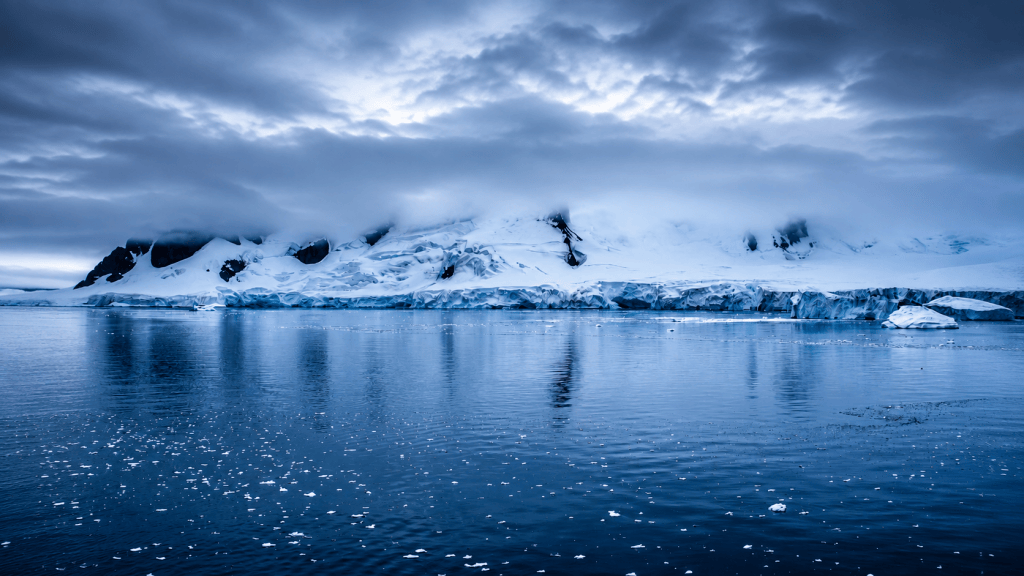
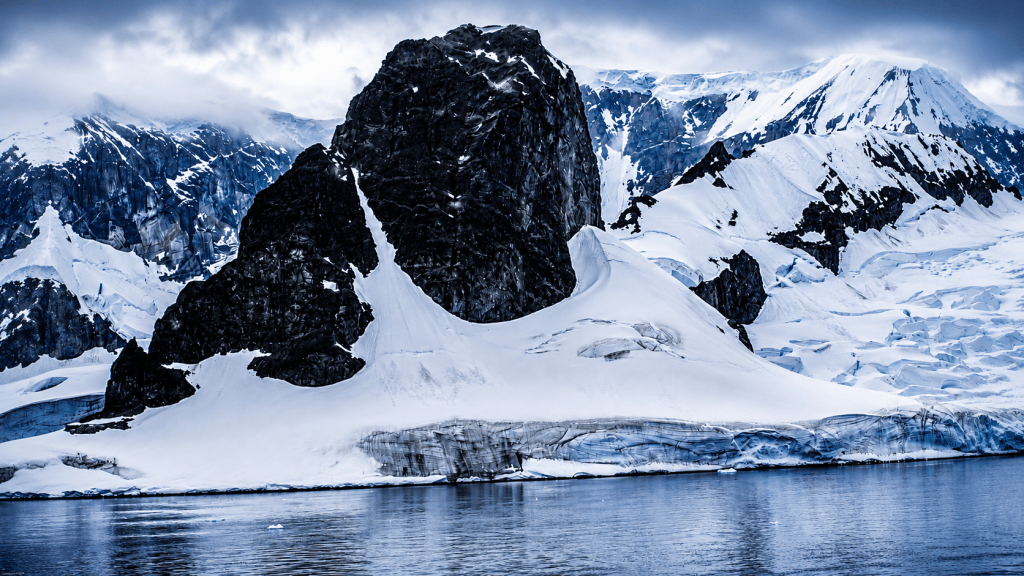
Reflections from Antarctica (2013)

Long before its icy shores were ever seen, Antarctica existed in the human imagination—a place of mystery, balance, and symmetry. As early as the 6th century BCE, the philosopher Pythagoras proposed that the Earth was round. Building on this idea, ancient Greek thinkers reasoned that if there was land in the north, there must be land in the south—a great unknown mass to balance the globe. This theoretical land became known by many names through the centuries, including Terra Australis Incognita—the Unknown Southern Land.

Even today, Antarctica remains a place apart—untouched by borders, politics, or ownership. Governed not by conquest but by cooperation, the Antarctic Treaty stands as a rare testament to international unity, preserving this continent for science and peace.

From a geological perspective, Antarctica’s isolation shaped its destiny. Around 60 million years ago, it began drifting apart from Australia. As the Drake Passage opened between Antarctica and South America, the formation of the Antarctic Circumpolar Current created an invisible moat—circling the continent and insulating it from the warmth of neighboring seas. This current became a key player in locking Antarctica in its frozen stillness, sealing it off in time and temperature.

Standing on its frozen expanse in 2013, I was humbled—not just by its stark beauty and ferocious winds—but by the realization that Antarctica is both a frontier and a mirror: a final wilderness where the Earth whispers its deepest secrets and challenges us to protect what is rare, wild, and essential.

Palmer Station, Antarctica

Established in 1968, Palmer Station is named in honor of Nathan B. Palmer, one of the first people to lay eyes on Antarctica during his expedition in 1820. Located on Anvers Island along the Antarctic Peninsula, the station can accommodate up to 44 researchers and staff, typically reaching full capacity during the austral summer months.

Palmer Station serves as a hub for vital scientific research, focusing on marine ecosystem monitoringatmospheric studies, and the impact of heightened ultraviolet radiation on both marine and terrestrial life. Much of this work has been spurred by the expanding ozone hole, a growing environmental concern over the past few decades.

One of the more visible consequences of climate change in the region has been the decline of the Adélie penguin population. Changes in sea-ice patterns and snowfall—driven by a warming climate—have contributed to a dramatic population drop: from over 8,000 breeding pairs in 1974 to fewer than 3,300 pairs. By 2014, researchers predicted that Adélie penguins could disappear entirely from the island, a stark symbol of the broader ecological shifts underway in the Antarctic.

Icebergs of Antarctic Proportion

Though most icebergs remain confined to coastal waters by prevailing winds and currents, the largest ever recorded have calved from Antarctica’s vast Ross Ice Shelf. These colossal slabs of ice, known as tabular icebergs, break off and drift into the Southern Ocean, sometimes becoming legendary in size and spectacle.

One of the most famous, Iceberg B-15, was captured by satellite imagery in the year 2000. It measured approximately 295 by 37 kilometers (183 by 23 miles), covering a staggering surface area of 11,000 square kilometers—larger than the entire island of Jamaica.

Even more astounding was the largest iceberg ever observed, sighted on November 12, 1956, by the crew of the USS Glacier. Spotted 150 miles west of Scott Island in the South Pacific, this tabular giant measured an estimated 335 by 97 kilometers

Because the density of pure ice is approximately 920 kg/m³, and that of seawater about 1025 kg/m³, typically only one-ninth of the volume of an iceberg is visible above the water. The shape of the submerged portion is often difficult to discern from what is seen above the surface. This phenomenon has given rise to the expression “the tip of the iceberg,”referring to a problem or situation where only a small part is visible while a much larger issue remains hidden beneath the surface.

Final Reflections: Elephant Island, Deception Island & Paradise Harbor

Elephant Island, just northwest of the Trinity Peninsula, would likely have remained obscure were it not for the remarkable survival story of Sir Ernest Shackleton’s ill-fated Endurance expedition. After being trapped in the Antarctic pack ice for over a year and spending an astonishing 497 days without touching solid ground, Shackleton and his 27 men finally broke free and rowed northward in search of refuge. Frozen, exhausted, and clinging to hope under a dim polar sunset, they miraculously landed on the desolate shores of Elephant Island. It may not resemble paradise to most, but for those men—it was salvation.

Yet Shackleton’s resolve was far from spent. Realizing no one would come looking for them, he and five others embarked on an improbable 800-mile voyage across the treacherous Southern Ocean in a 22-foot open boat. Their goal: reach South Georgia Island and summon help. Against staggering odds, they not only survived but crossed the island’s rugged, icy terrain to organize a rescue. After 105 days stranded, the remaining 22 men were finally retrieved from Elephant Island. Not a single life was lost. Shackleton’s feat remains one of the greatest survival and leadership stories in exploration history.

Further west lies Deception Island, a partially submerged volcanic caldera offering a rare natural harbor in Antarctica’s otherwise hostile coastline. Entry is only possible through Neptune’s Window, a narrow breach in the volcanic wall. Ships must carefully navigate around Raven Rock, a deceptively shallow hazard that lurks near the center of the channel. Inside, the island reveals its strange serenity—steaming beaches and colorful cliffs, remnants of a geologic past still simmering beneath the ice.

Finally, we sailed into Paradise Harbor—also known as Paradise Bay—a name that feels poetic rather than literal. There are no swaying palms here, no sun-kissed sands, yet its beauty is undeniable. Towering glaciers and jagged mountains frame the tranquil inlet in a striking composition of ice and stone. Along its edge lies the charred remains of Almirante Brown Station, an Argentine research base destroyed by fire in 1984. Now abandoned, it stands as a quiet reminder of the challenges faced even in humanity’s most remote outposts.

Adekunle Omotayo MD.


Going Back to My Roots: A Journey of Reflection and Renewal

As I stand at this pivotal moment in my life, transitioning from decades of dedication to my career into the vast possibilities of retirement, I feel a deep pull—a call to go back to my roots. Like the lyrics of a familiar song that speaks of self-discovery and reconnection, this is more than a nostalgic return; it is an intentional journey back to the essence of who I am, where I came from, and the values that shaped me.

Before I set foot on the vast tapestry of the world, weaving my way across the seven continents, I must first make a sacred stop—going home. This is not just a visit; it is a homecoming, a return to the place where my story began.

For years, I have built a life filled with accomplishments, financial wisdom, and the fulfillment of professional success. But beyond all of that, my greatest treasures—the ones that truly define my legacy—are my two incredible daughters, whom I love beyond measure, and my wife, my life partner, who has walked beside me through every triumph and challenge.

As I step into this next chapter—one of exploration, reflection, and pure experience—I realize that before I embrace the vastness of the world, I must first reconnect with my own beginnings.

Home: A Journey Through Time

Going home is more than a journey across distance; it is a journey through time. It is stepping onto the soil where my roots run deep, where the laughter of family still echoes, and where the traditions of my ancestors live on. It is where I will find renewal before expansion, gathering the strength of my heritage before I venture into the unknown corners of the earth.

I want to walk the familiar streets, hear the stories of those who remained, taste the flavors of my childhood, and stand in the presence of the history that shaped me. This is not just a visit—it is a ritual of reconnection, ensuring that no matter where I travel next, I carry home with me in my spirit.

But home is not just a place—it is my family. My daughters are my living legacy, the continuation of everything I have worked for and built. In them, I see the future—brilliant, full of possibility, shaped by both where we come from and where we are going.

And by my side, as she has always been, is my wife—my partner in this incredible journey. She has been my constant, my foundation, my greatest companion in life’s adventure.

Now, as I step into this new phase, I find myself drawn back—not just geographically, but spiritually and emotionally—to the values, traditions, and stories that made me who I am.

Reconnecting with Culture & Legacy

Growing up in Nigeria, my foundation was built on a rich culture of resilience, family, and purpose. My journey took me far from home, into the world of medicine, leadership, and financial strategy, where I dedicated myself to building something meaningful—not just for myself, but for my family and the communities I’ve served.

Yet, no matter how much success one attains, there comes a time when the heart longs for something deeper—a return to the essence of one’s identity.

Part of this journey is deeply personal. Going home means honoring my parents, the two people who poured everything they had into me.

I will stand at my father’s grave site, not in mourning, but in gratitude. He was a man of strength, wisdom, and unwavering love—a guiding presence who set the standard for the kind of man I strive to be. Though he is gone, his legacy remains etched into the fabric of my life.

And I will sit with my mother, the woman who gave me life, nurtured me, and instilled in me the values that have shaped my journey. She is my living history, my direct connection to all that came before. In her eyes, I will see the sacrifices she made, the love she poured into me, and the legacy she continues to build through me.

This journey back is about gathering strength, clarity, and purpose before I step forward into the vastness of the world.

The Seven Continents: A Life Fully Lived

Once I have touched the essence of home, honored my roots, and reaffirmed my foundation, I will set my sights on the vastness of the world.

From the icy peaks of Antarctica to the bustling streets of Asia, from the cultural depths of Europe to the raw beauty of Africa, from the open landscapes of Australia to the wonders of South America and the familiar yet ever-changing spirit of North America—this journey is about more than places.

It is about perspective.

Each continent will tell me a different story. Each land will offer a lesson, a piece of wisdom, a moment that expands the boundaries of what I know.

But before I listen to the world, I must first listen to the heartbeat of home—the love of my family, the sacrifices of my parents, and the legacy I carry forward through my children.

A Journey of Wholeness

This adventure—both the return home and the global exploration—is about more than travel. It is about wholeness.

It is about ensuring that as I collect experiences, I do not forget where I started. That as I expand, I remain grounded. That as I move forward, I do so not as a wanderer, but as someone deeply rooted, carrying the past into the future with wisdom and purpose.

I do this for myself, to see the world with open eyes.
I do this for my daughters, so they can witness a life lived fully, boldly, with intention.
I do this with my wife, my partner in all things, because every journey is more meaningful when shared.
I do this to honor my father and mother, whose sacrifices made every step of my journey possible.

Going home is not an end. It is the beginning.

And from that foundation, I will step forward—onto the tapestry of the world, onto the seven continents of this planet, embracing all that life still has to offer.

Just as the song reminds us, sometimes the best way to find ourselves again is to go back—not to stay, but to gather strength, clarity, and a renewed sense of direction for the road ahead.

This is my season of reflection, renewal, and reconnection.

And in going back to my roots, I find not just where I have been, but where I am meant to go next.

Adekunle Omotayo MD.