The Question of if:

People often ask about the “why” behind a decision.

Why retire?

Why travel?

Why write?

Why change course after decades of following a familiar path?

For much of my life, I believed that “why” was the most important question. It seemed to hold the key to purpose, motivation, and meaning. Leaders ask it. Coaches ask it. Authors write entire books around it.

But lately, I have begun to wonder if the more important question is not why, but if.

The truth is that most of us can construct a compelling “why.”

We can explain our motivations. We can articulate our dreams. We can tell ourselves stories about what we hope to accomplish or who we hope to become.

The “why” often lives in the realm of aspiration.

The “if” lives in the realm of reality.

If I make this decision, what becomes possible?

If I take this path, what are the consequences?

If I step away from what is familiar, will I be okay?

If I pursue this opportunity, does it align with the life I want to create?

The more I reflect on major decisions in my own life, the more I realize that the most consequential moments were not resolved by answering “why.”

They were resolved by answering “if.”

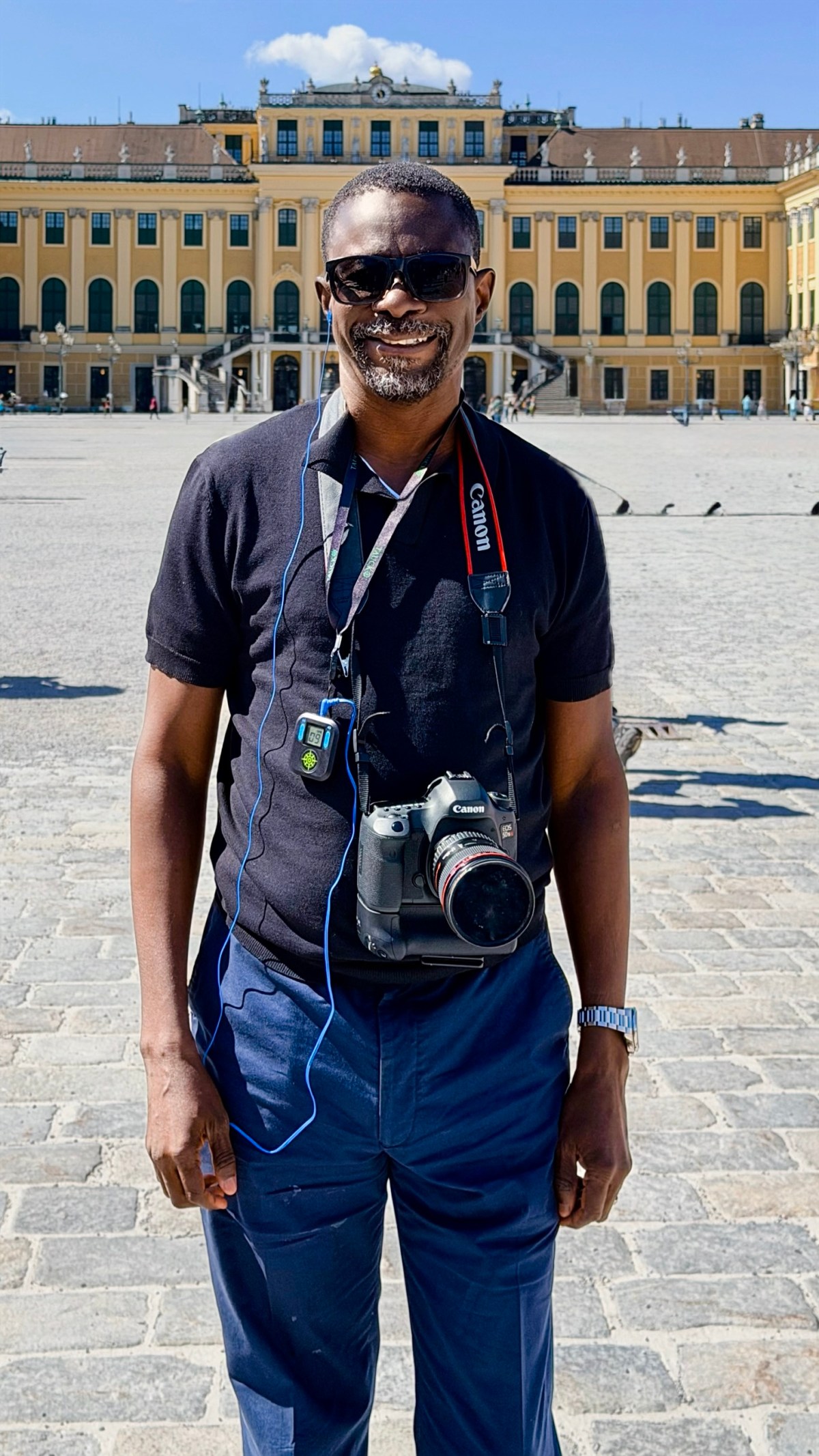
Retirement was not simply a question of why I wanted to retire. The reasons were obvious: more time with family, freedom to travel, opportunities to write, photograph, and explore the world.

The deeper question was:

If I retire now, will my family be secure?

If I retire now, can we sustain the life we have built?

If I retire now, what opportunities might emerge that are unavailable while I am working?

Only after those questions were answered did clarity emerge.

I have come to believe that an affirmative answer to “if” is what I often call alignment.

Alignment occurs when aspiration and reality shake hands.

When values, resources, timing, and opportunity all point in the same direction.

When the answer is no longer merely desirable, but workable.

Not perfect.

Not risk-free.

Not guaranteed.

But aligned.

Perhaps that is why the question of “if” feels so grounding.

It forces us to gather many threads together—our finances, our relationships, our health, our obligations, our dreams, and our fears.

The “why” can sometimes be driven by emotion.

The “if” demands examination.

The “why” can be imagined.

The “if” must be tested.

And when the answer comes back yes, something remarkable happens.

The internal debate begins to quiet.

The need for justification fades.

There is a sense that the pieces fit.

Not because the future is certain, but because the direction is clear.

I am increasingly convinced that this is where wisdom resides.

Not in finding better reasons.

But in asking better questions.

And perhaps the most important question is this:

If this path is aligned with my values, my responsibilities, and my vision for the future—what am I waiting for?

For me, the answer to that question has opened doors to retirement, travel, writing, family, and a life that continues to unfold in unexpected ways.

The older I get, the less interested I become in explaining why.

And the more interested I become in discovering what becomes possible when the answer to “if” is yes.

— Simply O. 

Somewhere Between Leaving and Arriving

One year after retirement, I realized the journey was never about escape. It was about alignment—found somewhere between airports, oceans, memory, and becoming.

One year into the Journey

Somewhere between the leaving…
and the arriving…
I found something I wasn’t looking for.

Not in one place.
Not in one moment.
But scattered—across cities, coastlines, quiet streets, and long flights between them.

A year ago, I stepped away from a life that had long defined me. For decades, my days were structured—measured in decisions, responsibilities, and outcomes. It was meaningful, deeply so. But it was also constant.

And then, one day, it wasn’t.

I remember reading something at 30,000 feet—somewhere between continents, suspended between what was and what was next. It said most of us are moving through life somewhere between shining and just getting by.

And for the first time, I had the distance to ask:

Where was I, really?

Retirement didn’t answer that question.

It created the space for it.

At first, the absence of structure feels unsettling. You reach for the familiar rhythms—deadlines, meetings, the quiet validation of productivity. But slowly, something shifts.

The absence becomes space.
And the space becomes possibility.

Over the past year, I’ve stood on coastlines where the only clock was the tide. I’ve walked through cities where getting lost felt more meaningful than arriving. I returned to Lagos and found memory waiting for me there. I sat in cafés and airport lounges where time slowed just enough for reflection to finally catch up.

And in those moments, something began to change.

Not suddenly.
But steadily.

The things I once thought defined me—titles, roles, expectations—started to fade into the background. Not gone, but no longer in control.

In their place, something quieter emerged.

A different way of living.

One not driven by urgency, but by presence.

Every destination has left something with me. Not simply memories, but clarity. A realization that the life I had built was only one expression of who I am—not the entirety of it.

And perhaps the most unexpected truth of all:

What I thought I had to be… was never the full story.

The noise that once filled my days has softened. The constant internal dialogue of responsibility and expectation has given way to something more measured, more intentional.

More… mine.

I spent years working to feel alive.

Now, I’m learning what it means to simply live.

Not defined by a title.
Not anchored to a place.
Not measured by output.

Just present.
Just aware.
Just open to whatever comes next.

One year into this journey, I wouldn’t say I’ve arrived.

But I’ve stopped trying to.

Because somewhere along the way—between airports and oceans, between familiar beginnings and unknown horizons—

I found something better than certainty.

I found a life that felt less constructed… and more true.

I found alignment.

The journey, I’m learning, is not about finding where you are going.

It is about discovering who has been traveling with you all along.

Yourself.

Because distance does not merely separate you from places—it reveals you to yourself.

And when the noise fades, truth does not rush in.

It waits patiently to be noticed.

Simply O.

The Illusion of Flight

“Not everything that feels like ascent is progress. Sometimes, we are simply falling—with confidence.”

There is a quiet illusion that often accompanies success.

A sense of lift. Of movement. Of ascent.

We mistake motion for direction.

We mistake speed for purpose.

And sometimes… we mistake falling for flying.

There is a moment—early on—when everything feels right.

The wind rushes past.

The world expands beneath you.

You feel elevated… chosen… unstoppable.

In that moment, there is no fear.

Only the intoxicating belief that you are rising.

But perception is not truth.

And elevation is not always ascent.

Then something shifts—subtly at first.

The ground, once distant, begins to take shape.

Clarity replaces illusion.

What felt like control begins to feel uncertain.

What felt like progress begins to feel… fast.

Too fast.

But by then, momentum has taken over.

And momentum does not ask for permission.

And then—the truth arrives.

Not gradually.

Not gently.

But all at once.

The realization that what felt like flight…

was never flight at all.

It was descent—misunderstood.

And in that final moment, clarity comes—

but too late to change direction.

Closing Reflection

We all have seasons like this.

In our careers.

In our finances.

In our decisions.

Even in our convictions.

Moments when everything feels like upward movement—

until reality reminds us otherwise.

Wisdom is not just in rising.

It is in discerning.

Are we truly flying…

or simply falling with confidence?

“True elevation is not measured by how high we feel, but by how firmly we are grounded in truth.”

Simply O.

From Accumulator to Steward

The Psychology of Retirement

For most of my life, I was an accumulator.
Across three continents, I worked, studied, saved, sacrificed, and built.

Nigeria to the United Kingdom.

United Kingdom to the United States.

Resident to physician.

Physician to Medical Director.

The formula was simple:

Work hard.

Spend carefully.

Save aggressively.

Delay gratification.

Let time compound.

It worked.

But something curious happened when I retired.

The operating system flipped.

The Jarring Transition

In less than a month, I moved from accumulation to distribution.

For over four decades, I trained myself to say:

“Not yet.”

Not yet on indulgence.

Not yet on luxury.

Not yet on upgrades.

Even when I could afford more, I chose restraint.

Then, after retirement, I bought my first first-class ticket.

And I hesitated.

Not because I couldn’t afford it.

Not because it was irresponsible.

But because it violated the psychological wiring that built my success.

That surprised me.

The Strange Irony of Compounding

What makes this transition even stranger is this:

Even at average market returns, our wealth continues to grow.

The machine I spent decades building now runs on its own.

And yet, instinctively, I still guard it —

as if one indulgent decision might unravel everything.

That is the dichotomy.

Mathematically secure.

Psychologically vigilant.

The Immigrant Mindset

Perhaps this is common among immigrants.

When you build from uncertainty, security becomes sacred.

Frugality isn’t just a habit —

it’s armor.

Savings isn’t just financial planning —

it’s emotional protection.

Letting go of that armor, even partially, feels vulnerable.

The Realization About Time

There is another layer.

I am now 63.

Statistically, two-thirds of my life is behind me.

That realization does something profound.

Retirement is not simply a financial event.

It is an existential one.

You are forced to confront:

  • How much time remains.
  • What truly matters.
  • What legacy means.
  • Who you are when you are no longer “the doctor.”

That reorientation is far more significant than the balance sheet.

From Accumulator to Steward

I’ve come to realize something important.

I am not moving from accumulation to consumption.

I am moving from builder to steward.

The goal is no longer:

“How much can I grow this?”

It is now:

“How intentionally can I deploy this?”

Deploy toward:

  • Experiences with my wife.
  • Travel with purpose.
  • Family structure and legacy.
  • Philanthropy.
  • Health.
  • Writing.
  • Reflection.
  • Time.

This is not indulgence.

It is alignment.

A Different Question

For most of my life, I asked:

“Can I afford this?”

Now I’m learning to ask:

“Does this serve the life I am intentionally crafting?”

That is a harder question.

But it is a better one.

Do All Retirees Go Through This?

I suspect many do — especially those who built wealth rather than inherited it.

When your identity is tied to discipline, productivity, and accumulation,

retirement requires psychological recalibration.

You must learn to trust the system you built.

You must learn to enjoy what you delayed.

You must learn that spending wisely in retirement is not erosion.

It is execution.

Final Reflection

There is a quiet shift that happens when the drive to prove gives way to the freedom to choose.

I am no longer building for survival.

I am shaping for legacy.

And perhaps the greatest discipline of this stage of life

is not saving more.

It is releasing well.

— Simply O

The Arc, The Dream, and Why I Still Believe

I am an immigrant. I came to America not as a descendant of its earliest wounds, but as someone who chose it. I built my life here. I trained, worked, led, invested, raised daughters, paid taxes, and contributed to the institutions that make this country function. I have lived the American dream — not perfectly, not effortlessly — but honestly and through discipline.

That is why I care.

When public discourse becomes careless with truth — when arithmetic is stretched beyond recognition, when rhetoric replaces seriousness — it unsettles me. Not because I expect perfection from leaders. No democracy has ever had that. It unsettles me because words matter. Facts matter. Institutions matter. A republic depends on shared reality.

Yet even in moments of disappointment, I remain grounded.

I believe in the arc of justice. History is not linear, but over time it has bent toward broader inclusion, deeper rights, and greater opportunity. There have been dark chapters — civil war, segregation, corruption, political hysteria — but the constitutional core endured. The system corrected. Not instantly. Not painlessly. But steadily.

I also believe in the fundamental goodness of the human spirit.

I grew up in Nigeria, lived for a decade in the United Kingdom, and ultimately built my life in the United States. Across continents and cultures, I have seen the same thing: ordinary people want dignity, opportunity, and fairness. They want to work. They want their children to rise higher than they did. They want stability more than spectacle.

America, at its best, uniquely affirms that your origin does not determine your ceiling. That you can come from anywhere, work hard, contribute meaningfully, and build something lasting. I am evidence of that promise. My daughters are evidence of that promise.

The American dream does not depend on flawless speeches. It depends on durable institutions — rule of law, capital markets, education, civic participation — and on citizens who take their responsibilities seriously. Those foundations remain.

I am disappointed at times. But I am not cynical.

Disappointment means I expect more. Cynicism would mean I expect nothing.

I choose not to surrender to cynicism. Because I have seen too much evidence — in my own life and in the broader sweep of history — that the arc does bend. Slowly. Imperfectly. But persistently.

And I want my daughters to inherit not just wealth or security, but confidence in the idea that effort still matters, integrity still matters, and justice, though delayed at times, is not defeated.

That is why I still believe.

Simply O

The Last Day: A Physician’s Farewell to Clinical Practice

By Dr. Adekunle Omotayo

Today marks the close of a sacred chapter—my final day in clinical practice. It arrives not as a surprise, but still, with the quiet weight of finality. As I hang up my white coat for the last time, I do so with a full heart, a reflective mind, and a soul stirred by the memories, challenges, and triumphs of a career that has spanned continents, decades, and countless lives.

The Vocation

Medicine, for me, has never been just a profession—it has been a calling. Rooted in service, tempered by science, and sustained by grace, it has demanded everything and, in return, offered the profound privilege of walking with people through their most vulnerable moments. From first diagnoses to final goodbyes, from newborn cries to triumphant recoveries—I have borne witness to the full arc of the human condition. These are not simply memories; they are sacred imprints that I carry forward.

The Patients

To the thousands of patients who entrusted me with their care—thank you. You taught me more than any textbook ever could. Your courage in the face of illness, your faith in uncertain times, your laughter even in suffering—these are the lessons I will never forget. I have seen healing, but also heartbreak. I have learned that the most powerful medicine is not always written on a pad but offered through presence, compassion, and unwavering attention.

The Colleagues

To the colleagues I have journeyed with—especially within the physician group I was privileged to lead—you are the embodiment of excellence. Together, we built something greater than ourselves: a culture of integrity, innovation, and relentless pursuit of better care. In you, I found not just professional collaborators, but kindred spirits—people committed to mission, to purpose, and to each other.

The Legacy

What is a legacy if not the impact we leave behind, the people we’ve lifted, the systems we’ve improved, the lives we’ve touched? I hope mine will be measured not by titles or years, but by the moments that mattered: a patient feeling truly seen, a colleague feeling supported, a younger physician inspired to lead with both courage and humility. I leave confident that the seeds planted over these decades will bear fruit for years to come.

The Transition

Though this chapter closes, my journey does not. Retirement is not an end, but a transformation. I step away from clinical care, but not from purpose. I carry with me the same values—service, curiosity, and compassion—that shaped my career. New seasons await, and I embrace them with the same heart that once greeted each new patient.

A Final Benediction

To heal is holy work. To serve is sacred. And to finish well is a blessing. I leave clinical medicine with no regrets, only gratitude—for the privilege of a life spent in meaningful labor, and for the countless lives that shaped my own.

May those who continue in this noble calling be blessed with strength, clarity, and joy. And may the work we have done endure, ripple outward, and echo forward—long after this final day has passed.

With deep respect and abiding thanks,

Dr. Adekunle Omotayo