Reflections gathers moments that do not belong to a single place, but to an interior landscape. These entries pause between journeys—capturing thoughts, transitions, gratitude, and questions shaped by movement and memory.
I came to Europe expecting rivers, castles, cathedrals, museums, and photographs.
What I did not expect was a pilgrimage.
Somewhere between abbeys and opera halls, libraries and ruined fortresses, vineyards and candlelit cathedrals, this journey became less about geography and more about the human search for meaning.
In Melk Abbey, gold ceilings attempted to create heaven on earth for weary souls burdened by suffering. In Vienna later that evening, music accomplished something remarkably similar.
Again and again across Europe, I find the same recurring human desire: to build beauty in defiance of suffering, to preserve memory against time, to reach toward transcendence even while surrounded by human imperfection.
The Danube carries more than water. It carries centuries of faith, empire, war, art, philosophy, music, and longing.
And perhaps that is Europe’s greatest gift to the traveler: it refuses to let you see humanity in only one dimension.
For fuller reflections and the complete daily journey through Europe , and see the full Daily entries on Europe unfolds.
“Some journeys take us across geography; the deeper ones carry us through memory, beauty, faith, and the unfinished work of understanding ourselves.” — Simply O.
On a lighter note — though perhaps no less profound — I want to talk about canals.
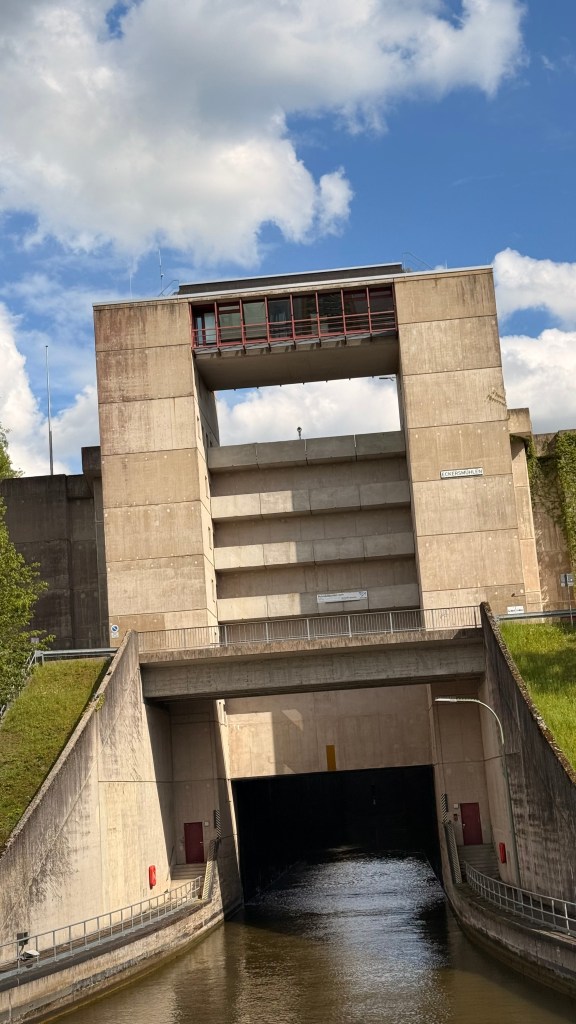
I have always been fascinated by them. Maybe it began years ago watching locks and waterways in North America, or later standing in awe before the Panama Canal. This journey through Europe has only deepened that fascination. We have passed through canals in Prague, navigated countless locks along the rivers, and today encountered what may be the most astonishing engineering achievement of them all: the Main–Danube Canal.
There is something almost poetic about it.
A man-made waterway connecting two great river systems — the Rhine flowing toward the North Sea and the Danube flowing toward the Black Sea — effectively linking one side of Europe to the other. For centuries it existed only as a dream. Today we are floating through it.
What struck me most was not merely the scale, but the precision.
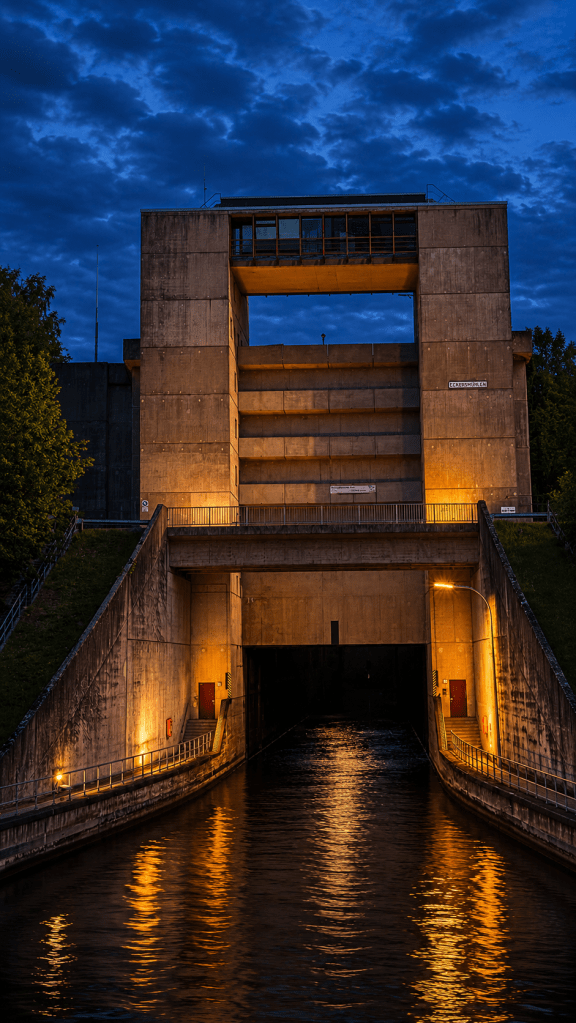
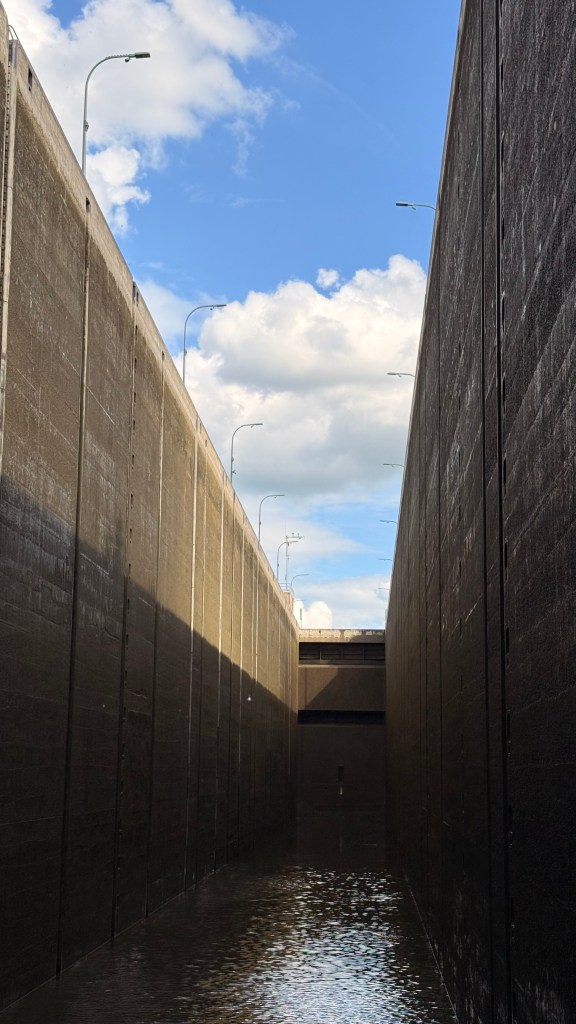
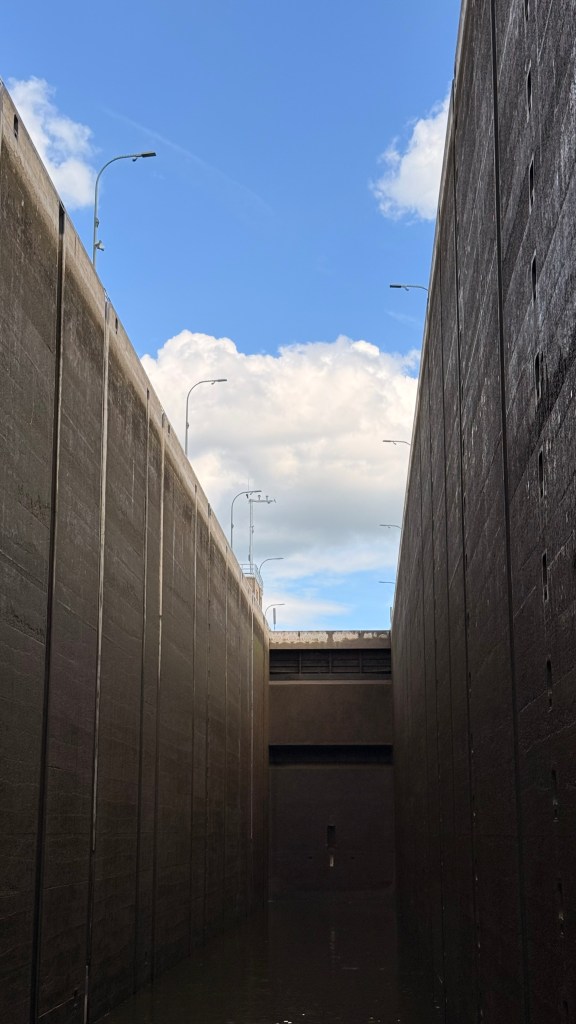
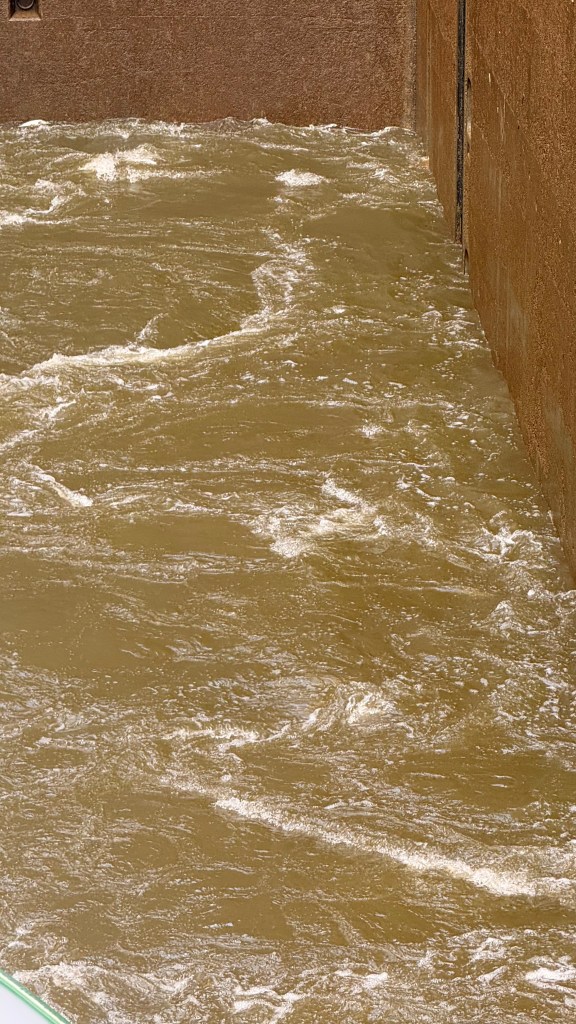
Today we passed through three of the largest locks on the canal system, each lifting our ship roughly 15 meters — nearly five stories high — with extraordinary smoothness. Watching it happen feels almost impossible at first. The gates close behind you, and then millions of gallons of water begin entering the chamber from openings hidden beneath the floor and along the walls. There is surprisingly little turbulence. No violent surge. Just a gradual, almost silent rising.
And the margins are astonishingly small.
Standing on deck, you could practically touch the concrete walls on either side. The clearance felt scarcely more than a foot in places, yet this massive vessel floated upward with calm precision, as though guided by invisible hands.
The engineering behind it is extraordinary. Each lift uses roughly 15 million gallons of water and takes about twenty minutes. Much of that water is recycled through ingenious gravity-fed reservoirs built into the lock system itself — a design so efficient that even the modern Panama Canal studied it while addressing its own water challenges.
And all of this exists for a singular purpose: to carry ships over Europe’s continental divide.
Then, almost quietly, we passed the divide itself.
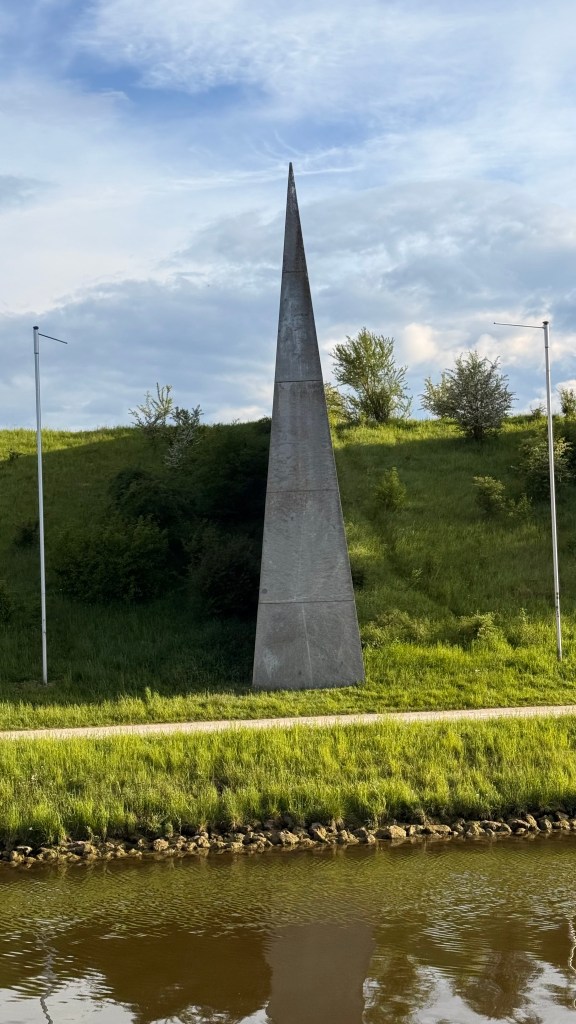
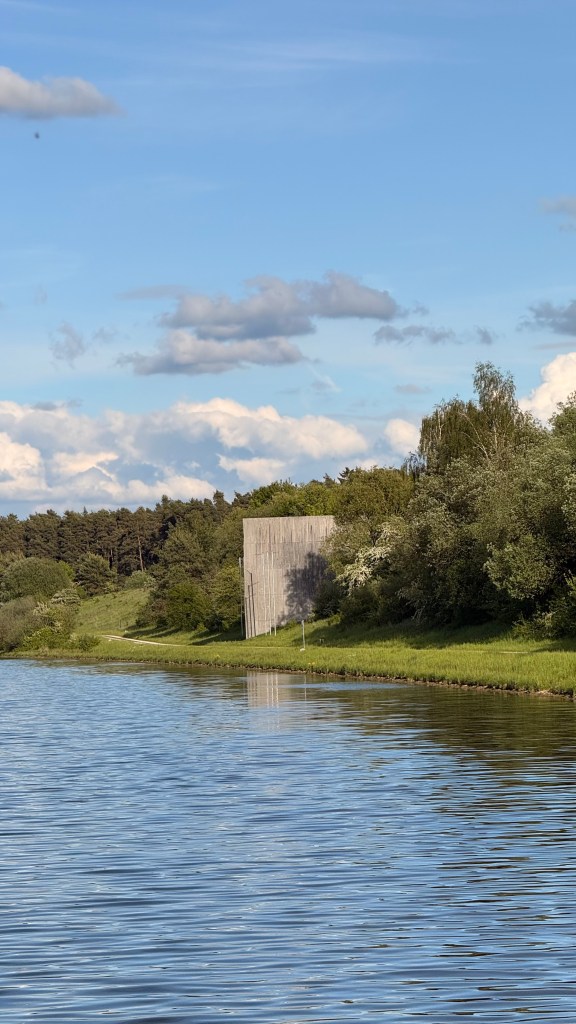
Not a dramatic mountain ridge. Not some towering alpine crossing. Just a slender monument rising beside the canal — easy to miss if you did not know its significance.
Yet few places on earth represent geography, engineering, and history converging so elegantly.
At that point, we were floating across the invisible line separating Europe’s waters.
To one side, every drop eventually journeys northward through the Main and Rhine Rivers toward the North Sea. To the other, the waters begin their long descent through the Danube toward the Black Sea.
And somehow, through locks, reservoirs, pumps, and centuries of human persistence, we crossed between them almost effortlessly.
I found that strangely moving.
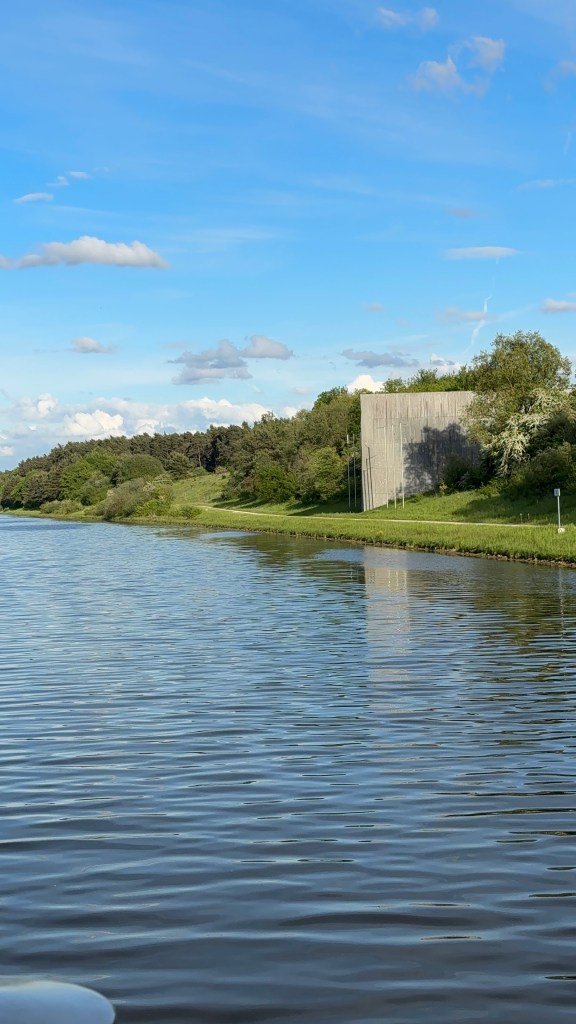
There was no announcement from nature itself. No thunder. No visible boundary. Only calm water, evening light, and an austere concrete monument standing silently beside the canal — like a marker not merely of geography, but of human imagination.
The monument itself felt fittingly understated. A narrow concrete sail cutting upward into the sky, almost like the bow of a ship emerging from the earth. Our lecturer joked that some people think it resembles a wall more than a sail, but perhaps that ambiguity is appropriate. Divides and connections often look similar depending on where one stands.
What fascinated me equally was the history behind it.
The dream of linking these waterways dates back over a thousand years to Charlemagne himself, who attempted to build an early canal in 793 AD. Imagine that: medieval engineers trying to connect Europe’s great river systems long before modern machinery existed. Their effort may or may not have succeeded fully, but the vision endured through generations until the modern canal finally opened in 1992 — after 32 years of construction.
There is something deeply human about that persistence.
We often speak of civilization through wars, kings, borders, and politics. But canals remind us of another side of humanity: cooperation, engineering, patience, and imagination. They are monuments not to conquest, but to connection.
As we rose slowly inside those immense locks today, I found myself thinking about how often the greatest achievements in human history are not loud at all. Sometimes they are quiet systems working beneath the surface — carefully calculated, elegantly designed, almost invisible unless someone takes the time to understand them.
A lock chamber filling beneath your feet.
Water seeking its own level.
A ship lifted gently toward another sea.
And somewhere in all of it, the enduring human desire to bridge what nature once left apart.
Tonight, somewhere between the Rhine and the Danube, between the North Sea and the Black Sea, between ancient dreams and modern engineering, we drifted quietly over the roof of Europe.
There is something about slow travel that changes not only what one sees, but how one sees.
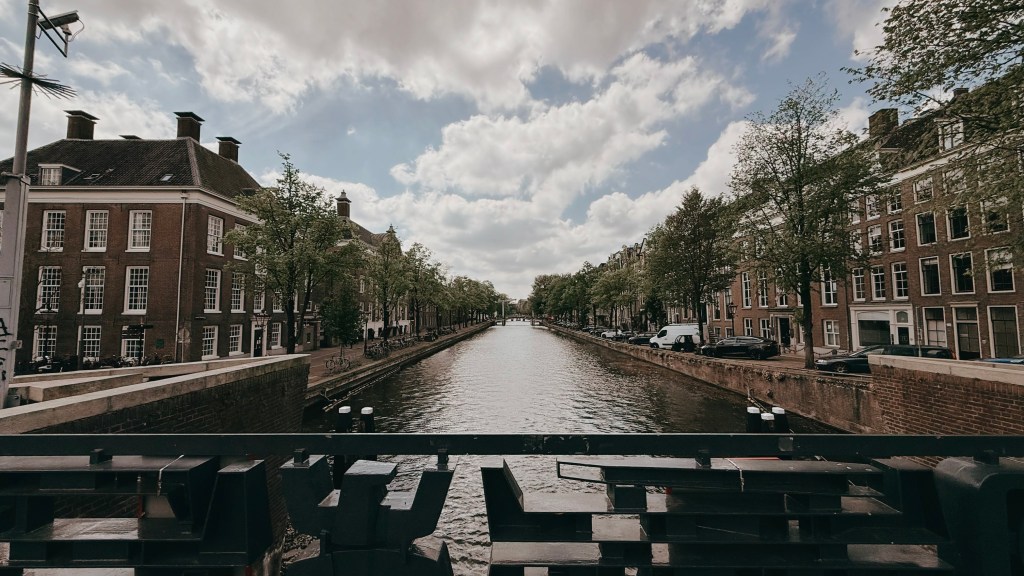
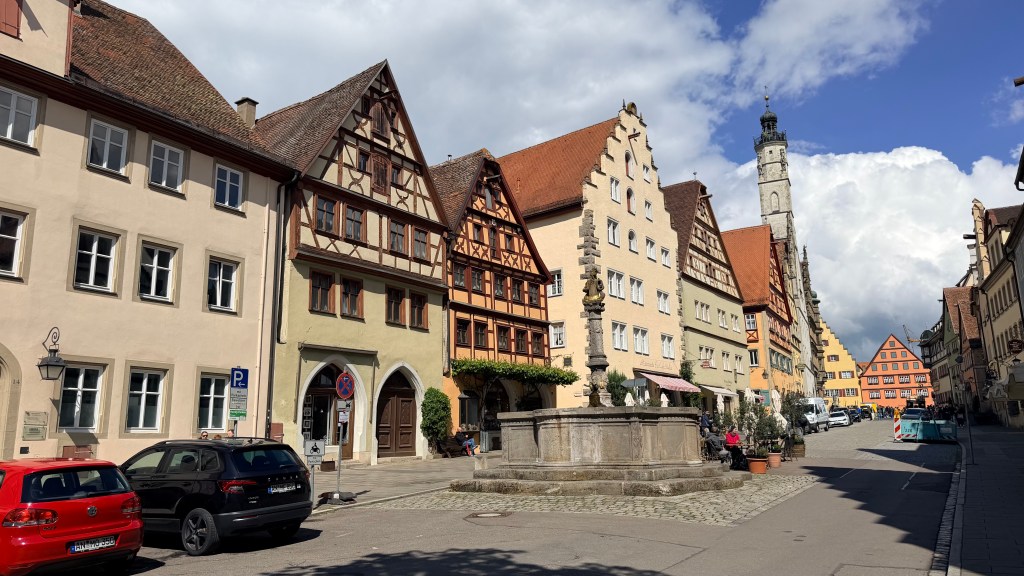
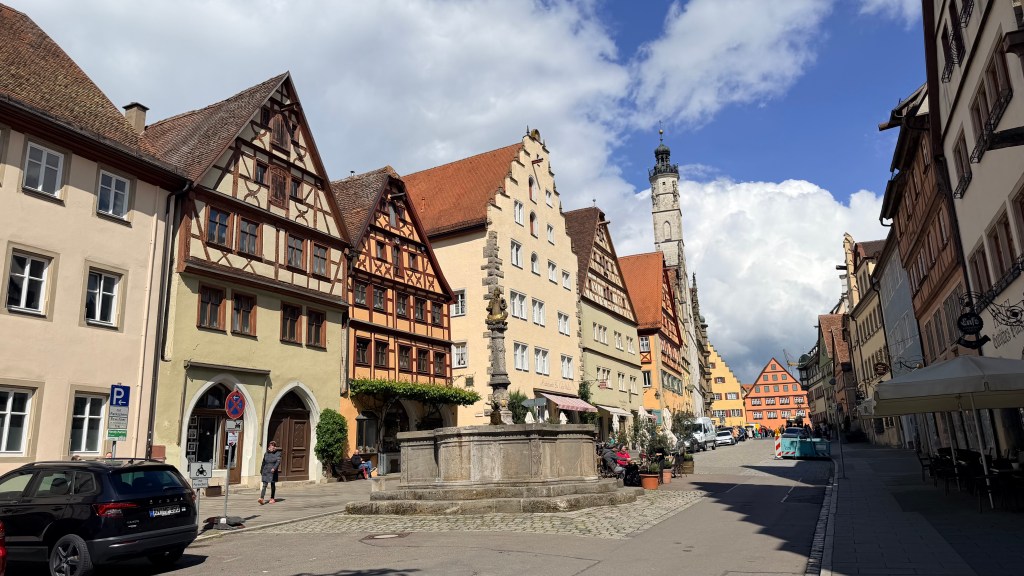
Over these past days, the rivers of Europe have carried us through landscapes of extraordinary beauty — canals lined with leaning houses, vineyards flowing down hillsides, medieval towns suspended in time, soaring cathedrals, castles perched above the Rhine, and streets still marked by centuries of footsteps. Yet beneath the beauty lies something deeper: memory.
Europe seems to preserve memory differently than anywhere else I have traveled.
Wars are not hidden here. They are engraved into bridges, memorial lights, rebuilt cities, plaques, and silence. Faith is not merely spoken of here. It rises in stone through Romanesque walls, Gothic arches, stained glass, and Baroque ceilings that once attempted to pull human eyes toward heaven. Even wine becomes memory — soil, climate, tradition, and centuries bottled together and passed from one generation to another.
What has struck me most is how often beauty and contradiction coexist side by side.
Cities that produced magnificent cathedrals also witnessed unimaginable cruelty. Places nearly destroyed by war were rebuilt not only through governments, but through ordinary people who refused to let memory disappear. Medieval streets that now charm tourists were once walked by people struggling simply to survive plague, hunger, cold, and uncertainty.
And perhaps that is the deeper lesson these rivers quietly teach.
Civilization is fragile.
Yet human beings continue building anyway: cathedrals that take centuries, bridges rebuilt after war, music that survives hatred, stories that outlive empires, and small acts of beauty that refuse to disappear.
As I move further eastward toward Budapest, I realize this journey is becoming less about destinations and more about attention — learning to notice the layers beneath places, beneath history, and perhaps even beneath oneself.
The rivers continue flowing.
So does memory.
And somewhere between the locks, castles, cathedrals, vineyards, and conversations, I sense that travel at its best does not merely show us the world.
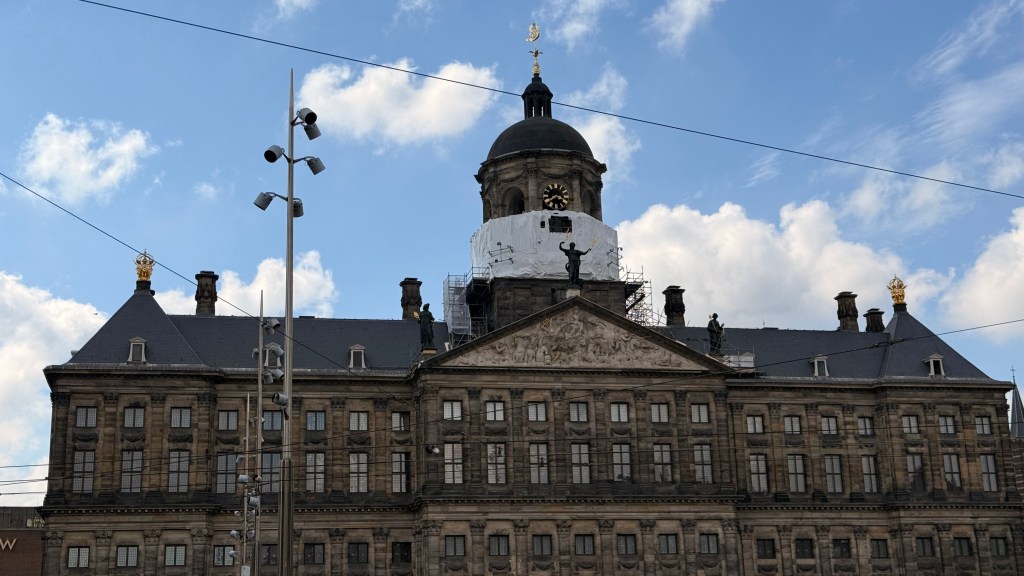
Before our Tauck river cruise began, Amsterdam gave us more than museums and monuments. It gave us a chance dinner conversation, a meditation on retirement, the weight of Holocaust memory, and the unexpected beauty of yellow.
Amsterdam has a way of opening conversations you did not know you needed.
We arrived in the city before beginning our Tauck river cruise, expecting the usual rhythm of travel: check in, settle down, have dinner, rest, and prepare for the journey ahead. But sometimes the most memorable part of a trip is not the monument, the museum, or the carefully planned itinerary. Sometimes it is the person sitting at the next table.
At dinner, a pleasant couple sat beside us. Before long, we were talking easily — so easily, in fact, that we had not even asked one another’s names. What was supposed to be a quick dinner became several hours of warm conversation.
The most intriguing part was how closely our lives seemed to intersect. We were both at similar stages of transition, negotiating retirement, family dynamics, and the emotional shift from years of saving to the unfamiliar act of spending from retirement accounts. For so long, the discipline had been accumulation. Save. Invest. Plan. Defer. Prepare.
Now, with earned income fading or gone, the challenge becomes permission — permission to spend, to enjoy, to travel, to live from what we spent decades building.
There was comfort in discovering that we were not alone in that paradox.
We were both travelers at heart. We had both come from Florida. We had both visited five continents, with two still waiting. As husbands we found ourselves sharing many similar thoughts, and our spouses seemed to recognize similar rhythms in each other as well. There was an ease to the conversation that surprised me — the kind of ease that usually belongs to old friends, not strangers sharing a dining room in Amsterdam.
Only after hours of conversation did we finally ask each other’s names. We exchanged Facebook contacts, and I shared my blog handle. We even learned a new acronym: the SKI Club — Spending the Kids’ Inheritance. It made us laugh, but beneath the humor was a very real transition: learning how to enjoy what we had spent decades building, while still honoring family, legacy, and responsibility.
It felt like one of those small travel moments that may quietly remain with you long after the trip is over.
That, I think, is one of the great gifts of travel. It opens our lives beyond our familiar borders. It places us beside people whose stories mirror, challenge, or expand our own. Seeing how other people live helps us understand how we are living. Sometimes a chance meeting becomes a gentle confirmation that we are all navigating transitions, uncertainties, and dreams in our own way.
⸻
Amsterdam and the Weight of Memory
Earlier that day, Amsterdam had already placed us in a reflective mood.
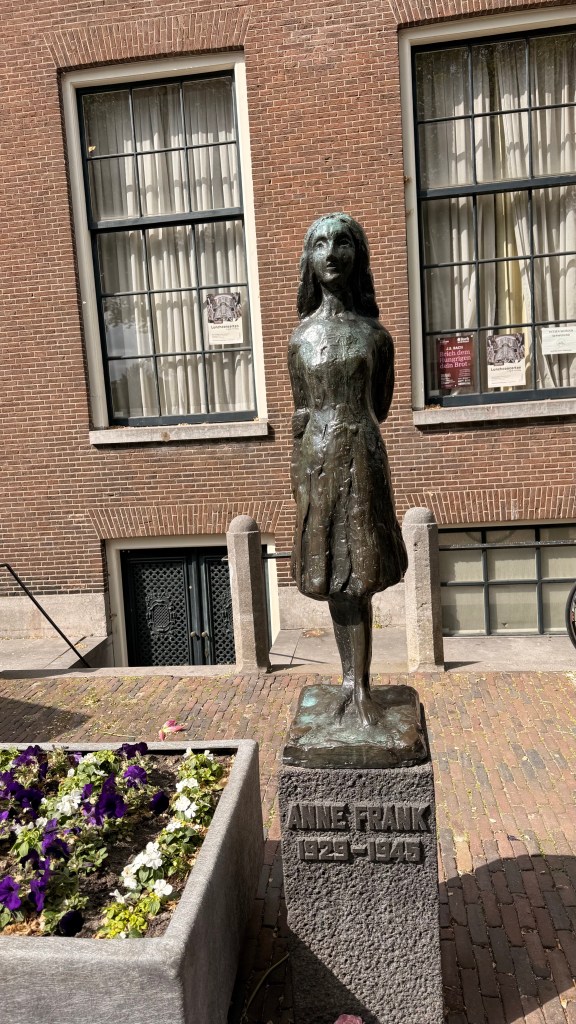
We visited the Anne Frank House, and outside stood the statue of Anne — young, still, fragile, and yet somehow enduring. The bronze figure felt small against the brick buildings around it, but the moral weight of her story filled the entire street.
There are places where history does not shout. It simply stands there and asks you to remember.
Nearby, the church tower rose above the neighborhood, bicycles lined the streets, and ordinary Amsterdam life continued around us. That contrast was striking: daily life moving forward in a place where the past still breathes through brick, stone, and silence.
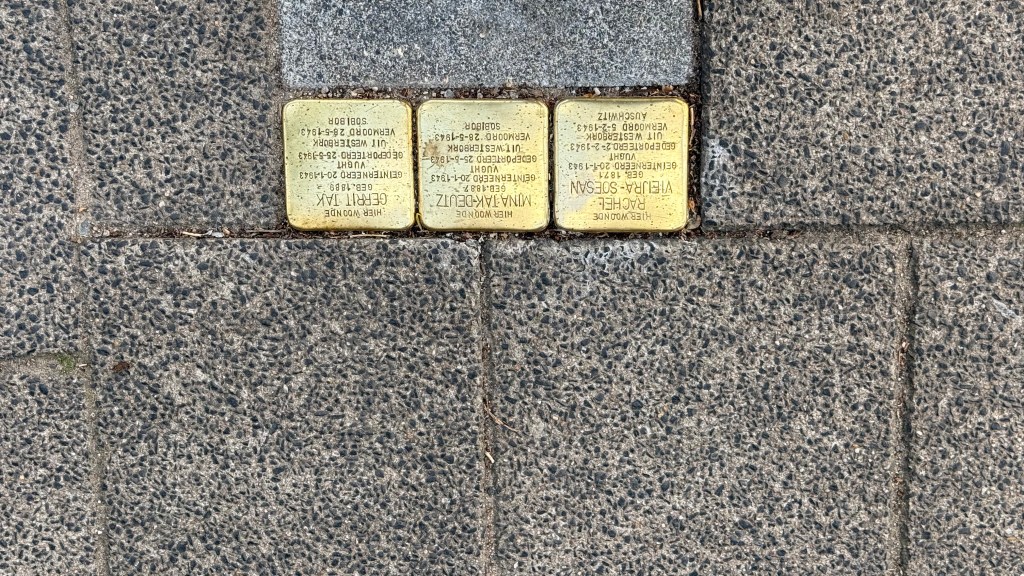
The small brass memorial stones embedded in the pavement were especially moving. Names underfoot. Lives interrupted. Families erased from ordinary streets. They reminded me that history is not only held in museums; sometimes it is built into the ground we walk on.
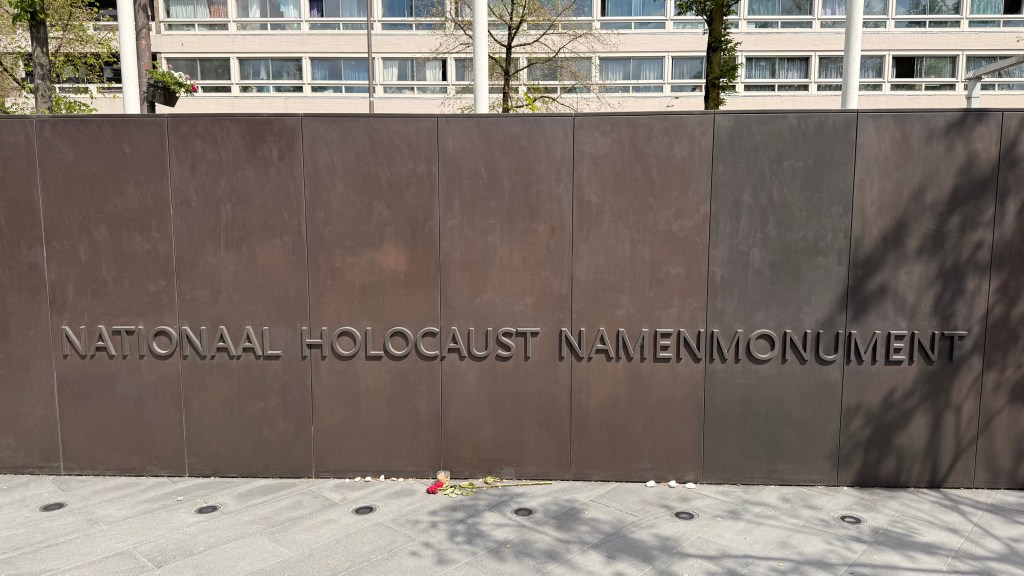
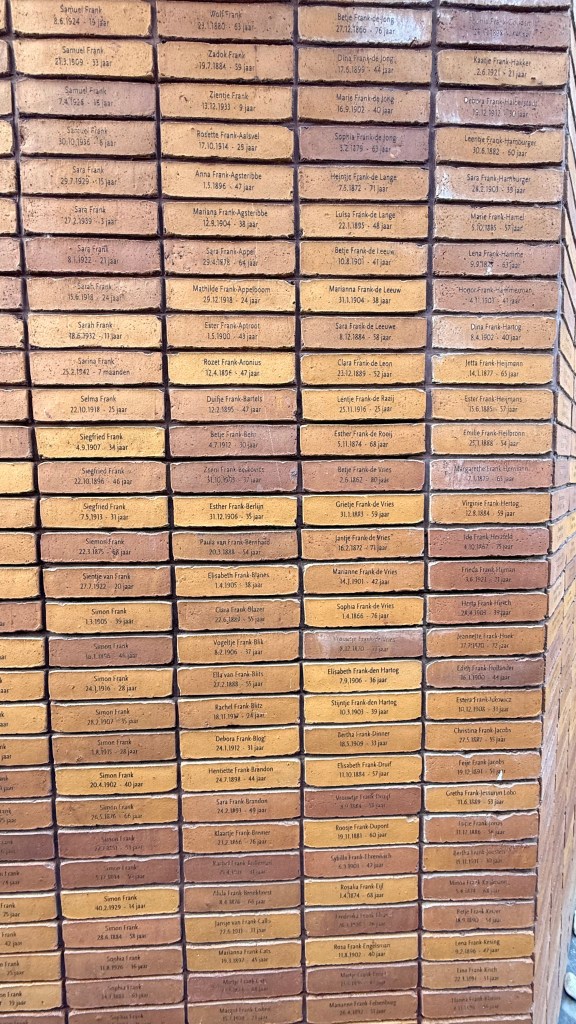
Later, at the National Holocaust Namenmonument, the scale of remembrance became almost overwhelming. The monument bears the names of more than 102,000 Jews, Sinti, and Roma from the Netherlands who were murdered during the Holocaust and never received a grave. Seeing those names transformed the tragedy from abstraction into presence.
It is one thing to know history.
It is another thing to stand before names.
I was struck again by the extent of depravity human beings are capable of when fear, hatred, and narrowness replace empathy. The Anne Frank House and the Holocaust memorial both reminded me that an expansive worldview is not a luxury — it is a moral necessity. When we stop seeing the humanity of others, we become capable of terrible things.
Travel matters because it enlarges us.
It moves us beyond the smallness of our assumptions.
It teaches us that borders may define nations, but they should never define compassion.
⸻
Van Gogh, Yellow, and the Self-Portrait of a Life
From the heaviness of memory, we moved into the world of Van Gogh.
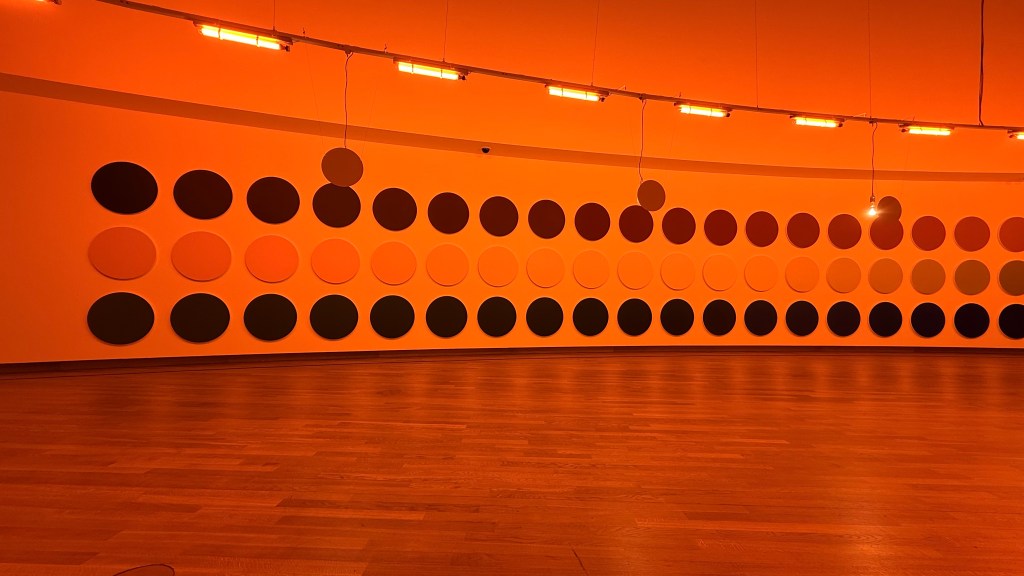
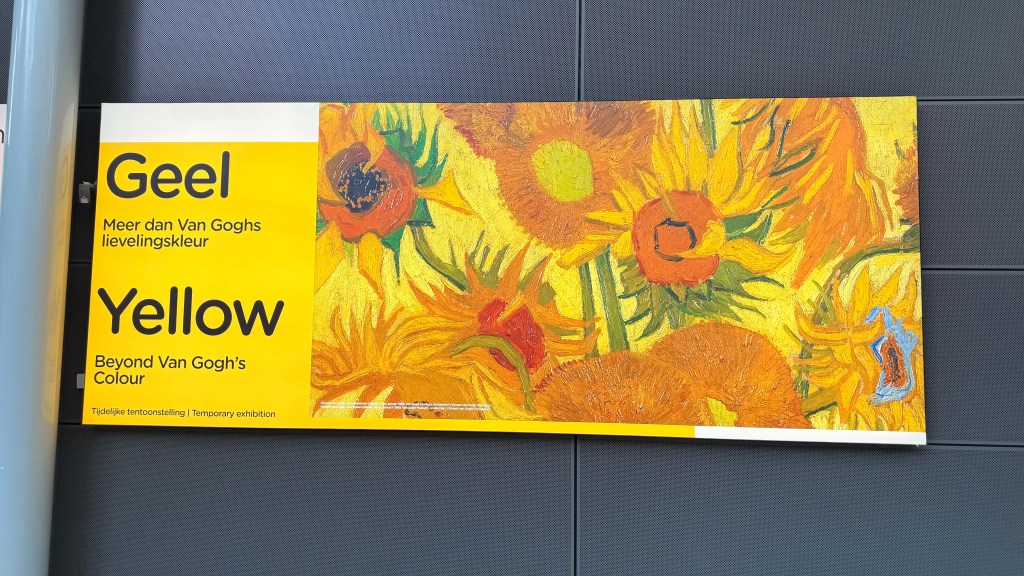
At the Van Gogh Museum, I found myself unexpectedly captivated by yellow. Not just as a color, but as an emotion. Yellow as sunlight. Yellow as longing. Yellow as brightness trying to break through suffering.
One display described sunshine as a light that, for want of a better word, could only be called yellow. Another suggested that yellow is not merely seen, but experienced. That stayed with me.
Van Gogh’s work seems to hold both anguish and radiance at once. Despite his inner struggles, he created with astonishing intensity. His paintings were not casual expressions; they were urgent attempts to translate feeling into color.
His self-portraits were especially revealing.
They were not simply paintings of a face. They felt like examinations of a life.
And I wondered: perhaps we all need self-portraits of our own lives.
Not the polished version. Not the curated version. Not the version we show at dinner parties or post online. But the honest one — the one that reflects our fears, our transitions, our joys, our wounds, our contradictions, and our unfinished hopes.
We may not always like what is reflected back.
But if we are willing to look closely, we may see something true.
Van Gogh died tragically, but his paintings continue to speak. Anne Frank’s life was cut short, but her words continue to bear witness. And in a quiet Amsterdam dinner, four travelers from Florida found unexpected companionship at the edge of a new chapter.
That is the beauty of travel.
It can take you from a memorial wall to a museum of color, from a stranger’s table to a reflection on your own life. It can remind you that the world is both wounded and beautiful, both tragic and luminous.
Amsterdam gave us all of that in one day.
A statue.
A name.
A stone in the pavement.
A wall of remembrance.
A room filled with yellow.
And a conversation that began before we even knew each other’s names.
⸻
Closing Reflection
Some journeys begin with a boarding pass.
Others begin with a shared table, an unexpected conversation, and the quiet courage to see yourself in someone else’s story.
Amsterdam reminded me that retirement is not simply an ending or a reward. It is a transition into a different kind of seeing. We are learning not only how to spend what we saved, but how to inhabit the life we prepared for.
And perhaps that is what travel does best.
It gives us new mirrors.
It gives us new colors.
It gives us yellow.
“Travel enlarges the portrait of a life. It adds light where routine had drawn only lines.” Simply O.
There is so much turmoil in the world today. Much of it, at least on the surface, appears to be driven by religion. Conflicts rooted in belief systems, identities shaped by faith, divisions that seem irreconcilable. And yet, when you step back, a different truth begins to emerge. We are more alike than we are different.
Science tells us that all humans share a common genetic origin. Faith traditions, in their own ways, trace humanity back to a shared beginning—a family, not fragments.
So the question becomes unavoidable:
If we are, in essence, one family… why so much hate?
An Old Problem, Not a New One
It is tempting to think this is a modern crisis. But history tells us otherwise.
Even in the time of Jesus Christ, the world was deeply divided.
Truth was not universally embraced—it was challenged.
Love was not always received—it was rejected.
And those who carried the message forward paid a heavy price.
With the exception of one, His disciples were martyred.
This is not a new story.
Where the Tension Lies
Perhaps the issue is not religion itself—but what we, as humans, do with it.
At its core, faith calls us to:
Love one another
Show mercy
Walk in humility
Seek peace
And yet, in practice, we often:
Defend identity over truth
Choose tribe over unity
React in fear rather than understanding
The tension lies in the gap between what we believe… and how we live.
A Broken World
It may simply be that the world has always been broken.
Not irredeemable—but fractured.
Capable of great compassion… and great division.
Capable of grace… and of harm.
And perhaps the discomfort we feel when we observe this is not a weakness—but an awareness. A recognition that something is not as it should be.
From a biological standpoint, there is something quietly profound about the human body.
Our skin—the part of us most visible to the world—is composed of layers. The dermis beneath, and the epidermis above. And at the very surface lies what is known as the stratum corneum—a layer made up almost entirely of dead cells.
Cells that have fulfilled their purpose.
Cells that no longer live… yet still cover us.
They protect us.
They define our outward appearance.
And they are constantly being shed, replaced, renewed.
In a sense, we are all walking around covered in what is no longer alive.
The Illusion of Permanence
And yet, despite this remarkable process of renewal, we age.
The body changes.
Time leaves its imprint.
And slowly, unmistakably, we are reminded of a truth that no advancement in science has been able to reverse:
This body was never designed to last forever.
What We See… and What We Are
There is something humbling in realizing that our most outward expression—our skin, our appearance—is, in large part, composed of what has already passed.
What the world sees first… is not the essence of who we are.
It is a covering.
A temporary layer.
A reflection, not the core.
A Quiet Message Over Time
Perhaps this is why aging brings with it a different kind of clarity.
The things we once held tightly—appearance, perception, external identity—begin to loosen their grip.
I am an immigrant. I came to America not as a descendant of its earliest wounds, but as someone who chose it. I built my life here. I trained, worked, led, invested, raised daughters, paid taxes, and contributed to the institutions that make this country function. I have lived the American dream — not perfectly, not effortlessly — but honestly and through discipline.
That is why I care.
When public discourse becomes careless with truth — when arithmetic is stretched beyond recognition, when rhetoric replaces seriousness — it unsettles me. Not because I expect perfection from leaders. No democracy has ever had that. It unsettles me because words matter. Facts matter. Institutions matter. A republic depends on shared reality.
Yet even in moments of disappointment, I remain grounded.
I believe in the arc of justice. History is not linear, but over time it has bent toward broader inclusion, deeper rights, and greater opportunity. There have been dark chapters — civil war, segregation, corruption, political hysteria — but the constitutional core endured. The system corrected. Not instantly. Not painlessly. But steadily.
I also believe in the fundamental goodness of the human spirit.
I grew up in Nigeria, lived for a decade in the United Kingdom, and ultimately built my life in the United States. Across continents and cultures, I have seen the same thing: ordinary people want dignity, opportunity, and fairness. They want to work. They want their children to rise higher than they did. They want stability more than spectacle.
America, at its best, uniquely affirms that your origin does not determine your ceiling. That you can come from anywhere, work hard, contribute meaningfully, and build something lasting. I am evidence of that promise. My daughters are evidence of that promise.
The American dream does not depend on flawless speeches. It depends on durable institutions — rule of law, capital markets, education, civic participation — and on citizens who take their responsibilities seriously. Those foundations remain.
I am disappointed at times. But I am not cynical.
Disappointment means I expect more. Cynicism would mean I expect nothing.
I choose not to surrender to cynicism. Because I have seen too much evidence — in my own life and in the broader sweep of history — that the arc does bend. Slowly. Imperfectly. But persistently.
And I want my daughters to inherit not just wealth or security, but confidence in the idea that effort still matters, integrity still matters, and justice, though delayed at times, is not defeated.