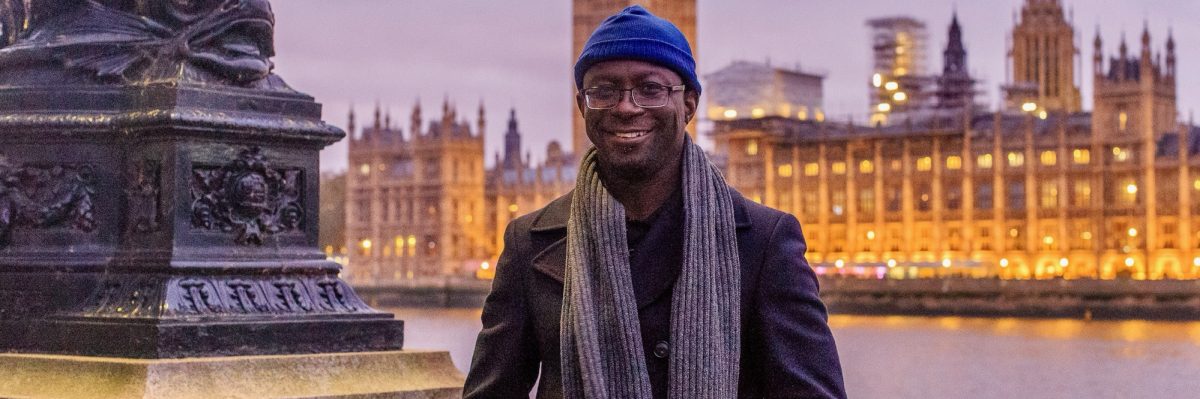
Podcast Episode: Turkey Through First Impressions

Pip: Simply O lands in Istanbul, and Adekunle Omotayo does what any sensible traveler does on arrival — immediately wonders if there is a bigger airport anywhere on earth.

Mara: This episode covers the full arc of that trip so far: the first overwhelming impressions of scale and arrival, and then the deeper, layered city that starts revealing itself the next morning. Let’s start with what Istanbul looks like up close, on day two.

Istanbul and Daily Life

Mara: The second day in Istanbul is where the city stops being enormous and starts being complicated — religious, historical, human, all at once, sometimes within the same block.

Pip: The post opens with a quiet moment that sets the whole tone. The context is simple: it’s early, the city is barely awake, and then — “I woke this morning to the call to prayer. It was still early, and for a few moments I simply listened.”

Mara: That stillness matters because what follows is anything but simple. The post traces how Istanbul has crossed religious and political boundaries across centuries — churches became mosques, mosques became museums, some became mosques again — and yet the country is a secular republic.

Pip: The word the post reaches for isn’t contradiction. It’s layers. And that framing does a lot of work — it’s the lens for everything that comes after, including a statue that turns out to carry real historical weight.

Mara: The statue depicts a man bent nearly double under an enormous load. Before learning anything about it, the post names him informally — the human camel. Then comes the actual history: he is a hamal, one of Istanbul’s traditional porters, who carried goods on their backs through streets too narrow for any other transport.

Pip: Sultans get palaces. Faith gets mosques. Conquest gets fortresses. And the people who actually kept the city moving get one bent figure in a city corner.

Mara: From there the post moves to the Bosphorus, where the scale shifts back outward. The strait connects the Black Sea to the Sea of Marmara, runs a two-layer current due to differences in salinity, and places Europe on one shore and Asia on the other — with about 97 percent of Turkey sitting on the Asian side.

Pip: Rumeli Hisarı, the fortress Sultan Mehmed II built before taking Constantinople, went up in four months. Thousands of men, day and night. That number lands harder than any date.

Mara: And then the pivot to the present: bridges now span what ferries once crossed, and Istanbul responded to the first Bosphorus bridge, opened in 1973, by producing considerably more traffic.

Pip: The post notes a local radio host called Istanbul traffic therapeutic. The author, who is from Lagos, is not entirely convinced therapeutic is the right word.

Mara: The two posts together — this one and the arrival piece — build toward the same conclusion: first impressions are invitations. Day two is where Istanbul starts making its case.

Pip: Which means the airport was just the opening argument.

Scale and Arrival in Turkey

Mara: Before the layers, there was the sheer size of the place — the arrival post captures what Istanbul feels like before you’ve had time to think about what it means.

Pip: The post leads with a single sentence that frames everything: “My first impression of Turkey was scale.” The airport, the roads, the bridges — all of it reads as supersized before the city has said a single word.

Mara: And then, above the traffic, something cuts through. The call to prayer — ancient words carried over a thoroughly modern city — lands as the post’s earliest real impression of Istanbul: old and new occupying the same space without apparent difficulty.

Pip: The hotel is 120 years old and only recently became a hotel. Before restoration it housed a curtain shop, small stores, someone who made spoons, and a repair shop for radios and remote controls. A luxury hotel today. A spoon maker yesterday.

Mara: That line earns its place. The post is honest that almost nothing of the landmark city has been seen yet — Hagia Sophia, the Blue Mosque, Topkapi, the Grand Bazaar are all still ahead. But first impressions are doing real work.

Pip: There is also rakı — ordered specifically because it was unfamiliar. Water turns it from clear to cloudy white, a transformation the post finds genuinely fascinating. The taste, which is very definitely anise, produces less enthusiasm.

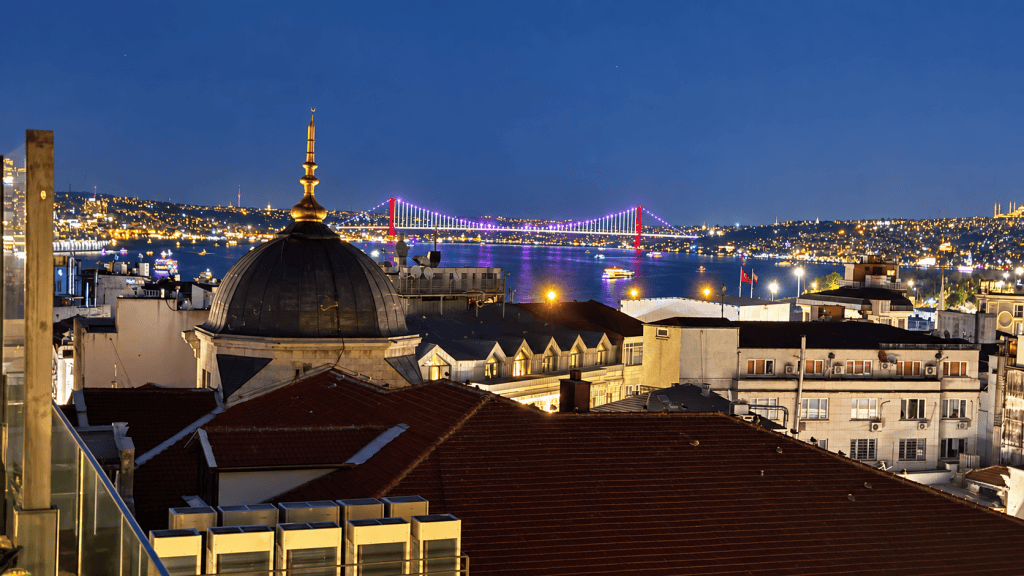
Mara: The post closes with the city at night: a bridge lit up across the Bosphorus, its lights suspended between two continents. The conclusion is that first impressions are not conclusions at all. They are invitations.

Pip: Day two, it turns out, is where the city starts accepting its own invitation.


Mara: What stays with me is that word — layers. Not contradiction, not tension. Just depth accumulated over centuries.

Pip: And the hamal. Someone still had to carry the load. More from Istanbul, presumably, in the next episode.
Istanbul – Between Two Worlds

I woke this morning to the call to prayer.

It was still early, and for a few moments I simply listened.

There are five calls each day here, and after hearing the first one yesterday evening, waking to another this morning made me realize that this sound would become part of the rhythm of our days in Istanbul.

There is something particularly fitting about that in a city whose history has crossed religious boundaries almost as readily as its people cross the Bosphorus.

Once Constantinople, this was for centuries one of the great centers of Christianity. Then came the Ottomans and Islam. The buildings themselves carry the evidence. Churches became mosques. Mosques became museums. Some became mosques again.

And yet modern Turkey is a secular republic.

Perhaps contradiction is the wrong word.

Layers may be better.

Before leaving the hotel, I found myself noticing some of the objects around us.

On one wall hung an old-fashioned telephone—wood and brass, rotary dial, receiver dangling from its cord. I don’t know its history, or whether it belonged to this building in an earlier life, but in a place that had already lived for more than a century before becoming our hotel, somehow it didn’t feel merely decorative.

It felt like an echo.

And then there was a statue I had noticed earlier.

It depicted a man almost doubled over beneath an enormous load. Before knowing anything about it, I had already given him my own name: the human camel.

A camel, after all, is a beast of burden, built to carry enormous weight across difficult terrain. Looking at this bent figure, I couldn’t escape the comparison. Except here, the beast of burden was a human being.

Later I learned that he was a hamal—one of Istanbul’s traditional porters. For centuries, men like him carried goods on their backs from the waterfront into the city’s markets, navigating streets too narrow and steep for other forms of transport.

Suddenly the statue meant something different.

Istanbul’s palaces tell us about the sultans who ruled it. Its mosques tell us about faith. Its fortresses tell us about conquest.

But someone still had to carry the load.

Perhaps that bent man tells another history of Istanbul—the history of the ordinary people upon whose backs great cities are built.

Outside, the scale changed again.

We left these smaller echoes of the past behind and took to the Bosphorus, where history was written not in telephones and statues, but in palaces, fortresses and continents.

The Bosphorus is not a river. It connects Asia to Europe. It is a natural saltwater strait, not a river or man-made canal, connecting the Black Sea with the Sea of Marmara and ultimately the Mediterranean. It has a fascinating two-layer current: generally southward at the surface and northward below because of differences in salinity and density. 

That geographical fact suddenly seemed extraordinary when experienced from the water.

To one side, Europe.

To the other, Asia.

And we were sailing between them.

Most of Turkey—about 97 percent of it—is actually in Asia, something easily forgotten when thinking of Istanbul as a European city. Today we would cross over and, for a little while at least, stand on another continent.

History lined both shores.

Ottoman palaces appeared along the waterfront. Magnificent old wooden mansions—yalıs—sat close to the water, reminders of a time when position on the Bosphorus was itself a statement of wealth and power. Today, some command extraordinary prices.

Then came the fortresses.

At one of the narrowest points of the Bosphorus stands Rumeli Hisarı, built by Sultan Mehmed II as he prepared to conquer Constantinople. Looking at its massive walls, I wondered how long construction had taken.

Years seemed reasonable.

The answer was four months.

Thousands of men, working day and night.

There are moments when history becomes easier to understand not through dates but through ambition. Standing there more than five centuries later, looking at those walls from the water, four months told me almost everything I needed to know about how badly Mehmed wanted Constantinople.

And then there was modern Istanbul.

Bridges now span the water that once required ferries to cross. The first Bosphorus bridge opened in 1973 and offered a new way of moving between Europe and Asia.

Apparently Istanbul responded by producing more traffic.

Much more traffic.

A lady on a local radio joked that in Istanbul there is little need for therapy because the traffic itself is therapeutic.

I’m not entirely convinced that therapeutic is the word I would choose.

I come from Lagos.

I know traffic.

But Istanbul is certainly making a respectable effort.

And perhaps that is what I am beginning to understand about this city.

Yesterday, everything seemed bigger.

Today, everything seems layered.

Christian and Muslim.

Ancient and modern.

Sultans and porters.

Palaces and ordinary homes.

Fortresses and suspension bridges.

Europe on one shore.

Asia on the other.

And between them, the Bosphorus—carrying ferries, tankers, fishermen, tourists and centuries of history back and forth across the same water.

Yesterday I wrote that first impressions are invitations.

Today, Istanbul began explaining why.

Simply O

Everything seems bigger here.

My first impression of Turkey was scale.

Istanbul Airport seemed almost impossibly large. Corridors stretched into the distance, the parking structure was equally imposing, and before we had even properly arrived, I found myself wondering whether there was a bigger airport anywhere in the world.

Outside, the theme continued.

The roads were wide and remarkably clean. The bridges were enormous. Everything seemed somehow supersized.

It took nearly an hour to reach our hotel, the Orient Occident, and Istanbul gradually revealed itself through the car window. Traffic everywhere—not quite Lagos traffic, perhaps, but enough cars to make the comparison inevitable. The streets were alive with pedestrians. The air was hot and muggy, almost tropical.

And then came a sound that immediately reminded me that I was somewhere different.

The call to prayer.

It rose above the traffic and the noise of the city, broadcast from loudspeakers, ancient words carried over a thoroughly modern metropolis.

That juxtaposition may be my earliest impression of Istanbul: the old and the new apparently having no difficulty occupying the same space.

Even our hotel tells that story.

The building is about 120 years old, although it became a hotel only recently. Before the restoration, its spaces housed an assortment of small businesses: a curtain shop, tiny stores tucked between columns, someone who apparently made and sold spoons, another shop devoted to remote controls and repairs for radios and electrical devices.

I smiled listening to the story.

A luxury hotel today. A spoon maker yesterday.

Perhaps that is Istanbul.

We haven’t really seen anything yet. Somewhere beyond our hotel are Hagia Sophia, the Blue Mosque, Topkapi Palace, the Grand Bazaar and the Bosphorus. Tomorrow we begin discovering them.

But first impressions matter.

And on this first evening in Turkey, Istanbul already felt enormous, crowded, warm, ancient and modern all at once.

By dinner, it seemed only appropriate to try something Turkish.

When I wondered aloud what I should drink, I decided against the familiar and ordered rakı.

It arrived clear. Then water was added and, almost magically, the drink turned cloudy white before my eyes. I was fascinated. The resulting color, I discovered, is sometimes described as aslan sütü—“lion’s milk.”

The fascination lasted longer than my enthusiasm for the taste.

Anise.

Very definitely anise.

Perhaps a little too much anise for me. I was glad I tried it, but I suspect rakı and I may remain acquaintances rather than become close friends.

After dinner, I stepped outside with my camera.

And there was Istanbul again—this time illuminated against the night. Across the dark waters of the Bosphorus, one of those enormous bridges I had noticed on the drive from the airport was now transformed, its lights suspended between two continents and the city climbing the hills beyond it.

I took a couple of photographs.

It seemed an appropriate way to end my first evening in Turkey.

I had arrived thinking about scale—the enormous airport, the bridges, the roads, the traffic and the crowds. But by nightfall, Istanbul had begun revealing itself through smaller things: the call to prayer floating above the streets, stories hidden inside a 120-year-old building, a glass of rakı changing color when touched by water, and a bridge glowing across the Bosphorus.

Perhaps first impressions aren’t conclusions at all.

They are invitations.

And Istanbul has five more days to make its case.

Simply O

How much is enough:

I have begun to wrestle with a question that seems deceptively simple:

How much is enough?

We spend so much of our lives moving the goalpost.

One more achievement.
One more promotion.
One more investment.
One more property.
One more number that must be reached before we finally give ourselves permission to say, This is enough. I can live now.

There is nothing wrong with striving. Much of what is good in my life came because I worked hard, remained disciplined, took chances, and kept going when stopping would have been easier.

But striving is supposed to take us somewhere.

At some point, surely, we have to stop and take stock.

We cannot behave as though time is limitless. We cannot work and accumulate indefinitely, postponing life until we are one illness away from a hospital bed—or until illness has taken from us the very ability to enjoy what we spent a lifetime building.

There is only one life.

And I am no longer convinced that spending almost all of it in service of one vocation is prudent, no matter how often we tell ourselves, I love what I do.

Perhaps we do love it.

But there are other things to love.

There are people to love.

There is a world to see.

There are mornings that belong to no employer. Conversations that need no agenda. Places that have been waiting patiently for us. There are children who become adults while we are busy. Spouses who grow older beside us. Friends who disappear sooner than we imagined. And there are ordinary afternoons whose value we often recognize only after they are gone.

People sometimes speculate that artificial intelligence may eventually make much human work unnecessary. I wonder what that would reveal about us.

Would we rejoice at being liberated from work?

Or would we discover that we had spent so long defining ourselves by our occupations that, without them, we no longer knew who we were?

Perhaps that is one of the dangers of achievement. What begins as provision can quietly become accumulation, and accumulation can become something else entirely—a gateway to greed, comparison, and an undeserved sense of self-importance.

I hear of people owning ten houses.

Ten houses.

Yet no matter how many houses we own, we can sleep in only one bed at a time—and occupy perhaps six feet of it.

That is the absurdity of endless accumulation.

There will always be another house to buy, another dollar to earn, another milestone to cross. If the definition of enough is always more, enough will never come.

And the great irony is that eventually we leave all of it behind.

Every house.

Every account.

Every title.

Every possession.

Even the name on the office door.

None of it comes with us.

Perhaps, then, the question is not how much we can accumulate before we die.

Perhaps the better question is:

How much life are we willing to surrender in order to accumulate things we already have enough of?

There comes a point when the arithmetic changes.

Earlier in life, money is scarce and time appears abundant. We exchange time for money because that is what building a life requires.

Later, if we have been fortunate, money becomes abundant enough.

And suddenly time is the scarce asset.

Except there is one terrible difference.

We can look at an account and know exactly how much money remains.

No statement tells us how much time is left.

So perhaps knowing when enough is enough is not a failure of ambition.

Perhaps it is wisdom.

To stop accumulating merely for the sake of accumulation.

To turn from accumulation to stewardship.

To exchange striving for presence.

To recognize that wealth has fulfilled its highest purpose when it gives us the freedom to spend our remaining time deliberately—and, where possible, to make someone else’s journey a little easier.

Because when everything else is stripped away, what remains is surprisingly simple.

The hope for a long life.

The love that carries us through it.

And the grace that sustains them both.

Peace. Grace. Love. Faith.

Simply O.

I had my Time:

There is an image used to describe physician retirement that has stayed with me.

A Jenga tower stands upright, one block protruding from its center. Imagine that block represents medicine. Pull it out, and the tower collapses.

The metaphor is meant to illustrate what can happen when physicians retire. After decades of being defined by patients, schedules, decisions, responsibility, and the simple but powerful title of doctor, remove medicine and something fundamental can disappear with it.

I understand the metaphor.

I am simply not sure it describes me.

I spent more than half my life in medicine. That is an extraordinary amount of time when I stop to think about it. Medicine accompanied me through much of adulthood. It provided a livelihood, certainly, but it also gave me purpose, friendships, responsibility, intellectual challenge, and the privilege of entering people’s lives at moments when they were often most vulnerable.

I eventually moved beyond caring for individual patients into leadership, where the decisions were different but the responsibility remained. Medicine shaped how I thought, how I solved problems, and probably how I still look at much of the world.

And yet, when it was time to leave, I left.

I did not experience an existential crisis.

I did not wonder who I was without the title.

And, perhaps most surprisingly, I did not miss it.

For a while, I wondered whether there was something unusual about that. We hear so much about physicians who cannot quite retire—those who reduce their hours, continue teaching, maintain their licenses, volunteer in clinics, consult, or find some other way of keeping one foot inside medicine.

There is nothing wrong with that. For some, medicine remains a source of enormous joy and meaning long after formal practice ends.

But there must also be room for another story.

There is a difference between losing an identity and completing a season.

I think I had completed mine.

By the time I walked away, I did not feel that medicine had been taken from me. I felt that I had given it what I had to give. I had cared for patients. I had led. I had made mistakes and learned from them. I had accumulated stories, experiences, friendships, disappointments, victories, and lessons that could only have come from spending decades inside that remarkable profession.

I was grateful.

And I was finished.

Those two feelings can coexist.

Perhaps that is why writing became so important after I left.

I had begun blogging before retirement, but with time, writing became something more. It gave me somewhere to put the years.

There were decades of experiences stored inside me—patients I remembered, people who had shaped me, decisions I had made, places I had traveled, questions I had never stopped long enough to ask. Medicine had required movement. Writing invited stillness.

I began to understand that I wasn’t trying to preserve my medical life.

I was processing it.

Writing became release. Reflection. At times, therapy.

Photography did something similar. So did travel. They asked different things of me. Medicine had trained me to look for what was wrong and decide what needed to be done. Photography asked me simply to notice. Travel reminded me how enormous the world was beyond the familiar corridors in which I had spent so much of my life. Writing asked not What should I do? but What did all of this mean?

None of these things needed to become a second career.

That realization mattered.

We spend so much of our working lives measuring ourselves by productivity that we can carry the same habit into retirement. We retire from one demanding occupation and immediately begin searching for another sufficiently important thing to justify our continued existence.

But perhaps usefulness does not have to be proved.

Perhaps purpose is larger than occupation.

I sometimes think the Jenga metaphor has the architecture wrong.

Maybe medicine was never the block holding up the tower.

Maybe it was an entire level of the tower.

It helped build what came afterward: discipline, resilience, curiosity, perspective, gratitude, relationships, leadership, financial security, and the confidence to enter unfamiliar places. Removing the daily practice of medicine does not remove what those years built.

I carry those things with me.

But carrying medicine with me is different from needing to remain inside it.

Our lives were never meant to be one-act plays.

Medicine was an extraordinarily long first act in mine. It was demanding, consuming, consequential, and deeply worthwhile. But the importance of the first act does not require the second act to resemble it.

Photography does not have to become medical photography.

Writing does not have to become writing about medicine.

Travel does not need to become medical volunteering.

Wisdom does not have to become mentoring physicians.

Some things are allowed simply to be new.

Perhaps that is one of the freedoms of this stage of life: no longer needing every new interest to justify itself by connecting to what came before.

I can remain proud that I was a practicing physician without needing to practice.

I can be grateful for medicine without longing for it.

I can acknowledge that it shaped me without believing that it defines me.

And I can say something that might sound strange after giving more than half my life to a profession:

I don’t miss it.

There is no bitterness in that sentence.

Quite the opposite.

There is gratitude.

I had my time.

I lived that part of my life fully, and when the time came, I was able to leave without feeling that something essential had been taken from me.

Maybe that is what fulfillment sometimes looks like—not desperately wanting one more year, one more title, one more patient, one more opportunity to prove that we still matter.

Maybe fulfillment is being able to look backward with gratitude and forward with curiosity.

Medicine gave me more than I could ever adequately describe. But it was never the whole story.

And when the curtain finally came down on that long first act, I did not feel the need to remain on the stage.

There were other stories I wanted to tell.

Simply O.

SOMEWHERE BETWEEN LEAVING AND ARRIVING

One Year Into the Journey

Somewhere between the leaving…
and the arriving…
I found something I wasn’t looking for.

Not in one place.
Not in one moment.
But scattered—across cities, coastlines, quiet streets, and long flights between them.

A year ago, I stepped away from a life that had long defined me. For decades, my days were structured—measured in decisions, responsibilities, and outcomes. It was meaningful, deeply so. But it was also constant.

And then, one day, it wasn’t.

I remember reading something at 30,000 feet—somewhere between continents, suspended between what was and what was next. It said most of us are moving through life somewhere between shining and just getting by.

And for the first time, I had the distance to ask:

Where was I, really?

Retirement didn’t answer that question.

It created the space for it.

At first, the absence of structure feels unsettling. You reach for the familiar rhythms—deadlines, meetings, the quiet validation of productivity. But slowly, something shifts.

The absence becomes space.
And the space becomes possibility.

Over the past year, I’ve stood on coastlines where the only clock was the tide. I’ve walked through cities where getting lost felt more meaningful than arriving. I returned to Lagos and found memory waiting for me there. I sat in cafés and airport lounges where time slowed just enough for reflection to finally catch up.

And in those moments, something began to change.

Not suddenly.
But steadily.

The things I once thought defined me—titles, roles, expectations—started to fade into the background. Not gone, but no longer in control.

In their place, something quieter emerged.

A different way of living.

One not driven by urgency, but by presence.

Every destination has left something with me. Not simply memories, but clarity. A realization that the life I had built was only one expression of who I am—not the entirety of it.

And perhaps the most unexpected truth of all:

What I thought I had to be… was never the full story.

The noise that once filled my days has softened. The constant internal dialogue of responsibility and expectation has given way to something more measured, more intentional.

More… mine.

I spent years working to feel alive.

Now, I’m learning what it means to simply live.

Not defined by a title.
Not anchored to a place.
Not measured by output.

Just present.
Just aware.
Just open to whatever comes next.

One year into this journey, I wouldn’t say I’ve arrived.

But I’ve stopped trying to.

Because somewhere along the way—between airports and oceans, between familiar beginnings and unknown horizons—

I found something better than certainty.

I found a life that felt less constructed… and more true.

I FOUND ALIGNMENT.

The journey, I’m learning, is not about finding where you are going.

It is about discovering who has been traveling with you all along.

Yourself.

Because distance does not merely separate you from places—it reveals you to yourself.

And when the noise fades, truth does not rush in.

It waits patiently to be noticed.

-Simply O.

Sacred Shores Series: Myrtos Beach – Kefalonia, Greece

Whispers of Blue

Myrtos Beach, Kefalonia, Greece

“To sit beside the sea is to hold a mirror to the soul.” — Greek Proverb

“Some landscapes speak in silence—this beach whispered peace to my spirit.” — Simply O.

Few places take your breath away quite like Myrtos Beach on the island of Kefalonia. Curving gracefully between towering limestone cliffs, its pristine white pebbles meet waters painted in impossible shades of turquoise, sapphire, and cobalt. It is one of Greece’s most photographed beaches—and standing there, it is easy to understand why.

From the viewpoint high above, the scene appears almost unreal. The sea glows with a brilliance that seems borrowed from an artist’s palette, while the cliffs stand as ancient guardians over a shoreline sculpted by wind, water, and time. Nature here has achieved a harmony so perfect that it feels less like a destination and more like a revelation.

Yet what struck me most was not the color of the water or the grandeur of the landscape. It was the stillness.

Even with the gentle rhythm of the waves rolling ashore, there was a profound quietness that settled over the spirit. The beach seemed to ask nothing of its visitors—no agenda, no achievement, no urgency. Only presence.

In a world that constantly demands our attention, Myrtos offers something increasingly rare: permission to simply be.

As I gazed across the Ionian Sea, I was reminded that some of life’s greatest gifts cannot be purchased, scheduled, or possessed. They can only be experienced. A sunset. A conversation. A moment of gratitude. A shoreline where the sea meets eternity.

Travel often teaches us through movement, but occasionally it teaches us through stillness. Myrtos Beach was one of those places.

A sanctuary carved by wind, sea, and time, it reminded me that peace is not always found in reaching a destination. Sometimes it is found in pausing long enough to hear the whisper of the waves and remembering that we are part of something far greater than ourselves.

For a brief moment on the shores of Kefalonia, the world seemed content simply to breathe.

And so was I.

Simply O.

Preparing for the Journey:

This morning I had the privilege of speaking at Walk with the Doc about travel medicine.

We talked about vaccinations, malaria prevention, deep vein thrombosis, food safety, jet lag, travel insurance, and the many practical things that help us return home safely.

After the presentation, the questions began.

People wanted to know about traveling to remote parts of Asia.

What about the Himalayas?

What happens at very high altitude?

How dangerous is altitude sickness?

What should I carry into places where medical care may be days away?

They were thoughtful questions, and as I answered them, I realized they all revolved around the same idea.

Preparation.

Not fear.

Preparation.

There is a tendency to think that the greatest danger in travel lies in the destination. But more often than not, the destination is not the problem. The problem is arriving unprepared.

The mountain is still the mountain.

The jungle remains the jungle.

The desert has always been the desert.

Our responsibility is not to demand that the world become safer for us. It is to become wiser before we enter it.

Altitude sickness is a fascinating example.

The mountain does not care how wealthy you are.

It does not care how physically fit you look.

It does not care how many countries you have visited.

Above a certain elevation, every human body is negotiating with thinner air. Some adapt quickly. Others do not. Some become mildly uncomfortable. Others become gravely ill.

The mountain treats everyone with remarkable fairness.

Respect it, and it often rewards you.

Ignore it, and it can humble you.

I wonder if life works much the same way.

There are emotional high altitudes as well.

Retirement.

Grief.

Success.

Failure.

Marriage.

Parenthood.

Immigration.

Leadership.

None of these places are inherently dangerous, but each demands a different kind of preparation. The habits that served us at one altitude may no longer be enough at the next.

Sometimes we try to rush the ascent.

We want tomorrow’s view without today’s acclimatization.

But life, like the mountains, often insists that we climb slowly.

Pause.

Adjust.

Drink deeply.

Rest.

Listen to our bodies.

Know when to continue and when to descend.

Perhaps wisdom is simply learning to respect the altitude of the season we are in.

When I prepared today’s talk, I told the audience that preparation is the best travel medicine.

As I reflected afterward, I realized the same could be said of life itself.

Preparation cannot eliminate every risk.

I prepared carefully before traveling to Nigeria and still returned home with COVID.

Preparation does not guarantee perfect outcomes.

It simply gives us the best chance to meet uncertainty with resilience instead of regret.

Whether we are boarding a plane, beginning a new career, entering retirement, or walking into an unfamiliar chapter of life, the principle remains unchanged.

Prepare well.

Travel with humility.

Respect what is greater than you.

And remember that the goal is never merely to arrive.

It is to return home—wiser, healthier, kinder, and grateful that there are still mountains left to climb.

Simply O.

The world is broken, But hope Remains

The World Is Broken, But Hope Remains

As I traveled through Europe, I often found myself thinking about the strange relationship between beauty and history.

I walked through magnificent cities.

I stood in ancient squares surrounded by beautiful buildings. I crossed bridges over peaceful rivers. I sat in cafés and watched people go about their ordinary lives. Tourists took photographs. Children played. Church bells rang.

And yet, beneath much of that beauty lay the memory of war.

This was a continent that had torn itself apart more than once.

Cities had been bombed into rubble. Millions had died. Families had been separated. Entire communities had disappeared. Young men had crossed borders to kill other young men they had never met. Human beings had discovered increasingly efficient ways to destroy one another.

And now, decades later, I was walking peacefully through those same places.

I found myself wondering:

Do we ever learn?

Because while I was traveling through the ruins and monuments of yesterday’s wars, my phone kept bringing me news of today’s.

Wars.

Rumours of wars.

Bombings.

Missiles.

Threats.

Refugees.

Children pulled from rubble.

Politicians explaining why the next act of violence is necessary because of the previous one.

Every morning, another notification.

Breaking News.

But after a while, I began to wonder what exactly was still breaking.

The news was new, but the story was ancient.

Human beings fighting over land.

Power.

Religion.

Resources.

History.

Pride.

Revenge.

One generation inheriting the anger of another and passing it faithfully to the next.

Perhaps one of the saddest things about our broken world is not simply that violence continues.

It is that we are becoming accustomed to it.

There may be such a thing as fear fatigue.

The first terrible image shocks us.

The tenth troubles us.

The hundredth becomes another story we scroll past on the way to something else.

Not because we do not care, but because the human heart was perhaps never designed to carry the suffering of the entire world every hour of every day.

And so we protect ourselves.

We look away.

We change the channel.

We continue with dinner.

We plan our vacations.

We live our lives.

I understand this.

But I also fear it.

Because when suffering becomes ordinary, indifference can begin to feel normal.

And yet, traveling through Europe taught me something else.

Destruction does not always have the final word.

I walked through cities that had once been rubble.

I crossed borders that armies once died defending.

I watched people from nations that once tried to destroy one another sit together in restaurants, travel together on trains, conduct business together, marry one another, and raise children who may barely understand why their great-grandparents hated each other so much.

That does not mean history is over.

It does not mean peace is permanent.

Nothing is permanent in this world.

But perhaps neither is war.

The human story is filled with destruction, but it is also filled with rebuilding.

Bridges are rebuilt.

Homes rise again.

Church bells ring again.

Markets reopen.

Children return to school.

Former enemies eventually sit at the same table.

Perhaps this is what hope looks like.

Not the denial of suffering.

Not pretending that everything will be fine.

Not closing our eyes to evil or refusing to speak when truth demands a voice.

Hope is something more stubborn than optimism.

It is the refusal to believe that destruction must have the final word.

Jesus said that we would hear of wars and rumours of wars.

Two thousand years later, the words remain painfully familiar.

But perhaps the instruction hidden within them is not to surrender to fear.

We are still called to live.

To love.

To pray.

To speak truth.

To help where we can.

To resist the temptation to divide every human being into camps of us and them.

To remember that behind every statistic is someone’s child, someone’s parent, someone’s friend.

The world is broken.

Perhaps it always has been.

But I have walked through places where broken things were rebuilt.

I have stood in cities where hope returned after people believed all hope had disappeared.

I have seen flowers growing beside monuments to the dead and children laughing in places where soldiers once marched.

And perhaps that is why I still believe.

The headlines may continue.

The wars may continue.

The rumours may continue.

But somewhere, even now, someone is rebuilding a wall.

Someone is planting a tree.

Someone is feeding a stranger.

Someone is choosing forgiveness over revenge.

Someone is teaching a child a different story.

Someone is praying for peace.

These things rarely make the breaking news.

But perhaps they are the news that matters most.

The world is broken.

But hope remains.

Simply O.

The Bright Side:

“Always look on the bright side of life.”

It wasn’t in a cathedral.

It wasn’t carved into ancient marble.

It wasn’t spoken by a philosopher.

It was written on the wall of a small shop in Mykonos, above a display of sunglasses.

I smiled.

Not because the message was profound in itself, but because of where I found it.

For days, Greece had immersed us in stories of empire, democracy, conquest, mythology, earthquakes, invasions, and civilizations that rose and fell.

We had stood where Socrates questioned convention.

Where Pericles inspired a democracy.

Where emperors built libraries.

Where temples became churches, and churches survived wars.

History, I was learning, is as much a story of suffering as it is of achievement.

And then, in the middle of an ordinary shopping trip, came this unexpected reminder.

Always look on the bright side of life.

At first glance it feels almost simplistic.

Life is not always bright.

There are diagnoses that cannot be changed.

There are phone calls no one wishes to receive.

There are loved ones we bury too soon.

There are dreams that quietly fade.

No thoughtful person would deny that.

But perhaps the phrase is not asking us to ignore life’s shadows.

Perhaps it is asking us to remember that shadows only exist where there is light.

Looking on the bright side is not pretending pain doesn’t exist.

It is refusing to let pain become the whole story.

As I reflected on my own journey, I realized how often that choice has shaped my life.

Leaving Nigeria meant leaving family and familiarity behind.

Training in new countries demanded sacrifice.

Medicine exposed me daily to illness, uncertainty, and loss.

Leadership brought criticism as well as success.

Even retirement, joyful as it has been, carries its own quiet awareness that time has become more precious than ever.

Yet every difficult chapter has carried unexpected gifts.

Friendships.

Lessons.

Opportunities.

Gratitude.

A deeper appreciation for what truly matters.

Perhaps that is what travel has been teaching me all along.

Every city has shown me humanity at both its best and its worst.

The Shoes on the Danube spoke of unimaginable cruelty.

Malta reminded me of resilience.

Lithuania revealed the quiet strength of endurance.

Athens celebrated the power of ideas.

Mykonos, of all places, offered a lesson hidden above a shelf of sunglasses.

Wisdom does not always arrive where we expect it.

Sometimes it waits in museums.

Sometimes in churches.

Sometimes in conversations with strangers.

And sometimes…

on the wall of a little shop.

As I left the store, I couldn’t help but think that perhaps life itself is a bit like choosing a pair of glasses.

The world before us remains exactly the same.

What changes is the lens through which we choose to see it.

I cannot control every circumstance that lies ahead.

None of us can.

But I can choose gratitude over resentment.

Hope over despair.

Wonder over cynicism.

And if I can do that…

perhaps I really am looking on the bright side of life.

Not because life is always bright.

But because, even after all these years, I still believe the light deserves my attention.

Simply O