The Currency of Time:

People often say, “I’ll start saving when I have more money,” or “I’ll invest when I get a better job.”

What they fail to recognize is that the most valuable currency in life is not money.

It is time.

Money can be earned, lost, and earned again. Careers can change. Businesses can succeed or fail. Markets rise and fall. But time moves in only one direction. Once spent, it can never be recovered.

A year lost is worth more than its weight in gold.

This truth is perhaps most visible in investing. Many people postpone saving until they earn more money, unaware that what they are truly sacrificing is not dollars but years. A modest investment begun early often accomplishes more than a large investment started late because compound growth depends less on the amount invested than on the length of time invested.

Time, not money, is often the greatest contributor to wealth.

Yet the lesson extends far beyond finance.

Life itself compounds.

Relationships compound.

Knowledge compounds.

Wisdom compounds.

Acts of kindness compound.

Faith compounds.

The small choices made consistently over decades become the architecture of a life.

When we are young, we rarely appreciate this. We assume there will always be more time. More opportunities. More tomorrows.

We postpone dreams. We delay difficult conversations. We put off travel, forgiveness, gratitude, and sometimes even joy itself. We tell ourselves we will begin later, when circumstances are better and life becomes less demanding.

But time is quietly passing while we wait.

The same principle applies to many of life’s most important decisions. Young couples often postpone having children while waiting for financial security, a larger home, a better job, or a more convenient season of life.

The reasoning is understandable.

We all want to provide the best possible start for those we love.

Yet life rarely follows our carefully constructed schedules.

Looking back, I am not sure there was ever a perfect time for many of the blessings that shaped our lives. Had we waited until every uncertainty disappeared, some of those blessings might never have arrived at all.

Children, like many of life’s greatest gifts, do not arrive when everything is settled. They arrive and become part of the journey itself.

In hindsight, some of the years that seemed the most uncertain were also among the richest. The years when resources were limited, careers were still developing, and the future felt less predictable were also the years filled with first steps, first words, family traditions, laughter around small tables, and memories that remain priceless decades later.

Sometimes what appears to be an inconvenient season becomes, in retrospect, the season we would not trade for anything.

Time has a way of revealing scale in a manner that money often obscures.

Consider the difference between a million seconds, a billion seconds, and a trillion seconds.

A million seconds passes in less than two weeks.

A billion seconds spans more than thirty years.

A trillion seconds stretches beyond thirty thousand years.

The numbers sound similar when spoken, but the realities they represent are unimaginably different.

Perhaps that is why our perspective on wealth changes as we grow older.

When we are young, we often trade time for money because time appears abundant and money appears scarce.

As we age, many of us begin making the opposite trade.

We spend money to save time.

We choose convenience over accumulation.

Experiences over possessions.

Proximity to family over professional advancement.

Not because money has lost its value, but because time has revealed its own.

Beyond a certain point, additional money adds little.

Additional time adds everything.

As I have grown older, I have become increasingly aware of something that once seemed distant and abstract: every day that passes leaves us with one day less.

Not in a fearful sense, but in a deeply humbling one.

The mathematics of life are simple.

Each birthday is both a celebration and a reminder.

We are all moving in one direction.

Perhaps that is why gratitude becomes more natural with age.

We begin to understand that ordinary moments are not interruptions to life—they are life itself.

A quiet morning with a cup of coffee.

A walk with a spouse.

A phone call from a child.

A shared meal with friends.

A healthy day.

Another sunrise.

These become treasures because we finally recognize their true value.

The irony of life is that when we are young, we possess the most time but understand its value the least. When we are older, we understand its value much more clearly but possess less of it.

And so our perspective changes.

We become less concerned with accumulating things and more concerned with experiencing moments.

Less focused on possessions and more focused on people.

Less interested in being busy and more interested in being present.

Time teaches us what truly matters.

The wealthy have no more than twenty-four hours in a day.

The powerful cannot purchase an extra year.

The brilliant cannot stop the passage of time.

Every morning we receive another deposit of twenty-four hours, and by nightfall every one of them has been spent.

The question is not whether we will spend our time.

We will.

The question is how.

Will we invest it in relationships, purpose, faith, learning, service, and love?

Or will we allow it to disappear unnoticed?

In the end, I suspect few people wish they had accumulated more possessions. Many, however, wish they had spent more time with those they loved, pursued more of what mattered, and worried less about what did not.

Time is the only currency that every human being possesses.

The young spend it as though it were limitless.

The old spend it as though it were precious.

Both are correct in part.

But only one understands its scarcity.

And perhaps that is the final lesson.

Live intentionally.

Save early.

Love generously.

Have the child if you are blessed with the opportunity.

Take the journey.

Serve where you are needed.

Give thanks often.

For in the end, time is not merely the measure of a life.

It is the currency of life itself.

Simply O.
The Watch That No longer Winds Itself:

For years, I wore the same automatic watch.

It accompanied me through hospital corridors, clinic rooms, board meetings, airport terminals, and journeys across continents. I rarely thought about it. It simply worked. As long as it remained on my wrist, it remained alive.

Recently, however, I noticed something had changed.

Despite being worn every day, the watch would gradually lose power unless I wound it manually every few days. Assuming something was wrong, I had it serviced. Yet the problem persisted.

Eventually, I arrived at an unexpected conclusion.

Perhaps nothing was wrong with the watch.

Perhaps what had changed was me.

An automatic watch draws its energy from motion. Not dramatic motion, but the countless small movements of ordinary life—the swing of an arm while walking, the gesture of a hand while speaking, the rhythm of a busy day. For decades, my life supplied that energy without effort. Medicine demanded movement. Responsibility demanded movement. Ambition demanded movement.

Then retirement arrived.

The days became quieter. There was more reading and less rushing. More reflection and fewer deadlines. More time spent sitting with thoughts, family, books, and memories. The watch remained on my wrist, but the life that once powered it had changed.

And so the watch began asking something of me.

A few turns of the crown every now and then.

At first I saw it as an inconvenience. Now I see it differently.

There is wisdom in a machine that reminds us of the relationship between movement and vitality.

Not all movement is physical. The body may slow, but the spirit must continue to move. Curiosity must continue to move. Love must continue to move. Purpose must continue to move. Faith must continue to move.

A life without motion eventually winds down, whether measured by a watch or by the heart.

Yet there is another lesson.

The watch no longer sustains itself from the unconscious momentum of a busy life. It now requires intentional energy. In that respect, it mirrors retirement perfectly. The structures that once provided purpose automatically are gone. What remains is the invitation to choose purpose deliberately.

The winding of the watch has become a small ritual.

A reminder that life is not sustained merely by being alive, but by engaging with life itself.

Perhaps that is why I no longer mind winding it.

Each turn of the crown is a quiet acknowledgment that while one season has ended, another has begun. The pace may be slower, but the need for movement remains.

After all, even a watch knows that time alone is not enough.

Something must keep it going.

Simply O.

Trust,Verify and the Search for Truth:

I often hear the expression, “Trust, but verify,” and I find myself wondering whether it still makes sense in the world we inhabit today.

After all, why should one trust before verifying?

We live in an age where appearances are increasingly difficult to distinguish from reality. An hour spent watching what appears to be a legitimate video may later reveal itself to be entirely AI-generated. A compelling podcast host can speak confidently for ninety minutes while presenting little more than opinion dressed as fact. Politicians, influencers, commentators, and even well-meaning individuals often repeat information that is incomplete, distorted, or simply untrue.

Truth seems harder to find, yet opinions have never been more abundant.

Perhaps that is why I have become increasingly uncomfortable with the idea of trusting first and verifying later. By the time verification arrives, the falsehood may already have taken root. Reputations may have been damaged, investments made, votes cast, relationships strained, and decisions finalized.

I once read that truth has only one way of being.

There may be many perspectives, many interpretations, and many narratives, but reality itself remains singular. An event either happened or it did not. A statement is either accurate or inaccurate. A document is authentic or it is not. Human beings may disagree endlessly about meaning, but truth itself does not bend to our preferences.

Yet few of us encounter truth directly.

Most of what we know comes through intermediaries—journalists, scholars, friends, social media feeds, podcasts, television programs, and increasingly, algorithms designed not to inform us but to capture our attention.

Attention has become a commodity.

The modern economy rewards outrage, certainty, speed, and emotional reaction. Nuance is often discarded because it does not generate clicks. Humility is overlooked because it does not go viral. The careful admission of “I may be wrong” is drowned out by those who confidently proclaim certainty.

Perhaps that is why the old proverb deserves reconsideration.

When it comes to people, trust remains indispensable. Families cannot flourish without it. Friendships cannot deepen without it. Communities cannot survive without it. Much of life requires us to extend trust before we possess complete evidence.

But information is different.

Information should earn our confidence.

A headline should not be trusted because it confirms our beliefs. A podcast should not be trusted because we enjoy the host. A video should not be trusted because it appears authentic. A claim should not be trusted simply because thousands of others have shared it.

Information deserves verification before belief.

In such an environment, verification becomes an act of stewardship.

Stewardship of our minds.

Stewardship of our beliefs.

Stewardship of the decisions that shape our lives.

This does not mean becoming cynical. Cynicism is merely distrust elevated into a philosophy. Nor does it mean doubting everything. A life spent questioning every fact and every motive would be exhausting and ultimately impossible.

Rather, it means learning to distinguish between trust that is earned and trust that is assumed.

It means asking simple questions:

How do I know this is true?

What is the source?

What evidence supports the claim?

Who benefits if I believe it?

Have I heard the other side?

What if I am wrong?

The older I become, the more I appreciate that wisdom is not measured by how much information one consumes, but by how carefully one evaluates it.

Perhaps the modern version of the old proverb should be this:

Verify what matters. Then extend trust where it has been earned.

For trust remains essential. No family, friendship, institution, or society can function without it. But trust untethered from truth eventually collapses under the weight of reality.

Truth requires no defense from us. It simply is.

Long after opinions fade, narratives change, and headlines disappear, reality remains what it always was.

Our responsibility is not to manufacture truth but to seek it faithfully, test what we hear carefully, and remain humble enough to change our minds when the evidence demands it.

In an age overflowing with noise, that may be one of the most important forms of stewardship we can practice.

Simply O.

Shoes by the Danube:

There are monuments that command attention, and there are monuments that whisper.

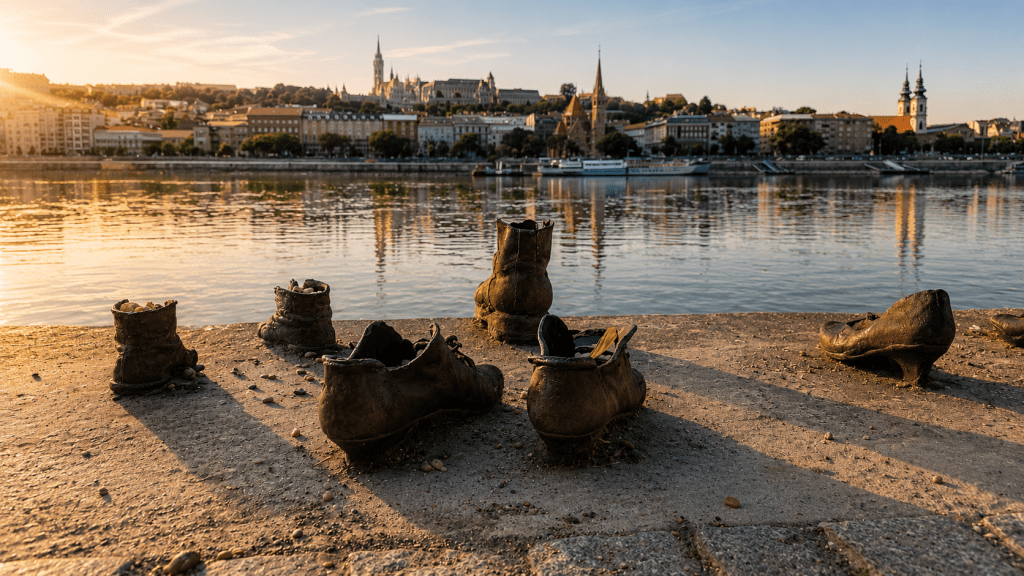
The Shoes on the Danube whispered.

At first glance, they appear almost ordinary—pairs of worn shoes scattered along the riverbank. Some are work boots. Some are dress shoes. One looks small enough to belong to a child. They sit quietly facing the water as though their owners might return at any moment.

But they never will.

During the winter of 1944–1945, thousands of Hungarian Jews were brought to this very riverbank by members of the Arrow Cross militia. Before they were executed, they were ordered to remove their shoes. In a time of scarcity, shoes were valuable. The victims were lined up at the edge of the Danube, shot, and their bodies fell into the river.

The shoes remained.

Standing there in the evening light, with Budapest reflected in the water and the city carrying on around us, I found myself thinking about how easily human beings can become capable of extraordinary cruelty.

History often records numbers.

Six million.

Hundreds of thousands.

Millions more displaced, imprisoned, or forgotten.

But numbers can create distance.

Shoes do not.

Shoes remind us that every number was a person.

Someone who laughed.

Someone who worried about their children.

Someone who planned for tomorrow.

Someone who believed they would see another sunrise.

And yet, as I looked across the Danube toward the beauty of Budapest, another thought emerged.

Human history is not only the story of cruelty.

It is also the story of remembrance.

Someone chose to build this memorial.

Someone decided that these lives would not disappear into the current of history.

Someone believed memory matters.

Throughout our travels, I was struck by how often this tension appeared. Again and again we encountered evidence of humanity at its worst—and evidence of humanity at its best. Tyranny and courage. Hatred and sacrifice. Destruction and rebuilding.

The same species capable of creating death camps is capable of creating memorials.

The same hands that once pulled triggers can, generations later, place flowers.

The same world that wounds can also heal.

Perhaps that is why places like this matter.

They remind us that civilization is more fragile than we like to believe and more resilient than we sometimes fear.

As the sun settled over the Danube, the empty shoes cast long shadows across the stone.

The river kept moving, as rivers always do.

But memory remained.

And perhaps that is redemption—not the erasure of evil, but the refusal to forget those who suffered because of it.

For as long as the shoes remain on the riverbank, their owners are not entirely gone.

And as long as we remember, history still has something to teach us.

Simply O.

The Question of if:

People often ask about the “why” behind a decision.

Why retire?

Why travel?

Why write?

Why change course after decades of following a familiar path?

For much of my life, I believed that “why” was the most important question. It seemed to hold the key to purpose, motivation, and meaning. Leaders ask it. Coaches ask it. Authors write entire books around it.

But lately, I have begun to wonder if the more important question is not why, but if.

The truth is that most of us can construct a compelling “why.”

We can explain our motivations. We can articulate our dreams. We can tell ourselves stories about what we hope to accomplish or who we hope to become.

The “why” often lives in the realm of aspiration.

The “if” lives in the realm of reality.

If I make this decision, what becomes possible?

If I take this path, what are the consequences?

If I step away from what is familiar, will I be okay?

If I pursue this opportunity, does it align with the life I want to create?

The more I reflect on major decisions in my own life, the more I realize that the most consequential moments were not resolved by answering “why.”

They were resolved by answering “if.”

Retirement was not simply a question of why I wanted to retire. The reasons were obvious: more time with family, freedom to travel, opportunities to write, photograph, and explore the world.

The deeper question was:

If I retire now, will my family be secure?

If I retire now, can we sustain the life we have built?

If I retire now, what opportunities might emerge that are unavailable while I am working?

Only after those questions were answered did clarity emerge.

I have come to believe that an affirmative answer to “if” is what I often call alignment.

Alignment occurs when aspiration and reality shake hands.

When values, resources, timing, and opportunity all point in the same direction.

When the answer is no longer merely desirable, but workable.

Not perfect.

Not risk-free.

Not guaranteed.

But aligned.

Perhaps that is why the question of “if” feels so grounding.

It forces us to gather many threads together—our finances, our relationships, our health, our obligations, our dreams, and our fears.

The “why” can sometimes be driven by emotion.

The “if” demands examination.

The “why” can be imagined.

The “if” must be tested.

And when the answer comes back yes, something remarkable happens.

The internal debate begins to quiet.

The need for justification fades.

There is a sense that the pieces fit.

Not because the future is certain, but because the direction is clear.

I am increasingly convinced that this is where wisdom resides.

Not in finding better reasons.

But in asking better questions.

And perhaps the most important question is this:

If this path is aligned with my values, my responsibilities, and my vision for the future—what am I waiting for?

For me, the answer to that question has opened doors to retirement, travel, writing, family, and a life that continues to unfold in unexpected ways.

The older I get, the less interested I become in explaining why.

And the more interested I become in discovering what becomes possible when the answer to “if” is yes.

— Simply O. 

Somewhere Between Leaving and Arriving

One year after retirement, I realized the journey was never about escape. It was about alignment—found somewhere between airports, oceans, memory, and becoming.

One year into the Journey

Somewhere between the leaving…
and the arriving…
I found something I wasn’t looking for.

Not in one place.
Not in one moment.
But scattered—across cities, coastlines, quiet streets, and long flights between them.

A year ago, I stepped away from a life that had long defined me. For decades, my days were structured—measured in decisions, responsibilities, and outcomes. It was meaningful, deeply so. But it was also constant.

And then, one day, it wasn’t.

I remember reading something at 30,000 feet—somewhere between continents, suspended between what was and what was next. It said most of us are moving through life somewhere between shining and just getting by.

And for the first time, I had the distance to ask:

Where was I, really?

Retirement didn’t answer that question.

It created the space for it.

At first, the absence of structure feels unsettling. You reach for the familiar rhythms—deadlines, meetings, the quiet validation of productivity. But slowly, something shifts.

The absence becomes space.
And the space becomes possibility.

Over the past year, I’ve stood on coastlines where the only clock was the tide. I’ve walked through cities where getting lost felt more meaningful than arriving. I returned to Lagos and found memory waiting for me there. I sat in cafés and airport lounges where time slowed just enough for reflection to finally catch up.

And in those moments, something began to change.

Not suddenly.
But steadily.

The things I once thought defined me—titles, roles, expectations—started to fade into the background. Not gone, but no longer in control.

In their place, something quieter emerged.

A different way of living.

One not driven by urgency, but by presence.

Every destination has left something with me. Not simply memories, but clarity. A realization that the life I had built was only one expression of who I am—not the entirety of it.

And perhaps the most unexpected truth of all:

What I thought I had to be… was never the full story.

The noise that once filled my days has softened. The constant internal dialogue of responsibility and expectation has given way to something more measured, more intentional.

More… mine.

I spent years working to feel alive.

Now, I’m learning what it means to simply live.

Not defined by a title.
Not anchored to a place.
Not measured by output.

Just present.
Just aware.
Just open to whatever comes next.

One year into this journey, I wouldn’t say I’ve arrived.

But I’ve stopped trying to.

Because somewhere along the way—between airports and oceans, between familiar beginnings and unknown horizons—

I found something better than certainty.

I found a life that felt less constructed… and more true.

I found alignment.

The journey, I’m learning, is not about finding where you are going.

It is about discovering who has been traveling with you all along.

Yourself.

Because distance does not merely separate you from places—it reveals you to yourself.

And when the noise fades, truth does not rush in.

It waits patiently to be noticed.

Simply O.

The Contradictions of Europe

Bridges and Brokenness

Europe revealed itself not through monuments alone, but through contradictions. Through bridges built after wars, beauty rising from ruins, and stories of people carrying both scars and hope. I arrived expecting landscapes and history; I left having found something deeper — reminders that nations, like people, are often held together by what has broken them.

Europe revealed itself slowly.

Not merely through castles rising above rivers, cathedrals reaching toward heaven, or cobblestone streets worn smooth by centuries of footsteps. It revealed itself through layers of memory carried almost like sediment along the rivers we followed. Layer upon layer deposited over centuries: triumph and tragedy, brilliance and brutality, faith and conflict, destruction and renewal.

Everywhere there seemed to be bridges.

Bridges spanning the Danube and connecting cities once divided. Bridges joining East and West after walls and iron curtains had fallen. Bridges between strangers who sat beside us at dinner and somehow became companions. Bridges between who we once were and who we are becoming.

But I also found brokenness.

Europe remembers its wounds openly. Memorials stand where suffering occurred. Plaques sit quietly on walls. Churches rise beside reminders of war. Cities rebuilt after destruction still speak of what came before. There seems to be little attempt to erase pain; instead, there is an understanding that remembering itself is an act of healing.

Again and again, I found myself standing in beautiful places while hearing stories of occupation, persecution, world wars, and lives interrupted. It felt almost impossible to separate beauty from sorrow because Europe itself seems unwilling to separate them.

And perhaps people are not so different.

As a physician, I found myself noticing my fellow travelers almost as much as the monuments. Some moved with ease; others moved with deliberate care. Some carried visible limitations while others carried burdens that could not be seen. I recognized in them what I also recognize in myself: scars carried quietly beneath the surface.

We all arrive with them.

Some physical. Some emotional. Some spoken of freely and others carefully guarded.

And yet we continue.

We climb hills despite aching feet. We walk ancient streets despite tired legs. We pursue beauty despite loss. We continue crossing bridges.

Travel has a strange way of removing noise from life. Somewhere between riverbanks and railway stations, between museums and meals, between conversations and long walks, unnecessary things begin to fall away.

Clarity appears.

I began this journey believing it would be about discovery — discovering places, cultures, histories, landscapes.

Increasingly, I realized it had become something else.

It became something quieter.

It became about being.

About understanding the human spirit.

About realizing that we are all travelers of one sort or another, moving through seasons of strength and weakness, trying to make sense of the limited time we have been given.

I met an eighty-six-year-old traveler still seeing the world with curiosity and wonder. I watched fellow travelers persevere through aching knees, canes, fatigue, and age. I listened to stories of transition, loss, and hope. And somewhere in all of it, I found myself reflecting on the truth that time eventually humbles us all.

But perhaps that is also the gift.

Because once we recognize that our days are finite, beauty becomes more precious, conversations become richer, and experiences become less about checking destinations from a list and more about receiving them fully.

Perhaps that is Europe’s deepest contradiction:

Among reminders of humanity at its worst, one also encounters humanity at its best.

Beauty rising from ruins.

Bridges rising from brokenness.

And somewhere between them, perhaps finding pieces of ourselves.

Fuller details of this journey available under Europe Unfolds under Europe.

Some journeys move us across rivers and borders; the deeper ones carry us through memory, beauty, grief, gratitude, and the sacred work of becoming whole.

— Simply O.

Reflection — The Pilgrimage I Did Not Expect:

I came to Europe expecting rivers, castles, cathedrals, museums, and photographs.

What I did not expect was a pilgrimage.

Somewhere between abbeys and opera halls, libraries and ruined fortresses, vineyards and candlelit cathedrals, this journey became less about geography and more about the human search for meaning.

In Melk Abbey, gold ceilings attempted to create heaven on earth for weary souls burdened by suffering. In Vienna later that evening, music accomplished something remarkably similar.

Again and again across Europe, I find the same recurring human desire:
to build beauty in defiance of suffering,
to preserve memory against time,
to reach toward transcendence even while surrounded by human imperfection.

The Danube carries more than water. It carries centuries of faith, empire, war, art, philosophy, music, and longing.

And perhaps that is Europe’s greatest gift to the traveler:
it refuses to let you see humanity in only one dimension.

For fuller reflections and the complete daily journey through Europe , and see the full Daily entries on Europe unfolds.

“Some journeys take us across geography; the deeper ones carry us through memory, beauty, faith, and the unfinished work of understanding ourselves.”
— Simply O.

Waterways, Locks, and the Quiet Genius of Civilization

On a lighter note — though perhaps no less profound — I want to talk about canals.

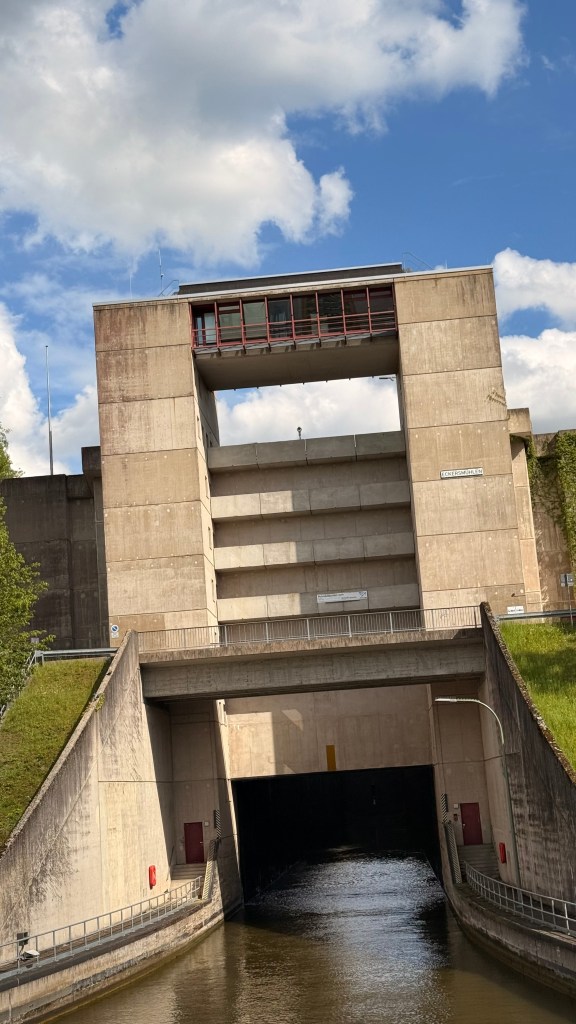
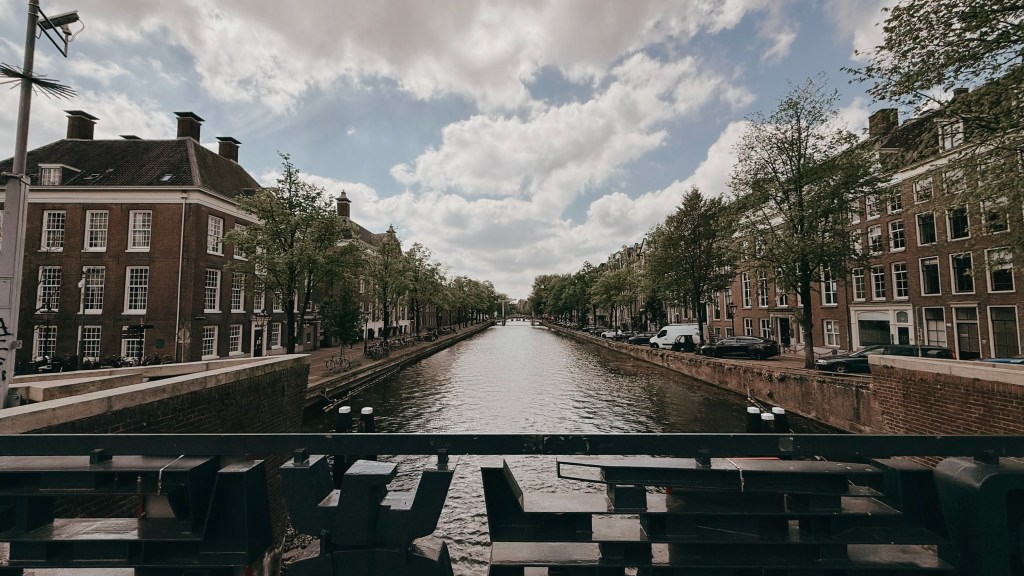
I have always been fascinated by them. Maybe it began years ago watching locks and waterways in North America, or later standing in awe before the Panama Canal. This journey through Europe has only deepened that fascination. We have passed through canals in Prague, navigated countless locks along the rivers, and today encountered what may be the most astonishing engineering achievement of them all: the Main–Danube Canal.

There is something almost poetic about it.

A man-made waterway connecting two great river systems — the Rhine flowing toward the North Sea and the Danube flowing toward the Black Sea — effectively linking one side of Europe to the other. For centuries it existed only as a dream. Today we are floating through it.

What struck me most was not merely the scale, but the precision.

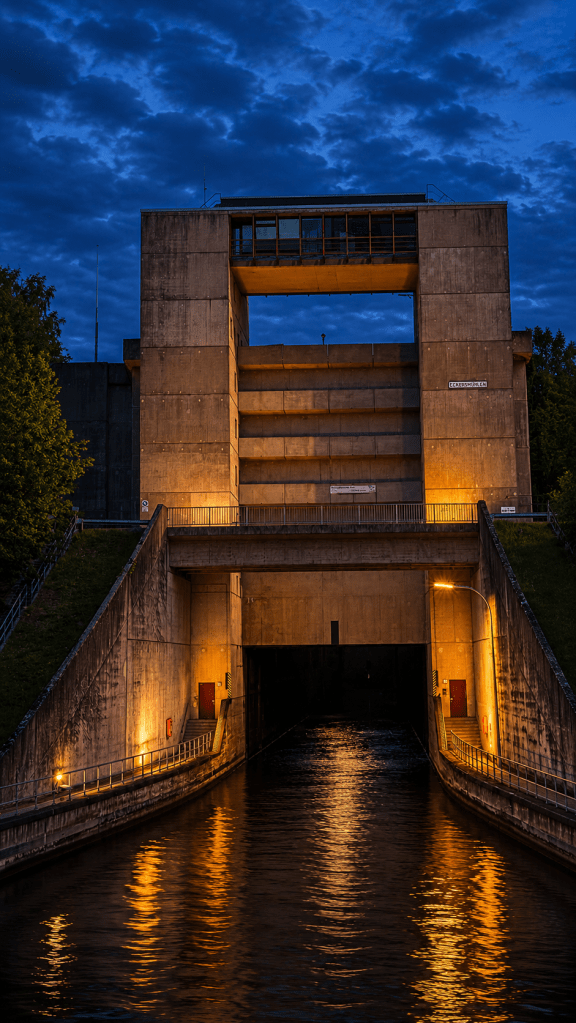
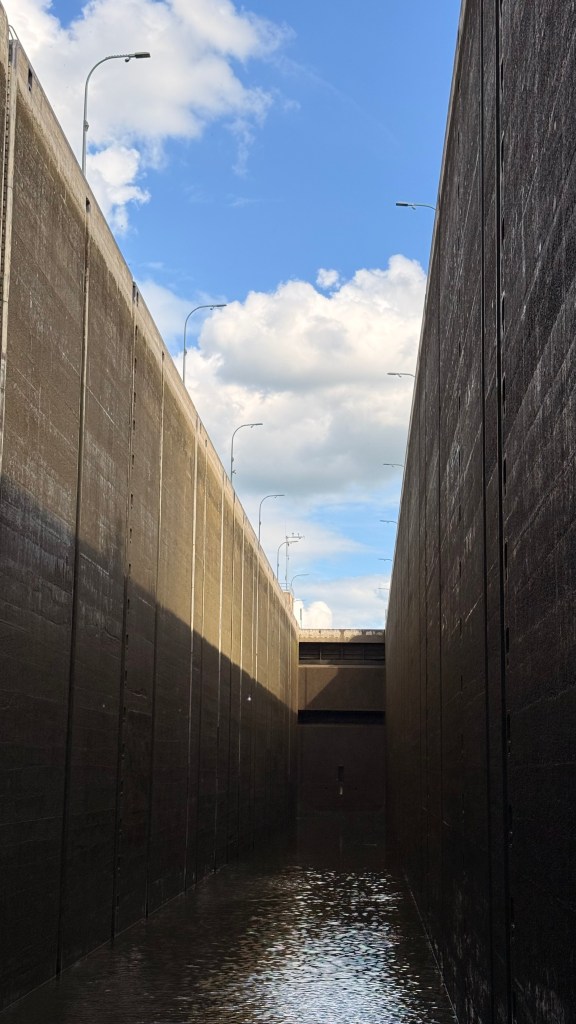
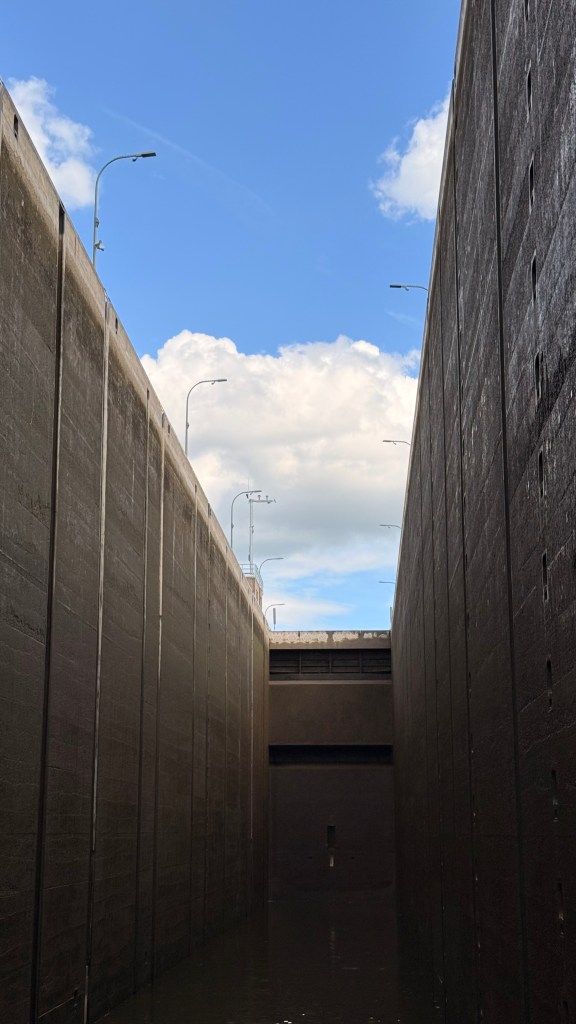
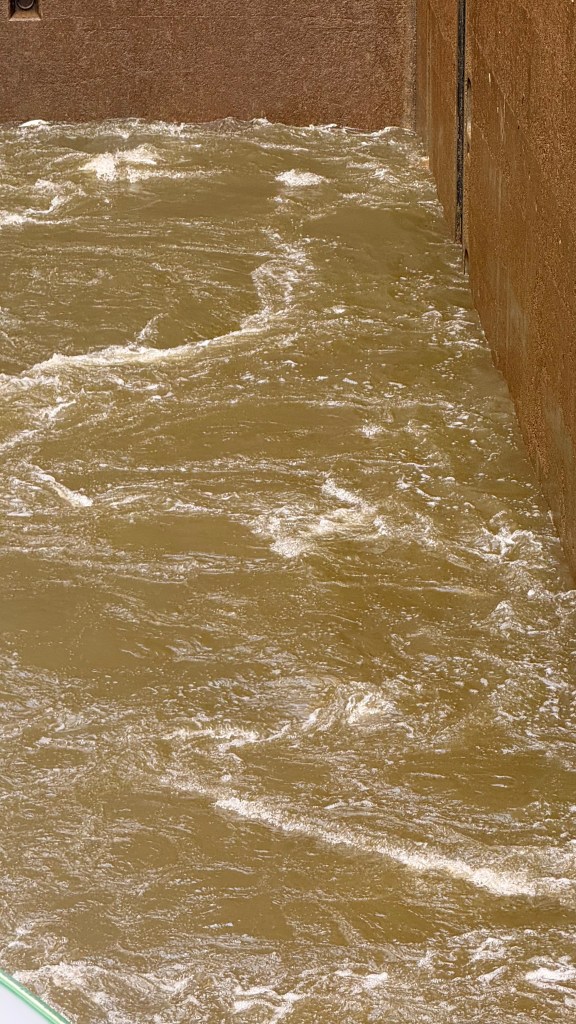
Today we passed through three of the largest locks on the canal system, each lifting our ship roughly 15 meters — nearly five stories high — with extraordinary smoothness. Watching it happen feels almost impossible at first. The gates close behind you, and then millions of gallons of water begin entering the chamber from openings hidden beneath the floor and along the walls. There is surprisingly little turbulence. No violent surge. Just a gradual, almost silent rising.

And the margins are astonishingly small.

Standing on deck, you could practically touch the concrete walls on either side. The clearance felt scarcely more than a foot in places, yet this massive vessel floated upward with calm precision, as though guided by invisible hands.

The engineering behind it is extraordinary. Each lift uses roughly 15 million gallons of water and takes about twenty minutes. Much of that water is recycled through ingenious gravity-fed reservoirs built into the lock system itself — a design so efficient that even the modern Panama Canal studied it while addressing its own water challenges.

And all of this exists for a singular purpose: to carry ships over Europe’s continental divide.

Then, almost quietly, we passed the divide itself.

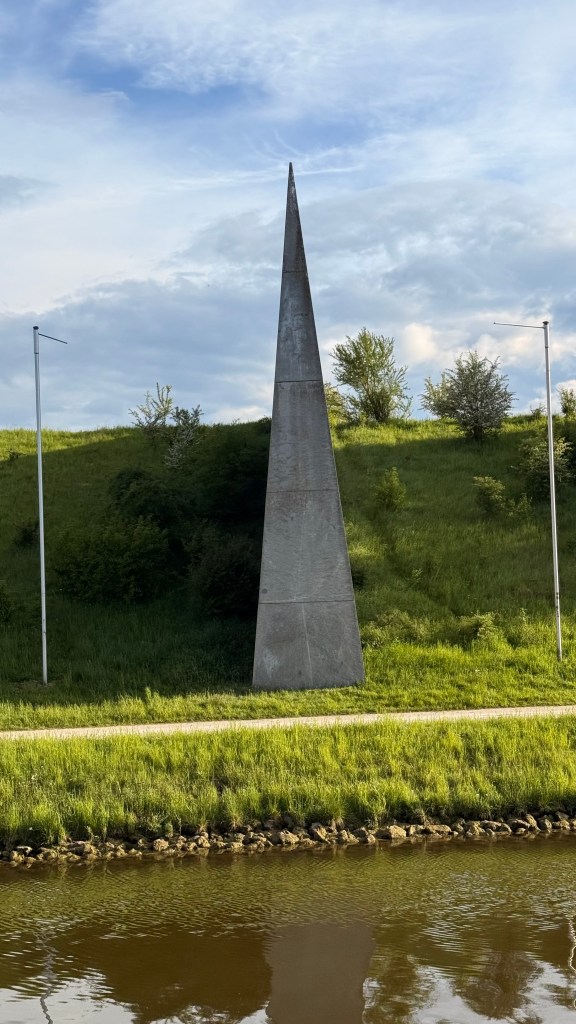
Not a dramatic mountain ridge. Not some towering alpine crossing. Just a slender monument rising beside the canal — easy to miss if you did not know its significance.

Yet few places on earth represent geography, engineering, and history converging so elegantly.

At that point, we were floating across the invisible line separating Europe’s waters.

To one side, every drop eventually journeys northward through the Main and Rhine Rivers toward the North Sea. To the other, the waters begin their long descent through the Danube toward the Black Sea.

And somehow, through locks, reservoirs, pumps, and centuries of human persistence, we crossed between them almost effortlessly.

I found that strangely moving.

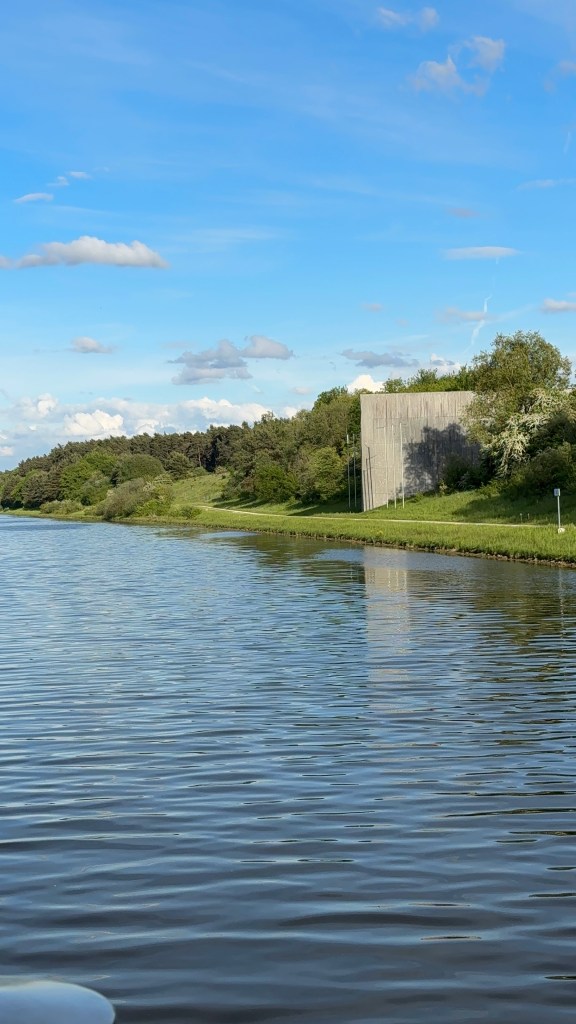
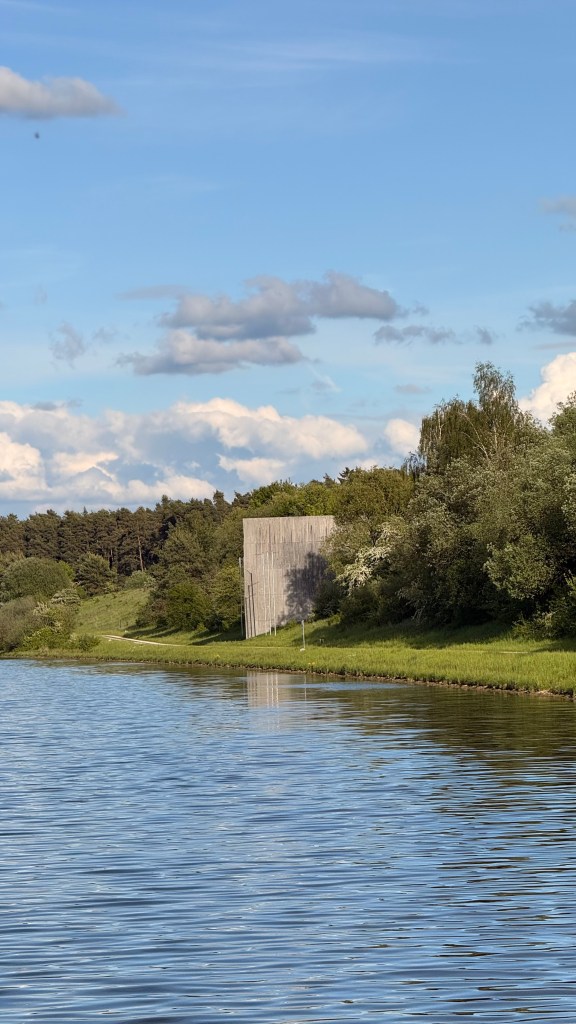
There was no announcement from nature itself. No thunder. No visible boundary. Only calm water, evening light, and an austere concrete monument standing silently beside the canal — like a marker not merely of geography, but of human imagination.

The monument itself felt fittingly understated. A narrow concrete sail cutting upward into the sky, almost like the bow of a ship emerging from the earth. Our lecturer joked that some people think it resembles a wall more than a sail, but perhaps that ambiguity is appropriate. Divides and connections often look similar depending on where one stands.

What fascinated me equally was the history behind it.

The dream of linking these waterways dates back over a thousand years to Charlemagne himself, who attempted to build an early canal in 793 AD. Imagine that: medieval engineers trying to connect Europe’s great river systems long before modern machinery existed. Their effort may or may not have succeeded fully, but the vision endured through generations until the modern canal finally opened in 1992 — after 32 years of construction.

There is something deeply human about that persistence.

We often speak of civilization through wars, kings, borders, and politics. But canals remind us of another side of humanity: cooperation, engineering, patience, and imagination. They are monuments not to conquest, but to connection.

As we rose slowly inside those immense locks today, I found myself thinking about how often the greatest achievements in human history are not loud at all. Sometimes they are quiet systems working beneath the surface — carefully calculated, elegantly designed, almost invisible unless someone takes the time to understand them.

A lock chamber filling beneath your feet.

Water seeking its own level.

A ship lifted gently toward another sea.

And somewhere in all of it, the enduring human desire to bridge what nature once left apart.

Tonight, somewhere between the Rhine and the Danube, between the North Sea and the Black Sea, between ancient dreams and modern engineering, we drifted quietly over the roof of Europe.

Simply O.

Reflections Along the Rivers of Europe

There is something about slow travel that changes not only what one sees, but how one sees.

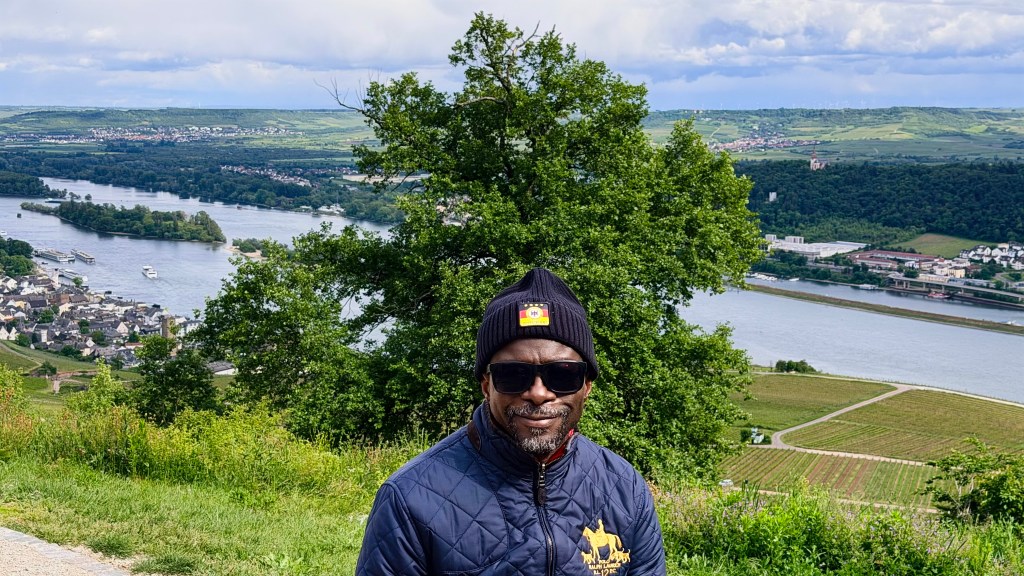
Over these past days, the rivers of Europe have carried us through landscapes of extraordinary beauty — canals lined with leaning houses, vineyards flowing down hillsides, medieval towns suspended in time, soaring cathedrals, castles perched above the Rhine, and streets still marked by centuries of footsteps. Yet beneath the beauty lies something deeper: memory.

Europe seems to preserve memory differently than anywhere else I have traveled.

Wars are not hidden here. They are engraved into bridges, memorial lights, rebuilt cities, plaques, and silence. Faith is not merely spoken of here. It rises in stone through Romanesque walls, Gothic arches, stained glass, and Baroque ceilings that once attempted to pull human eyes toward heaven. Even wine becomes memory — soil, climate, tradition, and centuries bottled together and passed from one generation to another.

What has struck me most is how often beauty and contradiction coexist side by side.

Cities that produced magnificent cathedrals also witnessed unimaginable cruelty. Places nearly destroyed by war were rebuilt not only through governments, but through ordinary people who refused to let memory disappear. Medieval streets that now charm tourists were once walked by people struggling simply to survive plague, hunger, cold, and uncertainty.

And perhaps that is the deeper lesson these rivers quietly teach.

Civilization is fragile.

Yet human beings continue building anyway:
cathedrals that take centuries,
bridges rebuilt after war,
music that survives hatred,
stories that outlive empires,
and small acts of beauty that refuse to disappear.

As I move further eastward toward Budapest, I realize this journey is becoming less about destinations and more about attention — learning to notice the layers beneath places, beneath history, and perhaps even beneath oneself.

The rivers continue flowing.

So does memory.

And somewhere between the locks, castles, cathedrals, vineyards, and conversations, I sense that travel at its best does not merely show us the world.

It slowly teaches us how to see it.

Simply O.